outside sleet chases hail at a 45 degree angle interspersed with random snowflakes that float above the fray. Above the snow-dusted roof the tips of skeletal trees sway, and curtains of snow sweep from the gutters.
on my cd player, Issa Bagayogo croons to a writable beat, followed by Brenda Fassie.
i attempt to induce my brain to begin labour of a dissertation proposal.
And I wonder about the mandatory charity tax imposed by shari'a in Bauchi....
last night i tried to listen to the state of union address while simultanously skimming a dissertation someone else finished in 2005. I could only make it about half way through the address before my annoyance superseded my desire to be an informed citizen. who were all those idiots applauding and cheering? and has there ever been a president of this country that sounds as absolutely unintelligent as GWB?
Tuesday, January 29, 2008


Sunday, January 27, 2008
Film reviews of Bye, Bye Africa; Keita: the Heritage of the Griot; and Yeelen
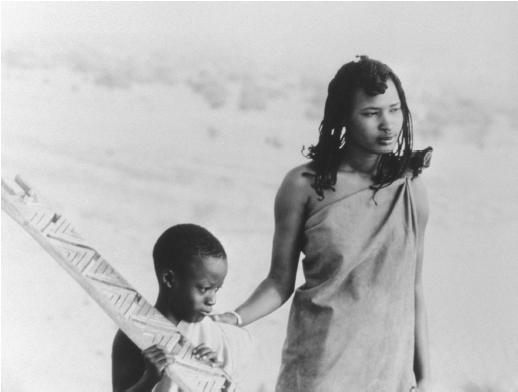
I have just posted three of the reviews I wrote on films last year on my other blog.
Yeelen (Mali) directed by Souleymane Cissé
Keita: the Heritage of the Griot (Burkina Faso) directed by Dani Kouyate
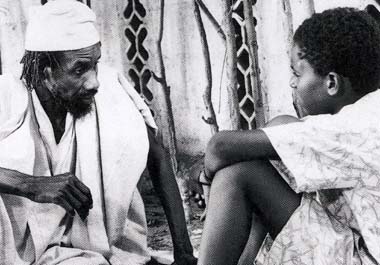
Bye, Bye Africa (Chad) directed by Mahamat-Saleh Haroun

Monday, January 21, 2008
Barack Obama Speaks at Dr. King's Church
"Hope is not blind optimism. Hope is not ignorance of the barriers and hurdles and hazards that stand in the way.... [It's] imagining and then fighting and then struggling for and sometimes dying for what didn't seem possible before... Change doesn't happen from the top down. It happens from the bottom up." (21:30, 24:48, etc).
Thursday, January 10, 2008
Review of Measuring Time and Waiting for an Angel by Helon Habila
Coming up for a gulp of air and then down again into the fetid swamp of studying for prelims [comprehensive exams for the PhD]. In addition to typing up old class notes, cramming theory anthologies and seminal books I should have read far before I reached this point in my career, I have been going over various papers I've written so as to remind myself of charachter names and events in all the novels and films and theoretical works I'm supposed to know well enough to write a couple of "robust" essays on next Wednesday and Friday. I re-read this review I wrote of Measuring Time last November alongside the interview I did. But I don't think I ever posted it here.... If you are in Nigeria, you can buy the Cassava Republic Nigerian editions of the novels at any of these venues. I note that Jos is not on the list, despite it being the home of Habila's alma mater, but if you are in Jos, I found copies of Waiting for an Angel at Castro Books across from Modern Bookshop; hopefully, they have Measuring Time there now too. Enjoy:
If you’ve never read anything by the Caine and Commonwealth prize winning author Helon Habila, the first thing to know is that his use of language is exquisite. The second thing to know is that he makes generous use of irony. Although he is a clearly political writer, he questions over-easy assumptions and political binaries. In his latest novel, Measuring Time, Habila continues the project he began in his debut novel Waiting for an Angel—that is to tell history through the eyes of ordinary people.
Waiting for an Angel opens in a prison setting. The imprisoned journalist Lomba is engaged in a battle of wits with the prison superintendent who is extorting poetry from his prisoner in an attempt to impress a woman. If Lomba’s story were told in a straight line, the way it might appear in his prison file, it would be the story of a failure: a student who drops out of university, who loses friends to madness and military violence and the women he loves to other men, a writer who never finishes his novel and whose journalistic career is cut short by his arrest in the slums of Lagos. However, this is not the story that Habila tells. By breaking up and rearranging the linear story of Lomba’s life, he wrests control of the narrative away from an environment-determined fate. The novel starts at the end of the chronological sequence and then circles back to gather stories of other characters in Lomba’s Lagos: a young boy banished from his home in Jos for smoking Indian hemp, an abandoned out-of-wedlock mother, an intellectual in a tragic love affair with a former student turned prostitute, the daughter of a general whose mother is dying of cancer, a disillusioned woman who runs a neighborhood eatery, a man who defies the soldiers on the night of Abacha’s coup, an editor pursued by the police who refuses to go into exile, a legless tailor who dreams of bidding poverty goodbye.
While the form of Waiting for an Angel reflects the frenetic beat of life in Lagos, the small town setting of Habila’s second novel Measuring Time allows for a more meandering pace. Mamo and LaMamo are twins growing up in the middlebelt town of Keti, and they hate their father, a womanizing businessman with political ambitions. They hate him for breaking their mother’s heart before she died giving birth to them, and they hate him for his long absences and his neglect. The twins’ simultaneous desire for revenge and quest for fame ends in their separation. When LaMamo runs away in search of adventure as a mercenary soldier, Mamo’s sickle cell anemia forces him to stay at home, spending more and more time in his imagination. The narrative of Mamo’s day to day life in Keti is rhythmically punctuated by adventure-filled letters from LaMamo as he travels around West Africa. Mamo reimagines events in Nigerian history: the poet Christopher Okigbo did not die in Biafra but instead lay down his gun to travel around Africa with Mamo’s Uncle Haruna. LaMamo enacts Mamo’s imagined story, becoming a soldier-poet who reports from the Liberian war front, and his words capture the spiritual horror and the boredom of war as it is rarely recorded in international news. The twins long for the other: while Mamo imagines adventures beyond the borders of his small town, LaMamo constantly searches for reminders of home in foreign lands.
The narrative of Measuring Time is frequently interrupted by folktales told by Mamo’s Auntie Marina, letters from LaMamo and a professor in Uganda who becomes Mamo’s mentor, excerpts from the memoir of the first missionary in Keti, his wife’s diary, and colonial reports, and the oral histories told by other characters. One of the most remarkable aspects of Habila’s prose is this inclusion of multiple genres alongside a continuous pattern of tributes to preexisting literary works. In Waiting for an Angel, he borrows the character of the prison superintendent from Wole Soyinka’s The Man Died and gives him some of the associations of the folkloric dodo, a dim-witted monster who is often outwitted by the youth he kidnaps. Throughout the rest of Waiting for an Angel he references writers as varied as Ayi Kwei Armah, Ousmane Sembene, Ngugi wa Thiong’o, Franz Kafka, John Donne, and Sappho. Similarly in Measuring Time, he bundles together Plutarch, Christopher Okigbo, William Shakespeare, Wole Soyinka, Alex La Guma, the Arabian Nights and Faust legends, as well as references to oral tales and Nigerian video films. The effect of these competing voices is to open up the boundaries between his fiction and other fictions and historical accounts that lie outside the novel. The illusion of a smooth, progressive, and abbreviated history, such as the Brief History of West Africa that is brought to Lomba in prison (as the Letters of Queen Victoria had been brought to Soyinka in prison) is a false one. Habila’s fictional histories play a function similar to the colonial history the Pacification of the Primitive Tribes of the Lower Niger in Chinua Achebe’s Things Fall Apart in which the district commissioner writes only a paragraph on a man who has been the subject of Achebe’s entire novel. Habila parallels Achebe’s fictional colonial text in Measuring Time with the missionary text A Brief History of the People’s of Keti by Reverend Drinkwater.
It is with these “brief histories” that Habila’s project in both Waiting for an Angel and Measuring Time becomes clear. Mamo is determined to write a history that does not “cut details” as the colonial histories had—a history that tells the stories of “individuals, ordinary people who toil and dream and suffer” (MT 180). The traditional ruler’s story he has been hired to write, Mamo states, is “simply a part of the other biographies…. [that he would] eventually compile to form a biographical history of Keti. That’s what history really is, people and their lives, no matter how we try to manipulate it. It is the story of real people with real weaknesses and strengths and… not about some founding fathers and … even if we want to write about the founding fathers we shouldn’t privilege them, we should place them on par with other ordinary folks…” (225). In Mamo’s subsequent “biographical history,” he writes of his father the failed politician, and his aunt the divorced wife, placing their stories alongside the less than glorious history of the mai, the traditional ruler, of Keti. Every story has its own place alongside the others. When LaMamo returns with a revolutionary fervour reminiscent of Ngugi’s Matigari, the separate lives of the twins blend and become one—LaMamo’s panAfrican experience and his soon to be born child are given into Mamo’s safekeeping and for recording into Mamo’s history of Keti.
Such a history is not merely a radical rewrite of racist colonial histories but an empathetic window into the lives of even the unpleasant characters. The characterization of the prison superintendent in Waiting for an Angel follows Soyinka’s original caricature, but the man is given a more complex psychology. He is a man grieving for his dead wife, a father of a young son. As Lomba realizes when he meets the superintendent’s girlfriend, “The superintendent had a name, and a history, maybe even a soul” (WfA 37). While in Measuring Time, the sleepy-eyed traditional ruler of Keti and his evil vizier take on the typed characteristics of folktale or a video film, most of the characters in Measuring Time are treated with complexity and compassion. When LaMamo calls the old widows who had pursued their father all his life “shameless old women,” Mamo reminds him that “they weren’t so bad… People are just people” (MT 343). And although the missionary Reverend Drinkwater may have misrepresented the history of Keti, his family has become a part of the history of the town. The missionary’s daughters, now old women, live in Keti, tending their parents’ graves. Although they are not Nigerian, they belong in Keti. It is the only life they have ever known.
This concern with multiple perspectives on history is behind what at first glance might seem to be an editorial flaw in Habila’s two novels. When reconstructed in both novels, time doesn’t quite add up. According to the chronology given in “Mamo’s notes toward a biography of the Mai,” the number of years between the installation of the first mai by the British and the current mai should be about thirty two or three years, yet the time period is stretched from 1918 up to the 1980s (MT 238-240). The year-long planning period for the celebration of the mai’s tenth anniversary seems to turn into three. Similarly in Waiting for an Angel, the time between Lomba’s stay at the university and his imprisonment seem much longer than the actual historical tenure of Abacha’s regime. He supposedly meets and falls back in love with an old girlfriend some time after he becomes a journalist. Yet, two weeks before he is arrested (after he has worked at the Dial for two years), another girlfriend, with whom he has lived for a year, leaves him. The times between the two love affairs don’t quite seem to add up.
Placing the novels side by side gives a hint to what Habila is doing here. In Waiting for an Angel, Habila gathers up historical events that happened along a spectrum of ten years and bundles them into the space of a week. Although Nigeria is kicked out of the Commonwealth in November 1995, in the novel, a week after this event, Dele Giwa, the editor of Newswatch Magazine, is assassinated by a parcel bomb on the same day that Kudirat Abiola is assassinated by gunmen. Of course, historically, the two activists were killed ten years apart: Dele Giwa during the Babangida regime in October 1986 and Kudirat Abiola during the Abacha regime in June 1996. The quickening rhythm of disaster in this chapter of Waiting for an Angel parallels the last quarter of the Measuring Time in which Mamo falls into the hard-partying lifestyle of corrupt politicians, religious riots break out, and the quiet town of Keti goes up in flames. Time here is not a mathematical iambic pentameter that can be measured with a clock, but a living fluctuating force that lags behind and loops around to find the stories of multiple characters. It reminds me of the way time acts in Gabriel Garcia Marquez’s One Hundred Years of Solitude or in oral tales and epics. It cannot be diagramed into a dry progression of events such as those found in A Brief History of West Africa or A Brief History of the Peoples of Keti but instead can only be mediated through the memories of those who experienced it. In his afterward to Waiting for an Angel, Habila acknowledges the liberties he has taken with the chronological order of events, “[N]ot all of the above events are represented with strict regard to time and place—I did not feel obliged to do that; that would be mere historicity. My concern was for the story, that above everything else” (WfA 229).
Mamo’s story of Keti, like the story of Lomba in Waiting for an Angel, becomes in miniature the story of Nigeria—not that it can represent all the complex and multi-faceted stories of the nation, but that it offers an example of what can be written: the individual stories of ordinary people living in extraordinary times. Habila layers his work onto that of older writers such as Achebe and Ngugi who rewrote colonial history in their early works, and joins other contemporary Nigerian writers like Chimamanda Ngozi Adichie and Teju Cole whose writing seems similarly concerned with providing entry points into historical events as lived by ordinary people. Measuring Time ends with the performance of a play by church women’s group, both celebrating and mocking the appearance of the missionary Reverend Drinkwater into Keti history. Mamo realizes that through their caricatured performance, they are telling the story on their own terms, invoking a way of life much older than the colonial encounter: “They were celebrating because they had had the good sense to take whatever was good from another culture and add it to whatever was good in theirs: they had done this before when they first met the Komda, and many times before that in their travels and migrations, in times earlier than even the oldest among them could remember. This was their wisdom, the secret of their survival. This was why they were still able to laugh… each generation would bring to this play its own interpretation” (MT 382). This at root is the power of Habila’s work—the ability of humanity to laugh in the face of tragedy—the ability to undermine stories that have been told for you by telling them yourself.
(Update 10 April 2012): To buy the books reviewed here, click on the links below:
Wednesday, January 02, 2008
Kenyan Electoral Crisis
On the ongoing crisis in Kenya: here is a link to a Reuter's article on the Kenyan electoral crisis. Here is a petition created by Wangui wa Goro, Firoze Manji, Mukoma wa Ngugi, Ronald Elly Wanda, King Omoga, Cenya Ciyendi and written by Firoze Manji.
Here is an article written by Ngugi wa Thiong'o about the elections before the election. And here is an article about how PNU party members harassed and violently intimidated Njeeri wa Ngugi, Ngugi wa Thiong'o's wife, and Ngugi's children before Christmas.
Here is an article written by Ngugi wa Thiong'o about the elections before the election. And here is an article about how PNU party members harassed and violently intimidated Njeeri wa Ngugi, Ngugi wa Thiong'o's wife, and Ngugi's children before Christmas.
Denzel Washington tells it...
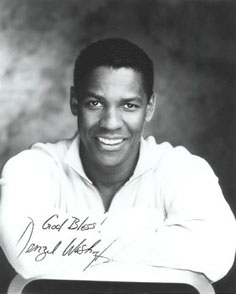
I was taking a little break from my prelims studying a few minutes ago to make some rice and gumbo to eat for the rest of the week, and I turned on NPR to listen to the news, while I was cooking. After the news, Fresh Air with Terry Gross came on. She was interviewing Denzel Washington about his new film The Great Debaters. You can listen to the interview here.
At one point in the interview (around time code 27:10) , she asks him about growing up with a father who was a Pentecostal pastor. Then she asked him if he still belonged to the church (Church of God in Christ [COGIC]), which he affirmed.
Terry Gross then says (around time code 29:00), "I'm wondering if that has even more meaning because you were so brought up in it... since your father---""
And he says, "No it has meaning because it has meaning. Because I believe in the scriptures. I'm a God fearing man who believes what he reads in the Bible, and that has meaning. The meaning that it has is the effect that it has on me, on him [his father] and has on thousands if not millions of other followers. It is our faith in God and our belief in these commandments and in the stories in the Bible...I've read the Bible a couple of times, and I'm working through it again.... I'm now in the book of Romans and listening to the examples and teachings of Paul. The perserverance and the faith that he had in spite of what he was up against... And I'm inspired by those teachings of Paul, of Luke, of all of the apostles, and the great leaders of the Old Testament, as well, obviously, Abraham, Moses..."
Later he says, (around 31:00) "You have to understand. Everything that I've done in my career, and hopefully in my life, is a reflection of my spiritual upbringing and cultivation. I'm not saying I've been an angel all my life. Heaven knows, I haven't.... But you learn. Because I had to go to church, I rebelled against the church, and probably many people out there have gone through that based on whatever negative experiences they may have had. But I can say this to you, whatever success I have, has been a direct result of my faith and the grace of God in my life. period. It's not hanging out with the right people, and it's not studying at some school, or training at some acting school. It's a gift from God, I recognize that. We all have it.
"So, the question is not what you have or what you're going to do with what you have, but recognizing that we all have that gift. It is the grace of God and the gift of God. For some it's acting. Some, it's radio. Whatever your ministry, as they say, is. Understand where it comes from and don't be ashamed of it. If you've had negative experiences in church, (because I'm talking about spirituality and not religion. You know, religion is where man gets ahold of it, and, Lord knows, that's where the problems begin), but if there is something still tugging at your heart, and you're not satisfied, and you feel that there is something there, there IS something there. And don't be ashamed or afraid to continue that search. It led me through all kinds of religions.... One of my favourite books is Siddhartha, you know Herman Hesse's Siddhartha, because it is the journey. And the journey has led me back to the Bible[....]"
Because I need to get back to my books, I won't transcribe the rest of the interview here, but it's a great listen. If you're interested, you can go to the website and listen to it.
What an unexpected blessing and encouragement in a long day of studying!
(And I'm planning to stay away from blogging for the next couple of weeks before my prelims, but I was so touched by this interview that I had to post.)
For the photo credit (Entertainment Weekly, 20-Dec-2002, DETAILS: Best of 2002 featuring Denzel Washington as Entertainer of the Year [photo by Norman Jean Roy]) and bio of the actor, see NNDB.
Monday, December 24, 2007
Never fly United Airlines if you can help it

Christmas Eve. Sitting in my apartment on the phone with a computer that enjoys hanging up on me. Flight to Los Angeles has been cancelled now twice. They called me the first time at 6am this morning and rescheduled my flight for 10am tomorrow. I prided myself on being extra nice, since I knew that most customers on the cancelled flight were probably pretty irate. I didn't mind the extra day because most of my family is flying in tomorrow anyway.
The second cancellation they didn't call me. I just went to check online before going to bed so I could get some sleep before my 1am taxi to take the 2:20am bus to get to the airport I need to fly out of, and noticed that it said "cancelled" before my flight, and that the new time was 8pm tomorrow, to arrive at 10:30pm.... and the trip to the airport from where my brother and cousin live is at least an hour. Since then, I have talked to a variety of agents, one of whom kept giggling and sounded like he was on pot. Have been hung up on at least 10 times. The first person I talked to confirmed that this was a "crew" problem, not a weather problem. So, when I asked if there was some sort of compensation, she talked to her supervisor, and they told me I could get a $25 voucher on United. "For two days worth of cancellations!?" I ask her incredulously. "That's the best we can do, maam," she says. "All right," I say, "I know it's not your fault. Have a Merry Christmas...." My brother tells me I should call back and insist that they put me on another airline. My dad tells me that I should insist on talking to supervisors if they can't help me. And thus continues the saga (great swell of organ and piano on the staticky "hold" music)...
Now, if this last agent can't help me, I'll take it as a sign from God that I am supposed to spend Christmas studying for my prelims....
......
So, (and I type this live) I finally talk with this very nice agent, who tells me that THAT flight, apparently in the few minutes in which I had been trying to change to an earlier flight, has ALSO been cancelled due to "crew" problems (THIRD flight cancellation today), and that the only flight she can get me on is an American Airlines flight that will get into Los Angeles at 11:10pm. I take it, along with another $100 voucher. But, do I dare ever actually use the vouchers?
I look forward to American Airlines...
I don't think I shall ever fly United again if I can help it....
So, Christmas prelims studying... here I come...
At least I'm at home and not in the airport. We thank God for small blessings...
My conversations with the computer tonight (recorded from memory) at 1800-United1:
Welcome to United Airlines. Please listen carefully. Press 1 to make a reservation. Press 2 if you already have a reservation." If you need time, please say, "please wait," if you don't know it, say "I don't know" Please say the reservation number, since some numbers like B or V are hard to tell apart, please use them with common first names such as "M" as in "Mary."
I have a "v" in my confirmation, so try "v" as in "valentine." They don't get it. I think of names with "v." "Vera?" "Violet?" "Van Damme?"
Got it. What's the first and last name of the passenger. Would you like to confirm the trip, change it, request seats, request a wheel chair, or speak to an agent.
After the 10th time, I consider requesting a wheelchair.
Let me get a reservations agent for you. I'll make sure the agent gets the information you've already given me. Thank you for calling United Airlines, we apologize for the delay. Please stay on the line....
I am on hold for about two minutes and then I hear a polite canned voice (for the upteenth time)
I'm sorry for the difficulty. Rather than take up any more of your time, I'm going to go ahead and end your call....
So be it.... and so ends my relationship with United Airlines.
Photo Credits: http://www.bloggossip.com/index.php?cat=160
Sunday, December 23, 2007
Global connections in Music Video objectification of Women: adhiambo sinda
Ok, so, as I'm studying linguistics today... watch for visual motifs in this Kenyan song alongside the Sean Paul and Dare Art Alade that I posted a few weeks ago. I must say this one and Dare Art Alade are "funner" than Sean Paul's.
And what the heck is Che doing in the background. Is that Bruce Lee beside him? Any swahilli speakers out there who could shed some light on this?
Saturday, December 15, 2007
"In Defence of the Films We Have Made" by Odia Ofeimun
When I'm writing a paper, I have such a hard time stopping myself from reading and actually starting to write. There is just so much to read, and I love feeling my mind growing and expanding--of learning--devouring knowledge. Today, I sat down on my couch while the snow fell outside and hand wrote an extended outline, so as to keep myself from turning on my computer and getting distracted, and then instead of turning on the computer and starting to write, I had to read one more thing.
The thing I chose to re-read (having first read it about a year and a half ago) was "In Defence of the Films we have made" the keynote address given by Odia Ofeimun at the 2nd National Film Festival in Lagos on 27 November 2003. Both celebratory and thoughtful, It is simply the best essay I have ever read on the Nigerian film industry, both placing it within a historical context and theorizing towards the future. I have been reading it from issue 8 of Chimurenga (2005), which some friends of mine in South Africa sent me, but when I searched for it online, I see that it has also been published by West Africa Review Issue 5 (2004), so I'll cut and paste a few passages from that.
"In Defence of the Films We Have Made"
by Odia Ofeimun
Excerpt 1:
"Needless to say, the home-video has become the hegemonic means of defining the Nigerian film sense. Whatever is said about any other way of making stories on screen, it is the video film that will necessarily for the foreseeable future dominate the Nigerian film festival. For every day of the year, three new video films are unloaded upon the Nigerian market. Every year in the past half decade, about 200,000 to 300,000 new hands have been lifted from the throes of unemployment and underemployment by the gloss and glitter of the small screen. Conjointly, they generate about five billion Naira annually. Stranded artists, areas boys and area fathers, authors, dramatists, actors and closet fabulists have found their niche in the pack. Actors who had run away from the penury that haunted the stage have been brought back to life! Though they were dead now they are a vibrant part of a community that literally bubbles. Devotees of the stage who had been reduced to breaching their talents, and living near derelict lives, wondering what kind of society leaves her artists to suffer in so many distracting sectors, have acquired the gravitas of an established community. No longer are they among the artists who are sneered at by other moneyed professionals who are no better than what used to be called agbero bourgeoisie because they merely load other people’s wagons. Now the home video artist is not lumped with other artists who are ritually blamed for not being business-oriented. Within the norm of the home video, it is enough to be a scriptwriter, actor, dramatist, cameraman, director or singer although professionalism is still far away.
....
Excerpt 2
"The avalanche of issues that films have covered bear testimony to unparalleled creativity which should make and have been making Hollywood buffs take notice. The sheer volume is unprecedented even if repetitious and not always obedient to the laws of professional decorum or excellence. For this reason, I would concede that the video films run the danger of merely supplying Hollywood with the raw materials to re-claim our shores in the not too distant future. But for now, in spite of a ritualistic slapdashness, there is so much energy and creativity that older motion picture industries have something to learn from. From boardroom struggles to political power play, military adventurism and godfatherism in politics, ritual murder, drug abuse and the rehabilitation of drug abusers, witchcraft and churchcraft, high living and low life, prostitution and AIDS, the home videos are brashly, even if self-consciously, seductive. They are turning out the Nigerian story in a no-holds-barred fashion which leaves no room for anybody to hide. In this, they recall the sass of junk journalism and, in a sense, what was called guerilla journalism under the military. Undeniably, they reveal an enormous lot about us and our society that is not beautiful. Not infrequently, they themselves are not beautiful or passable. But why judge an artistic culture by its commercial pulp rather than its outstanding performances. It is like the misbegotten booboo in literary criticism which takes the motley of self-published, poorly edited works, as basis for judging the vibrancy of Nigerian literature. In such situations, it is the judges who, inadvertently, are judging themselves."
To read the whole essay, see West Africa Review.
The thing I chose to re-read (having first read it about a year and a half ago) was "In Defence of the Films we have made" the keynote address given by Odia Ofeimun at the 2nd National Film Festival in Lagos on 27 November 2003. Both celebratory and thoughtful, It is simply the best essay I have ever read on the Nigerian film industry, both placing it within a historical context and theorizing towards the future. I have been reading it from issue 8 of Chimurenga (2005), which some friends of mine in South Africa sent me, but when I searched for it online, I see that it has also been published by West Africa Review Issue 5 (2004), so I'll cut and paste a few passages from that.
"In Defence of the Films We Have Made"
by Odia Ofeimun
Excerpt 1:
"Needless to say, the home-video has become the hegemonic means of defining the Nigerian film sense. Whatever is said about any other way of making stories on screen, it is the video film that will necessarily for the foreseeable future dominate the Nigerian film festival. For every day of the year, three new video films are unloaded upon the Nigerian market. Every year in the past half decade, about 200,000 to 300,000 new hands have been lifted from the throes of unemployment and underemployment by the gloss and glitter of the small screen. Conjointly, they generate about five billion Naira annually. Stranded artists, areas boys and area fathers, authors, dramatists, actors and closet fabulists have found their niche in the pack. Actors who had run away from the penury that haunted the stage have been brought back to life! Though they were dead now they are a vibrant part of a community that literally bubbles. Devotees of the stage who had been reduced to breaching their talents, and living near derelict lives, wondering what kind of society leaves her artists to suffer in so many distracting sectors, have acquired the gravitas of an established community. No longer are they among the artists who are sneered at by other moneyed professionals who are no better than what used to be called agbero bourgeoisie because they merely load other people’s wagons. Now the home video artist is not lumped with other artists who are ritually blamed for not being business-oriented. Within the norm of the home video, it is enough to be a scriptwriter, actor, dramatist, cameraman, director or singer although professionalism is still far away.
If you look at our hunger-besotted slums and our beleaguered villages, you find that many, so many, are finding their feet because of a trade that removes the duller moments from the depression of our neglected, unmanaged and generally manager-less towns and cities. Authors displaced by the collapse of the publishing industry have made a detour from the usual haunts in favour of the home-video turf. One look at any home video film, and the gushy life that it carries, brings a sense of how much of our society was dead and dying without finding a time to bloom. As such, gratitude must well up in the hearts of those enamoured of artistes who had given so much to the arts and are only just being saved for a season of eternity in the company of a vibrant younger generation by the home video films. This is to say that what appeared in the beginning as merely making do has opened floodgates to the peculiar Nigerian genius for creativity and enterprise. The burst of social energy that it has unleashed has very few parallels in any other areas of our national life except perhaps in the parallel growth of Pentecostal churches which it has serviced in many cities and which in an uncanny way services it."
....
Excerpt 2
"The avalanche of issues that films have covered bear testimony to unparalleled creativity which should make and have been making Hollywood buffs take notice. The sheer volume is unprecedented even if repetitious and not always obedient to the laws of professional decorum or excellence. For this reason, I would concede that the video films run the danger of merely supplying Hollywood with the raw materials to re-claim our shores in the not too distant future. But for now, in spite of a ritualistic slapdashness, there is so much energy and creativity that older motion picture industries have something to learn from. From boardroom struggles to political power play, military adventurism and godfatherism in politics, ritual murder, drug abuse and the rehabilitation of drug abusers, witchcraft and churchcraft, high living and low life, prostitution and AIDS, the home videos are brashly, even if self-consciously, seductive. They are turning out the Nigerian story in a no-holds-barred fashion which leaves no room for anybody to hide. In this, they recall the sass of junk journalism and, in a sense, what was called guerilla journalism under the military. Undeniably, they reveal an enormous lot about us and our society that is not beautiful. Not infrequently, they themselves are not beautiful or passable. But why judge an artistic culture by its commercial pulp rather than its outstanding performances. It is like the misbegotten booboo in literary criticism which takes the motley of self-published, poorly edited works, as basis for judging the vibrancy of Nigerian literature. In such situations, it is the judges who, inadvertently, are judging themselves."
To read the whole essay, see West Africa Review.
Friday, December 14, 2007
Ron Eglash on Fractals in Africa: art, design, and philosophy
Ok, Dr. Eglash is definitely talking to a Western audience, but his subject is absolutely fascinating!
Saturday, December 08, 2007
Global connections in Music Video objectification of Women: Dare Art Alade's "Fuji Music"
YES, I'm studying....
Note the visual connections between Dare Art Alade's music video "Fuji Music" and Sean Paul's "Ever Blazing," which should appear below this post.
Both songs feature obsessively catchy rhythms and "obscenely" shaking booty...
There is another paper waiting to be written here...
Gidan Iko: House of Power
Em, so, I'm in the midst of studying for prelims.... and preparing for a film paper...
One of these days, I'm going to write a paper on the genre of the Hausa film trailer (and perhaps its use on YouTube), which becomes in itself a mini-film, woven together by the chorus of one of the film's catchiest songs and dances. Note here framing and composition (especially in that opening shot), use of colour, the rhythmic graphic matching in the editing. Through the use of the song to weave together significant moments of the film, we see a concern with the power structures of the nation, alongside the crowd pleasing rhymes about love.
And to make this relevant to my prelims studying, note the magnificent examples of linguistic code switching. I love being a scholar of popular culture! {-;
And to link this to my other research, here is a very bad video I took on my digital camera in Kano last year in an open-air theatre of Abbas Sadiq and Zainab Idris (the dancers seen in the video here) dancing to the playback version of this song "Gidan Iko." (I have heard that this open air theatre may have since been destroyed. http://www.youtube.com/watch?v=tTqD6GQx0q0
Apparently the lyrics of this song are by Adam Zango (Usher), the artist and musician currently imprisoned for trying to market his music video "BaHaushiya", that had not been censored, during the film ban in Kano. (According to his critics, he was defaming Hausa women by calling a song where a woman dances provocatively "BaHaushiya" (Hausa woman).
Thursday, November 29, 2007
Warm Fuzzy teaching moments
So, one wouldn't think, after my post of a couple of days ago, that I would write something like this. But after having taken a couple of days break from grading (too much other stuff to do) I'm back at it, and this time getting warm fuzzies. What is exciting (now that I've gotten past the initial bad papers--I'm sure there are more to come) is to see students learning and writing about things that interest them. We gave them a variety of paper topics and the option to do what they are interested in rather than the "formula" paper, and, although I'm nervous about grading our "creative options" (I've set those aside for last), it's such a joy to read those few stellar papers that are almost perfect: well written, well-researched, intelligently thought out, engaging.... I just wrote on one paper, "I've been reading dozens of papers tonight, and it's so pleasurable to come across a paper that I not only enjoy reading but from which I learn something. You write very well..." On another (a student I know was just accepted into grad school), I wrote "You already sound like a graduate student!"
This is why we teach, I suppose, for those brief moments of joy when we see students synthesizing and connecting with what they are learning. You see all those sources in their works cited, and you think, "They know this now." This is now a part of their knowledge. Perhaps they will bring up the points they've cited in this paper in conversation with family and friends in related conversations.... And in the exceptional papers, you think "I just learned something new." And that is exciting.
I also have students post a comment or question on the readings or lectures to an email listserve once a week, and, despite a few mid-semester evaluation grumbles (most like it; a few don't), it always gets progressively better throughout the semester. I love seeing them think through things and using the tools they've learned to better analyze what they are reading and hearing.
So, even though I have about 50 more papers to grade and even though I'm stressed out of my mind because my prelims dates have been set for January 16 and 18 (sooner than I was planning--I'm not at all ready), I'm happy, sitting here at my kitchen table with papers all around me--sorted into various grades. I'm happy because I have 70+ students, who I really like even if I do still forget their names sometimes, most of whom are smart and interested in Africa. And if some of them still use the word "tribe" and "native," well, hopefully they'll remember my comments on their papers.... WWWD.
Wednesday, November 28, 2007
stylee
so... i'm trying to prepare for a short lecture on African popular culture tomorrow before showing Djibril Diop Mambety's film...and...
Monday, November 26, 2007
WWWD: What would Wainaina do....
 So, I'm in the midst of grading some 70+ papers and finding myself making loud growling noises--I SWEAR if I see "native Africans" or "tribal" or "nation" (for the continent of Africa) used one more time after I sent an explicit email to my students outlining my peeviest of pet peeves.... And after one dear child ends her otherwise insightful paper about the mis-uses of humanitarian aid in Africa with the phrase "we will start to see a country coming out of the darkness and into the light," I find myself writing: "What would Binyavanga Wainaina say?"
Because, you see, they had to read that Binyavanga Wainaina essay "How to Write About Africa" at the beginning of the semester, and he is my reference point whenever I think the dang textbook Understanding Contemporary Africa (a rather bad textbook trying to condense "understanding" all of Africa [politics, economics, religion, literature, history, etc] to about 200 pages) is over-generalizing, which is most of the time--or we see an old cliched documentary in lecture.... or someone asks in class how "we" can "save" Africa....
"What would Wainaina say?" I ask... WWWS
So, I FINALLY get to teach a film (Mambety) this week and Dangarembga's Nervous Conditions next week--back to African voices--thank GOD! After a semester teaching an African Studies introductory survey course, I am grateful that I chose to follow literature and film and spend the rest of my life teaching what African writers have had to say for themselves rather than what other people have to say for them.... I open each discussion section with a poem by an African writer--whether we are studying economics or politics, and whether it totally relates or not... Just my own little way of trying to remind the students that those voices do exist...
Photo Credit: Creative Writing @ EMU
Thursday, November 22, 2007
The Heroism of Ordinary People: An Interview with Helon Habila

Thanksgiving day in America... a cornbread dressing in the tradition of my Louisiana grandmother is in the oven and a pumpkin pie is done and cooling on the counter. I'm going to my advisor's house later for dinner to celebrate with some other African students. My interview with Helon Habila was published this week. I am thankful:
This is the 1000 word (ie. gutted) version of an interview with Helon Habila I conducted via telephone last Tuesday before he left for his book tour in Nigeria. (The easy part was transcribing. I spent hours cutting it to get it to 1000 words... ughh...) The story of the interview itself is a longer one, which perhaps I will post about sometime, but Habila was one of the most gracious people I have met via telephone.... The following was published in Leadership this past Monday, 19 November 2007. Unfortunately, the link is no longer up, but this is how it appeared in the newspaper. (In an interesting aside, my dad met him today after the reading at the University of Jos.) Perhaps I'll post the entire interview on my other blog when I have a chance to edit it properly; it will be published in the journal Abiku early next year. But here is the short version:
"The Heroism of Ordinary People: An Interview with Helon Habila"
Award winning novelist Helon Habila grew up in Gombe State. After earning his BA in English at the University of Jos in 1995, he taught at the Federal Polytechnic, Bauchi. Moving to Lagos in 1999, he became the arts editor at the Vanguard and wrote a novel, published as Waiting for An Angel in 2002, which won the Caine Prize for African Fiction in 2001 and the Commonwealth Writers Prize in 2003. Habila has published stories, articles, and poems in journals world-wide and is currently a PhD candidate at the University of East Anglia. After a stint as the first Chinua Achebe fellow at Bard College in New York, Habila took a position at George Mason University where he teaches creative writing. He is in Nigeria from November 17 to November 24 to promote his second novel Measuring Time. In this interview on behalf of LEADERSHIP, he speaks with Talatu-Carmen [my real name used in the publication; i suppose i should stop this ridiculous attempt to protect my identity--pretty much everybody who reads this blog knows who I am], a PhD student at a university in the USA, about his writing.
Talatu-Carmen: I was wondering what your creative process is like. Where do your stories come from?
HABILA: I really cannot say exactly, but I am really inspired by books. Sometimes I write in reaction to books I have read. Then there is also my experience: Measuring Time has a lot of that—my experiences as a child growing up. There was a time when I realised that I wanted to write about my hometown. From that moment whatever I did I viewed it through the eyes of fiction, thinking of how to represent the people I met, the things I did, the places I saw. I was thinking of them as already a part of my book that I was going to write. I was going to write Measuring Time even before I started writing Waiting for an Angel.
In both of your novels the act of writing itself seems to take on a political significance. What, to you, is the political responsibility of the writer?
Well, quite a lot, especially as an African writer. I think there is that tradition which started from the first generation of African writers. They were writing against the whole colonial system, which was very repressive, very racist, very dictatorial. They actually used to have congresses where they would discuss the best way to write fiction in a way that would address the political issues of the day. Even before that, in traditional African society, from the folk tales, there’s always a kind of moral lesson, a kind of didacticism that is seen as an aesthetic part of that story. So politics more or less becomes an aesthetic in African fiction. There are no boundaries between what is purely political and what is art. Art becomes politics and politics becomes art. So I think people like me who find themselves in that tradition, and have that temperament, that awareness of what is going on, who feel that things shouldn’t be the way they are, have a duty to speak out. It is tradition and it’s also a matter of temperament, because there are definitely writers in Africa who don’t write about politics. They write art for art’s sake, or whatever you want to call it.
Could you say more about the influences of Hausa literature on your writing?
Definitely. I grew up reading the translation of One Thousand and One Nights in Hausa and the works of Abubakar Imam, Magana Jari Ce, Ruwan Bagaja, etc. So there is that magical or folkloric representation of reality, which is very different from pure realism. I was definitely influenced by that. And before that I was also influenced by folktales told to me by women in the compound. So, these Hausa books I discovered later were almost a continuation of that story tradition with the magical elements, spirit figures and things like that.
Both of your novels deal with history. In Measuring Time, the character Mamo wants to write a biographical history. Is this one of your own goals?
Definitely, I think so. Because so much that we have is fast fading away and being taken over by the modern, I see writing itself as cultural conservation. That is exactly what Mamo’s project is, conserving the history of people…, because they were misrepresented by the [missionary] Reverend Drinkwater. If you represent what has been misrepresented, you are putting the records right. And that is what history is supposed be. Taking moments of glory, and also ordinary moments—moments of humanity, of value to the community, and putting it down in books. It doesn’t have to be about generals, it doesn’t have to be about chiefs, it could be about ordinary people, their heroism. That is the whole point of the book, that lives should be celebrated, regardless of what office or what lack of office that person has.
Newton Aduaka, the winner of the Golden Yennenga Stallion at the FESPACO film festival, is making a film based on Waiting for an Angel. How involved have you been with this?
I’m not really involved. I’m just the author of the novel. I see film as being totally different from literature. They are both narrative art forms, but they have different ways of representing their story, their subject. I trust him as an artist. I think my novel is strong enough to stand on its own, even if the movie is a bit different in some of its portrayals.
Have you ever thought of writing a screenplay or becoming involved in film?
I really want to do that some day. Some people approached me to write a movie script. I started writing it and then it became a novel! I’m really enjoying the experience. I don’t know how far it’s going to go, but I’m definitely going to go into movies one of these days. To write, or even direct, if I have the chance. The movie industry is just incredible, and I think this is the moment to get involved.
All right, thank you so much.
Thank you, you’re welcome.
Photo credit: Helon Habila with Jeremiah Gyang and Ola Soyinka. Kudus to amazing middlebelt artists! From Naijablog
Wednesday, November 14, 2007


Saturday, November 10, 2007
African Film Conference


Having just returned from an absolutely amazing conference on African film at the University of Illinois, Urbana-Champaign, I thought I'd share a few photos. In addition to my academic heros, there were representative filmmakers from the continent. Among the academics I was excited to have a chance to talk with further: Abdalla Uba Adamu, Brian Larkin, Matthias Krings, Onookome Okome, Jonathan Haynes, Birgit Meyer, Kenneth Harrow, and many more. "Nollywood" reps: Joke Silva, Madu Chikwendu, Francis Onwochei, Ghanian filmmaker Socrate Safo, and Cameroonian filmmaker Joyce Ashuntantang. Photo 1: Onookome Okome and Abdalla Uba Adamu; Photo 2: Ghanian filmmaker Socrate Safo was passionate about his craft and was a delight to watch "in action" as he grounded the often flighty academic theorizing with practical examples of current issues of technology and practice in the Ghanian film industry; Photo 3: Brian Larkin and Abdalla Uba Adamu on a panel; 4) Socrate Safo presents clips from three of his films; 5) Cameroonian filmmaker and actress Joyce Ashuntantang shows a clip from her film, Potent Secrets, and speaks about her feminist motivations.
One of the best parts of the conference was getting to interact with the filmmakers from Nollywood, Ghana, and Cameroon. Hearing them speak in conjunction with the academic papers, I was particularly struck by their passion and their professionality--the absolutely brilliant business that Nigerian (and Ghanaian) filmmaking has become. But while there were still a few academics who echoed the cliched critiques of "Nollywood" filmmaking being "only about making money," Socrate Safo, Joke Silva, Madu Chikwendu, and Francis Onwochei emphasized (and embodied) the intentionality of the craft. These filmmakers are not greedy amateurs out to just make money (although money is certainly a very practical concern in an artform that is also a business--films cannot be made without money), but artists and performers who love and are passionate about what they do. I was particularly impressed with the few clips I saw of Safo's films--lighting, camera angles, mise en scene, and wonderful use of an original music score.
The main impression I came away from the conference with was that the dichotomy between "African cinema" and the "video film" is a false one, and that while various histories, funding, and technologies must be taken into consideration, films on celluloid and video can and should be put side by side in analysis of African film. This is why (even before this conference) I have been calling Nollywood and Kannywood productions "films" rather than "video films." As digital technology becomes prevalent even among filmmakers coming out of a celluloid training (Jean Pierre Bekolo's Les Saignantes, for example), the technical differentiation between "video" and "film" seems to be a rather useless one. At the conference, the prevalent terms used were "Fespaco films" and "video films;" however, much of the discussion centered around the need to complicate the framework that has so far divided analysis of one from the other.
Wednesday, November 07, 2007
Rest In Peace Cyprian Ekwensi

This is a little bit late, but a post in honour of the late Cyprian Ekwensi, author of Jagua Nana, Burning Grass, and others. He died at age 86.
Here is a 2006 interview that Basil Okafor conducted with him for the Daily Sun.
Illustration credit: Basil Okafor
Subscribe to:
Posts (Atom)