An excerpt from an editorial which talks about the arrest of 'dan Ibro in today's Leadership:
Making A Scapegoat Of...
Sa’idu Mohammed Sanusi
[....]
One doubts whether political abracadabra, bureaucratic gibberish, blabber of amateurish politicians, political mercenaries and hirelings could exonerate apparently brazen partisan actions from their basic nature, mere political brigandage or grandstanding. One also wonders why most politicians spotting whichever toga increasingly and desperately attempt to cloak/ conceal unjustified political decisions, actions/inactions through indiscretion. Is it a virtue glorifying or celebrating cowardice? One should not be under illusion that dominant public disposition in Nigeria and its constituent parts, Kano State inclusive, are political. Is it not foolhardy to attempt drawing a demarcation line between politics and recent official actions of the state government?
Of recent, several political events have happened in Kano state, most of which bordered on presumed unpopularity of the state government's decisions that culminated in reported pelting of governor Shekarau in the Emir's palace on the last day of the just-concluded Ramadan fast Tafsir. The unfortunate event elicited comments from government and the opposition, and engendered placement of concentric security measures around the personality of the governor to enhance his personal security and that of his household. This is, indeed, commendable for security of life and property is so sacred in a civilized society. This is more pertinent considering that life of the state chief executive is involved. Nonetheless, security should be pursued without putting lives and properties of the ordinary citizens in jeopardy. The security arrangement is legally instructive, morally imperative and politically pre-emptive.
Moreover, the state government and its agents should not be seen to, in the process, engage in trampling on fundamental freedom and liberty of ordinary citizens, even of those considered as underdogs. There is no democracy without guaranteeing basic human liberty. This is a fundamental preachment of liberal democracy that Nigeria purports to operate. Could democracy be sustained when citizens' freedom is grossly endangered under whatever pretext? Hardly!
The popular Hausa Film comedian, Rabilu Musa Danlasan, alias Dan Ibro and co-artist Lawan Kunawa were, reportedly arrested by the Kano State Censorship Board, allegedly on a trumped up charge of contravening aspects of Censorship laws operating in the state. They were expeditiously arraigned and convicted by the Censorship Mobile Court presided over by the Senior Magistrate, Mukhtari Ahmed. It was not the arrest and arraignment of the victims that mattered but the circumstance and the speed with which the case was heard and disposed of. Even the penalty meted out to the offenders calls to question the process. Another question is why were the two artists the main target? Were they the only indecent dancers in the film?
The actual offense of the accused had to do with a role he allegedly played in comedy films entitled Ibro Aloko and Ibro Kauranmata which the Censorship Board took exception to. According to the report Dan Ibro and Lawan Kunawa were said to have indecently danced in the film, contrary to the provisions of Kano state Censorship Law. In addition the films were allegedly released without proper screening and authorization by the Censorship Board, another offense. The presiding Magistrate Judge found the accused guilty as charged and sentenced them to two months imprisonment without option of fine. The producer of the film was equally found guilty of the same offense and fined N40, 000, which he instantly paid. When Dan Ibro was asked for his comment after conviction, he was reported to have alleged he was only a target of political persecution, which could be an apt assessment of the situation.
Concerned Kano-based Hausa filmmakers have indicated interest in appealing the judgment and pursuing it to logical conclusion. Generally, observers feel that Ibro and Kunawa's arrest, arraignment, trial, conviction and imprisonment were politically motivated and maliciously pursued. This seems to be the broad-based belief of Kano citizens, especially those sympathetic to the victims. According to some respondents interviewed by this writer, Ibro Aloko was released about two years ago, and Ibro Kauranmata was released before the advent of Censorship law in the state. Legal luminaries were called upon to explain whether a law could have retrospective effect. Some wondered why the Censorship Board suddenly developed interest in the film, Ibro Aloko after some negative political happenings in the state. The political insinuations sound plausible if only to explain reason for the technicality and lacuna in the arrest and subsequent trial of the accused. Unconfirmed reports also have it that it was in the said film that Dan Ibro and his group sang "Mamar" Song, the song alleged to have been sung by hooligans that pelted Shekarau in the Emir's Palace. Mamar is popularly sung to make a jest of people that wear a peculiarly striped textile material in Kano during the last Eid- el-Fitr Sallah. The term, Mamar is also alleged to have originated from some Borno dialects, meaning of which could no be ascertained at the time of this piece. Governor Shekarau was allegedly fond of the material, which he was wearing when he was pelted in the Emir's Palace. Political observers believe that Dan Ibro and Lawan Kunawa were targeted as scapegoats to face punishment for governor Shekarau's pelting and embarrassment.
In addition, some Kano-based textile material merchants were alleged to have stock-piled the material in question, and have reportedly made representation to the state government and security agencies in the state over the issue. The traders allegedly in possession of unsold striped material were very angry. What made them jittery was possibility of incurring losses, because prospective buyers have shunned the material in the market. The merchants have attributed this to Dan Ibro's Mamar song in Ibro Aloko film that has been used to make a jest of anybody wearing the material in Kano State. Some of the traders were allegedly boastful that somebody somewhere must pay for their impending loss.
Contacted for his reaction over alleged political undertone in Ibro and Kunawa's trial, Mallam Abubakar Rabo Abdulkareem, Director-General, Kano State Censorship Board, out rightly refuted the allegation. He claimed he was away In Saudi-Arabia when governor Shekarau was pelted. He however, agreed that the film, Ibro Aloko could have been shot about two years ago, but it was not released till recently. He added, "We can only take an action when it is released to the public." Mallam Rabo has vehemently denied that their action on the film was dictated by political considerations, stating, "Kano Censorship Board is a statutory body set by the state government law aimed at sanitizing filmmaking and marketing industry in Kano state." But he conceded that the Board acted under mounting pressure from stakeholders, though he denied that was dictated by political motive/ consideration.
On the other hand, watchers of political events and Kano state Censorship Board activities have posited that Dan Ibro/ Kunawa's arrest and conviction was in tandem with seemingly systematic harassment of artists, especially filmmakers. They also asserted that it could be recalled that Alhaji Hamisu Iyan Tama, Hausa film producer/ artist was also targeted and humiliated, though his trial was not as speedy and controversial. It is not unlikely that high profile arrests, arraignments and convictions of particularly Hausa filmmakers and book writers would be witnessed in the state more often than not.
Monday, October 13, 2008


Monday, October 06, 2008
Breaking News: Hausa Comedian dan Ibro arrested and imprisoned for 2 months without bail by Kano State Censors Board

Breaking News.
Dazu, I recieved the following text:
"Kano state censorship board arrest rabilu musa dan ibro and 3 other members of his group."
Ibro is a Hausa comedian, and one of the biggest stars in the industry. People I know in Jos who don't watch Hausa films DO watch Ibro.
So, I called the friend who sent me the text and this is the story I heard. Again, this is breaking news, so I might have some of the details wrong. Supposedly, the group was arrested today over the film Aloko which was shot (and censored?) before the ban on Hausa films last year. The producer is being required to pay a N40,000 fine and Ibro a N20,000 fine. Furthermore, Ibro will be imprisoned for 2 months without bail.
Supposedly, the censorship board has accused Ibro of not registering his company with the censorship board. Ibro had registered individually, as an actor, with the censorship board and had the receipt and the certificate to prove it. But apparently the censorship board is saying that he has a company he hadn't registered. Ibro says he does not have a company--that if he has a company, what is the name of the company they are accusing him of not registering. Apparently, they said they didn't know the name of the company but that they knew he had one and that is why they were arresting him.
So, I suppose it is his claim against theirs.
I will post more news as I hear it.
Dazu, I recieved the following text:
"Kano state censorship board arrest rabilu musa dan ibro and 3 other members of his group."
Ibro is a Hausa comedian, and one of the biggest stars in the industry. People I know in Jos who don't watch Hausa films DO watch Ibro.
So, I called the friend who sent me the text and this is the story I heard. Again, this is breaking news, so I might have some of the details wrong. Supposedly, the group was arrested today over the film Aloko which was shot (and censored?) before the ban on Hausa films last year. The producer is being required to pay a N40,000 fine and Ibro a N20,000 fine. Furthermore, Ibro will be imprisoned for 2 months without bail.
Supposedly, the censorship board has accused Ibro of not registering his company with the censorship board. Ibro had registered individually, as an actor, with the censorship board and had the receipt and the certificate to prove it. But apparently the censorship board is saying that he has a company he hadn't registered. Ibro says he does not have a company--that if he has a company, what is the name of the company they are accusing him of not registering. Apparently, they said they didn't know the name of the company but that they knew he had one and that is why they were arresting him.
So, I suppose it is his claim against theirs.
I will post more news as I hear it.
UPDATE: 9:06am, 7 October 2008
I just pulled this off of Nigeria News (Ngex):
Hausa Actor Sentenced To Two Months Imprisonment
x October 07, 2008A popular Hausa comedian, Mr. Rabiu Musa (Ibro) and his associate, Mr. Lawan Kunawa, were sentenced to two-months imprisonement without any option of fine for operating a film industry without approval by the State Censorship Registration Board and acting in a film entitled, "Ibro A-LOCO."He was arrested by officials of the Kano State Censorhip Board and arraigned before a Censorship Mobile Court in Kano presided over by Senior Magistrate Mukhtar Ahmed.The comedian denied owning the film company or producing any film and said he only acted in the film. The magistrate refused his defence and sentenced him to two months without an option of fine.
UPDATE, 10:33pm, 7 October 2008
Nudity - Kannywood Star Ibro Sentenced
Daily Trust (Abuja)NEWS7 October 2008 Posted to the web 7 October 2008
Daily Trust (Abuja)NEWS7 October 2008 Posted to the web 7 October 2008
By Hassan a Karofi Kano
Kannywood star and popular comedian Rabilu Musa alias Dan Ibro has been sentenced to four months imprisonment for allegedly operating an illegal film production company and shooting a film that exposes nudity and immoral acts in contravention of the Kano State censorship laws.
Dan Ibro was sentenced along with his friend and co-actor Lawal Kaura by Chief Magistrate Muktar Ahmed. According to the Police First Information report read at the chief magistrate's court 14, the duo were accused and arraigned on a two count charge before the court for operating an unregistered film production company known as Ibro Film Production without registration and exposing nudity and immoral scenes in a film called Ibro Aluko. The film, according to the censorship lawyers, has contravened section 97 of the state censorship laws. The censorship board argued that the film released without authorisation depicts corrupt acts especially during a singing scene in which a song called Mar-Mar was organised with half naked women dancing in mesmerising steps and movements that attack the sensibilities of the people of Kano State. Additionally, Lawal Kaura, who appeared in the said dancing with some women was also accused for the same offences. Reading his judgement, the Chief Magistrate, therefore, said the two actors were sentenced to two months imprisonment on the first charge of producing a film with immoral scene without option, and another two months imprisonment for operating a film production firm without registration, the second carries an option of N10000.
Dan Ibro is the second Hausa film star that was sentenced to imprisonment since the introduction of stiff regulations governing film production in Kano State after the Maryam Hiyana's nudity video. [TC COMMENT: Make that THIRD Hausa film star. 1) Adam Zango, 2) Iyan Tama, 3) Ibro]
Dan Ibro was sentenced along with his friend and co-actor Lawal Kaura by Chief Magistrate Muktar Ahmed. According to the Police First Information report read at the chief magistrate's court 14, the duo were accused and arraigned on a two count charge before the court for operating an unregistered film production company known as Ibro Film Production without registration and exposing nudity and immoral scenes in a film called Ibro Aluko. The film, according to the censorship lawyers, has contravened section 97 of the state censorship laws. The censorship board argued that the film released without authorisation depicts corrupt acts especially during a singing scene in which a song called Mar-Mar was organised with half naked women dancing in mesmerising steps and movements that attack the sensibilities of the people of Kano State. Additionally, Lawal Kaura, who appeared in the said dancing with some women was also accused for the same offences. Reading his judgement, the Chief Magistrate, therefore, said the two actors were sentenced to two months imprisonment on the first charge of producing a film with immoral scene without option, and another two months imprisonment for operating a film production firm without registration, the second carries an option of N10000.
Dan Ibro is the second Hausa film star that was sentenced to imprisonment since the introduction of stiff regulations governing film production in Kano State after the Maryam Hiyana's nudity video. [TC COMMENT: Make that THIRD Hausa film star. 1) Adam Zango, 2) Iyan Tama, 3) Ibro]
Copyright © 2008 Daily Trust. All rights reserved. Distributed by AllAfrica Global Media (allAfrica.com).
Hausa Actor, Ibro Sentenced to Two Month Imprisonment
Leadership (Abuja)
NEWS7 October 2008 Posted to the web 7 October 2008
By Mansur Sani Malam
A popular and controversial lead comedian, Mr. Rabiu Musa (Ibro) and his associate, Mr. Lawan Kunawa, were yesterday sentenced to two-months imprisonement without any option of fine. Ibro was arrested by officials of the Kano State Censorhip Board and arraigned before a Censorship Mobile Court in Kano presided over by Senior Magistrate Mukhtar Ahmed.
He was charged with operating a film industry without approval by the State Censorship Registration Board and acting in a film entitled, "Ibro A-LOCO." But, in his defence, Ibro denied ownership of any film company or producing any film, saying that he only acted in the film like many others in which he appeared in the past. However, the magistrate refused his defence and consequently sentenced him to two months without an option of fine. Ibro who was arraigned with his producer, Malam Hassan was also charged with releasing a film without the approval of the censhorship board. But in his defence, the producer tendered a certificate issued him by the board. However, his defence did not convince the magistrate who convicted him. Hassan was lucky and paid his N40,000 fine.
Copyright © 2008 Leadership. All rights reserved. Distributed by AllAfrica Global Media (allAfrica.com).
Leadership (Abuja)
NEWS7 October 2008 Posted to the web 7 October 2008
By Mansur Sani Malam
A popular and controversial lead comedian, Mr. Rabiu Musa (Ibro) and his associate, Mr. Lawan Kunawa, were yesterday sentenced to two-months imprisonement without any option of fine. Ibro was arrested by officials of the Kano State Censorhip Board and arraigned before a Censorship Mobile Court in Kano presided over by Senior Magistrate Mukhtar Ahmed.
He was charged with operating a film industry without approval by the State Censorship Registration Board and acting in a film entitled, "Ibro A-LOCO." But, in his defence, Ibro denied ownership of any film company or producing any film, saying that he only acted in the film like many others in which he appeared in the past. However, the magistrate refused his defence and consequently sentenced him to two months without an option of fine. Ibro who was arraigned with his producer, Malam Hassan was also charged with releasing a film without the approval of the censhorship board. But in his defence, the producer tendered a certificate issued him by the board. However, his defence did not convince the magistrate who convicted him. Hassan was lucky and paid his N40,000 fine.
Copyright © 2008 Leadership. All rights reserved. Distributed by AllAfrica Global Media (allAfrica.com).
(Note the tone in the following article from the Daily Triumph, a government owned paper)
Wednesday, 8 October 2008
By NASIRU MUHAMMADKANO
state tribunal on films activities has sentence a renown Housa film artist in Kano, Rabilu Musa alias Dan Ibro, to two monthsi in prison for partaking in an indecent play in a Hausa video CD name Aloko.Delivering judgment on the second count charges the tribunal chairman, Senior Magistrate Muktari Ahmad, ordered the artist to cool his feet behind bars for two months or pay a fine of N10, 000 each to both the state government and the state Film Censorship Board, for operating a film company by the name Ibro Film Production Company.Also sentenced alongside Ibro was another Hausa film artist, Lawan Kaura, who was adminstered the same sentence in the second count charge.On the first count charge, he was ordered to pay a fine of N10, 000 to both the state government and the state Film Censorship Board for releasing the video.Before the sentences were announced to the convicts, the state prosecutor, Barr. Sunusi Ado Ma’aji applied that the court gives them summary trial since they have admitted committing the offences.Barr. Ma’aji, also applied for the banning of the said CD which include its sales and its viewing.The CD contained a lied song called “Mamar,” a slogan now being used to tease anyone who wears clothes that were carrying lines in Kano and other neighbouring states.Speaking to newsmen after the verdict, the Director General, Kano state Film Censorship Board, Alhaji Rabo Abdul-Karim, assured that his board will not relent in its effort to see that the state is rid of all illicit films and other vices.“We will continue to see that all those who break our laws are charged to court,” he said.The convicts have one month to appeal the sentenced passed on them.
Sunday, October 05, 2008
Most Gorgeous Nigerian Women (apparently live abroad...)

I will bracket the concern whether there should be these lists of people classified by their physical attractiveness at all (I admit I'm a sucker for People Magazine's the 50 Most Beautiful People), but let me speak to another concern. As I read through the "artville" section in today's Leadership "Most Gorgeous Nigerian Women" by Zully Abdul, I was struck by the fact that with the exception of Nollywood actresses Dakore Egbuson and Genevieve Nnaji and possibly model Agbani Darego, the women (12 out of 15) featured here live and have careers outside of Nigeria. Now of course I am in favour of celebrating the achievements (beauty, career, or otherwise) of Nigerians wherever they may reside and I am uncomfortable with "more authentic than thou" arguments; however, what does this list say about the standards used in judgment and what does this mean to the target audience, which I assuming would be women living in Nigeria where print copies of Leadership are distributed? Is it that there is a paucity of "gorgeous" women who actually live and work in this country???? I've seen women just as gorgeous if not more so among my students at Bayero, singing in church, designing clothing in tailor shops, or sitting behind the counter at an MTN shop. (Granted these sorts of lists generally deal with glamourous public figures, but are there not at least 7 or 8 gorgeous and glamourous Nigerian women living in Nigeria?) What does this list say to Nigerian women in Nigeria who would like to be seen as "gorgeous"? That they must get visas and go appear in American music videos, Hollywood films, and Italian runways? And looking at these women, what does it say about what beauty is? All of these women appear to have straightened hair (with the exception of Chimamanda Ngozi Adichie, ), they all appear to be wearing Western-style clothing, most of them seem to be fairly light skinned, and they are all rail thin....
It's not that I don't think these women are "gorgeous." I think they are. I also think there is a place for celebrating the accomplishments of expatriate Nigerians. But when there is so much beauty and creativity all around us here in Nigeria, why can't at least half of the "most gorgeous Nigerian women" highlighted here be ones living at home?
A related kvetch. Style. Nigerians have absolutely amazing styles. When I come to Nigeria from the U.S. I tend to leave most of my Western clothes there and just have clothing tailored here. When I go back to the U.S., one of the things I miss the most is getting to dress in beautifully designed, floor-sweeping skirts/wrappers whenever I like. But, and I noticed this while grading 113 gender analyses of Nigerian newspaper articles, it seems that often when 'style' is discussed in Nigerian newspapers it is more often about how to wear "skinny jeans," V-neck blouses, spagetti strap tank tops, etc. The photographs featured and advice given are (to pick a random number that seems about right) usually about 70% on 'Western' style. (I'm talking specifically of newspapers and not magazines like Ovation, which features a good deal of glamourous "traddie"). Now I think people should wear whatever they want and there is a case to be made that if it is worn by a Nigerian it becomes Nigerian style, but at the same time, it strikes me that there is something not quite right here...
Friday, October 03, 2008
"An Intellectual Christianity" by my friend Voz Nocturna
A fantastic post by my friend Voz Nocturna expressing a manifesto for an "intellectual" Christianity.
Mutum Duka Mod’a Ne: HIV as Transformative agent in Hausa Novels and films
I have just posted on my other "academic"/"literary" blog a paper and the handout (with pictures) that I presented at the African Studies Association in 2006, looking at representations of HIV/AIDS in Hausa novels and films. The film Hafsah directed and produced by Sani Mu'azu had not yet been released at that time, but I hope to add a section to the paper dealing with Hafsah.
Thursday, September 18, 2008
Ali Nuhu Official Website


Grateful to Ibrahim Sheme's blog for pointing out that Hausa film superstar Ali Nuhu has a new official website. Very impressive.
Here's a good interview the Daily Trust did with Nuhu back in March, in which he talks about the censorship crisis.
Photo Credit: Hausamovies.com (Much better pics on Ali Nuhu's site, but I couldn't link to them)
Monday, September 15, 2008
Recent articles on the Censorship crisis and an interview with Sa'adatu Baba
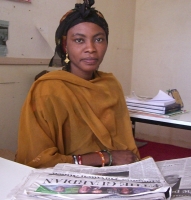
My friend, the Hausa novelist Sa'adatu Baba was recently interviewed on IPS news about the censorship crisis in Kano. See the interview here. A related article gives an overview of the crisis here. Here is a link to an article by Maryam Ali about the writing side of the censorship crisis, and a priceless piece by Malam Abubakar Rabo Abdulkarim himself.... There are more that I will try to add soon...
Thursday, September 11, 2008
A week of (mostly) blessings
Some encounters I’ve had this week:
I meet a woman on the bus who tells me she was inspired to study special education from an Indian film she watched. She tells me the story—about a blind girl who was able to achieve great things from learning to read, and then she tells me about a blind professor she has at BUK, who asked how many of the students in the class would marry someone who is blind. Only 13 stood up, and he said only 3 of those were probably telling the truth. But his wife married him. “Some people don’t pick education as their first choice,” she tells me, “but I did.” Her passion is obvious in the way her face shines when she talks about how “everyone has a disability. It’s just that some are more obvious than others.” She continues on about Helen Keller--how much she contributed to the world.
I sit with the sister of one of my friends whose husband divorced her two weeks ago and would not let her take any of the children, two boys and a girl, 6, 1, and 5. Come back with me, and say you are a lawyer from abroad, she half jokes, half pleads, as she shows me their pictures—healthy beautiful children, laughing into the camera lens. Her co-wife refuses to take care of them, so they were given to the grandmother to take care of. “But she’s blind. She can’t even see to wipe their noses…. I asked him, even just give me the baby to take care of until he is three, and I’ll give him back. But he refused.” She sits in a corner, hugging herself. She wants to take her husband to court to gain custody of the children. Her sister advises her against it. “He has money, and you don’t. You know the courts will side with the one who pays them…” Whenever I visit my friend, she is there, smiling sadly. I ask her about the children, “To, suna can.”
Last night I sha ruwa (lit. "drink water"; break fast) with a friend, while watching Antz from a DVD. She tells me how much she likes cartoons, and how they teach you to live in peace with nature. Now the children whenever they see ants make sure they don’t step on them because they remember the film. “Even now, I don’t like to eat eggs because I think what if I were the hen and my child were taken away…” She tells me she has thought of becoming a vegetarian…
On Tuesday, I sha ruwa with a studio full of musicians, actors, directors, and film editors. They bring bags and bags of food, oranges, kosai, roasted chicken, koko, pure water, and put it in the middle of the office. We descend upon the food. I am delicately finishing off my first orange slice, when I realize that if I don’t hurry up, I will miss out on the food altogether. In about 5 minutes, there is nothing left but bags of peels and bones. I finish off the night with the Bollywood film Chalte Chalte on a borrowed laptop. A singer watches over my shoulder, tells me he did a version of one of the songs in Hausa. He sings along with Shah Rukh Khan in Hindi.
Last week, I sha ruwa with a friend in the old city. We go to greet his elderly grandmother. He thinks she’s around 118. She cannot see or hear, but recognizes him when she touches his face, and holds on to his hand, shaking it with every blessing she gives him. When she takes my hand, she can tell I am a visitor. She blesses me too.
I meet a woman on the bus who tells me she was inspired to study special education from an Indian film she watched. She tells me the story—about a blind girl who was able to achieve great things from learning to read, and then she tells me about a blind professor she has at BUK, who asked how many of the students in the class would marry someone who is blind. Only 13 stood up, and he said only 3 of those were probably telling the truth. But his wife married him. “Some people don’t pick education as their first choice,” she tells me, “but I did.” Her passion is obvious in the way her face shines when she talks about how “everyone has a disability. It’s just that some are more obvious than others.” She continues on about Helen Keller--how much she contributed to the world.
I sit with the sister of one of my friends whose husband divorced her two weeks ago and would not let her take any of the children, two boys and a girl, 6, 1, and 5. Come back with me, and say you are a lawyer from abroad, she half jokes, half pleads, as she shows me their pictures—healthy beautiful children, laughing into the camera lens. Her co-wife refuses to take care of them, so they were given to the grandmother to take care of. “But she’s blind. She can’t even see to wipe their noses…. I asked him, even just give me the baby to take care of until he is three, and I’ll give him back. But he refused.” She sits in a corner, hugging herself. She wants to take her husband to court to gain custody of the children. Her sister advises her against it. “He has money, and you don’t. You know the courts will side with the one who pays them…” Whenever I visit my friend, she is there, smiling sadly. I ask her about the children, “To, suna can.”
Last night I sha ruwa (lit. "drink water"; break fast) with a friend, while watching Antz from a DVD. She tells me how much she likes cartoons, and how they teach you to live in peace with nature. Now the children whenever they see ants make sure they don’t step on them because they remember the film. “Even now, I don’t like to eat eggs because I think what if I were the hen and my child were taken away…” She tells me she has thought of becoming a vegetarian…
On Tuesday, I sha ruwa with a studio full of musicians, actors, directors, and film editors. They bring bags and bags of food, oranges, kosai, roasted chicken, koko, pure water, and put it in the middle of the office. We descend upon the food. I am delicately finishing off my first orange slice, when I realize that if I don’t hurry up, I will miss out on the food altogether. In about 5 minutes, there is nothing left but bags of peels and bones. I finish off the night with the Bollywood film Chalte Chalte on a borrowed laptop. A singer watches over my shoulder, tells me he did a version of one of the songs in Hausa. He sings along with Shah Rukh Khan in Hindi.
Last week, I sha ruwa with a friend in the old city. We go to greet his elderly grandmother. He thinks she’s around 118. She cannot see or hear, but recognizes him when she touches his face, and holds on to his hand, shaking it with every blessing she gives him. When she takes my hand, she can tell I am a visitor. She blesses me too.
Tuesday, September 09, 2008
Review/Gender Analysis of Hausa Film Inda Ranka
This is a summary/analysis I wrote up as a sample for a class I'm teaching. I'm a little uncomfortable with the 'judgmental' end, as I tend to like to just analyze and not 'review,' but I figured a practical componant might be good for the students, since many of them are hoping to become practitioners.
Several ‘virtuous’ women appear as foils to Safiya. Samira is portrayed as the opposite of Safiya. She is a kind, loving, and faithful wife, and her mournful song provides the bridge to many scene transitions. While Safiya responds with a shrill and angry voice to ‘just’ criticism, Samira is never shown as raising her voice even when her husband abandons and abuses her. Instead, she is shown as constantly weeping. Closeups on her tearful face reinforce portrayals of the ‘good wife’ as helpless victim. Similarly, Safiya’s kind sister Binta, who cared for their ailing mother while Binta chased career ambitions, is shown several times weeping—the ‘good’ to Safiya’s ‘bad.’ (The choice of actress for this role becomes ironic in light of later ‘sex scandal’ involving Maryam Usman. The marketing possibilities of Maryam ‘Hiyana’ Usman’s participation of the film are highlighted in the choice to have her face prominantely displayed on the cover of the video, rather than that of the main character Kubura Dackho. The cover becomes more of a commentary on 'real life' than on the 'fiction' of the film--illustrating the name of the film "Inda Ranka" the beginning of a proverb "Inda ranka kasha kallo" meaning "In life you will see many things...." In this case, life is stranger than fiction...)
While the film challenges current interpretations of the inherent immorality of the film industry (since the problem is seen with the character of the actress rather than her work), the treatment of Safiya as ‘devil’ woman and Samira and Binta as ‘angel’ women perpetuates the social ideology of the status quo. Professional behavior in filmmaking is shown as the realm of men. Actresses, who use their fame as a platform for personal enrichment, become scapegoats for the misfortunes of the industry. Safiya lifts her sickly mother and unemployed sister out of poverty, but her ambitions to maintain an independent professional life and not immediately marry are shown in the context of a rebellious and ‘immoral’ lifestyle.’ Her ‘success’ is shown not in terms of her ability to perform well as an actress but in her ability to sexually attract wealthy men. On the other hand, the women praised as being virtuous are those who have no identifiable profession and who are defined by their relationships with their husbands or fiancés. Samira faithfully grieves her bewitched husband. Binta, whose first fiancé is stolen by Safiya, is rewarded with Safiya’s humiliation when the rich alhaji who had first proposed marriage to Safiya decides to take Binta as the ‘mother of his children.’ This seems to be the best reward a good woman can be offered.
However, even these virtuous women are portrayed as ‘weak’ in judgment. The film subtly places the entire debacle at the feet of Mahmoud’s wife Samira, who encourages him to employ Safiya as an actress, despite his better judgment. Men are seen as the victims of women. At the beginning of the film, the male production assistant tells Safiya that when they have helped other actresses enter the industry, young men have ended up as the errand boys to these ‘ingrates.’ The fall of the virtuous Mahmoud is seen as result of Safiya’s scheming. Her other suitors are shown mostly as innocent dupes, who eventually discover her with other lovers. Mahmoud’s father suffers humiliation at the hands of Safiya when he advises her to leave his son alone (initially at the request of his wife). This humiliation is shown visually in an extreme close up of his profile, which obscures his eyes, while he begs the woman who is sitting spider-like in the shadows behind him.
In a film that engages the current controversies surrounding the Hausa film industry, the producers of the film missed a chance to creatively respond to criticisms in a gender-balanced way. Portraying the achievements, as well as the challenges, women face in the film industry could have provided an enlightening defense of the role of the film industry in contemporary Hausa society. Instead, Inda Ranka risks perpetuating dangerous stereotypes that damage the reputation of the film industry and hurt the chances of women to choose the film industry as ‘respectable’ profession. .

Inda Ranka
Produced by Nura Hussani; Directed by Sulaiman Alubankudi
(no date, purchased in 2008 from Almah Video, Jos)
Summary: The film Inda Ranka engages with recent criticisms of the Hausa film industry by following the rise and fall of a poor girl Safiya (Kubura Dackho), who enters the Hausa film industry and is able to transform her economic situation for the better while transforming the lives of those around her for the worse. While initially discouraged in her dreams of becoming an actress by director (Ishaq Sidi Ishaq) and the producer Mahmoud (Nura Hussein), Mahmoud’s wife Samira (Jamila Nagudu) urges him to give the girl a chance. Upon being accepted as an actress under Mahmoud’s protection, Safiya goes to a boka who gives her “control” over Mahmoud’s mind. The rest of the film shows how Safiya destroys lives around her: Mahmoud leaves his patient and kind wife Samira at home while chasing Safiya and quarrelling with her over her supposed affairs. Safiya is shown with a series of lovers: the producer Mahmoud, her elder sister Binta’s (Maryam Usman) fiancé, a wealthy alhaji (Mustapha Musty) who provides her with a house, a car, and trips abroad, another wealthy man (Baballe Hayatu) who wishes to marry her, and an elderly ‘Commissioner’ (Aminu Hudu) who promises to help her take revenge on Mahmoud for shouting at her. Safiya kicks her sister out of the house, ignores the advice of her mother who wants her to leave her profession and get married, and calls Mahmoud’s father a “useless old fool.” When her duplicitous nature becomes obvious to her various suitors, Baballe, on the advice of Alhaji Mustapha who says she is “not marriage material,” rescinds his marriage proposal and instead marries her virtuous elder sister Binta. The bewitched Mahmoud is reconciled with his long-suffering wife Samira, whose sad song has stitched together the episodes of the film. The final (and only) song and dance number comes at the end of the film, in which Safiya and Binta are shown dancing with their various suitors.
Produced by Nura Hussani; Directed by Sulaiman Alubankudi
(no date, purchased in 2008 from Almah Video, Jos)
Summary: The film Inda Ranka engages with recent criticisms of the Hausa film industry by following the rise and fall of a poor girl Safiya (Kubura Dackho), who enters the Hausa film industry and is able to transform her economic situation for the better while transforming the lives of those around her for the worse. While initially discouraged in her dreams of becoming an actress by director (Ishaq Sidi Ishaq) and the producer Mahmoud (Nura Hussein), Mahmoud’s wife Samira (Jamila Nagudu) urges him to give the girl a chance. Upon being accepted as an actress under Mahmoud’s protection, Safiya goes to a boka who gives her “control” over Mahmoud’s mind. The rest of the film shows how Safiya destroys lives around her: Mahmoud leaves his patient and kind wife Samira at home while chasing Safiya and quarrelling with her over her supposed affairs. Safiya is shown with a series of lovers: the producer Mahmoud, her elder sister Binta’s (Maryam Usman) fiancé, a wealthy alhaji (Mustapha Musty) who provides her with a house, a car, and trips abroad, another wealthy man (Baballe Hayatu) who wishes to marry her, and an elderly ‘Commissioner’ (Aminu Hudu) who promises to help her take revenge on Mahmoud for shouting at her. Safiya kicks her sister out of the house, ignores the advice of her mother who wants her to leave her profession and get married, and calls Mahmoud’s father a “useless old fool.” When her duplicitous nature becomes obvious to her various suitors, Baballe, on the advice of Alhaji Mustapha who says she is “not marriage material,” rescinds his marriage proposal and instead marries her virtuous elder sister Binta. The bewitched Mahmoud is reconciled with his long-suffering wife Samira, whose sad song has stitched together the episodes of the film. The final (and only) song and dance number comes at the end of the film, in which Safiya and Binta are shown dancing with their various suitors.
Analysis: Inda Ranka reproduces many stereotypes of women in its reflection of the controversies currently surrounding the Hausa film industry. While the film industry is shown as a professional public realm operating according to established procedures (particularly one in which young girls who want to enter the industry are advised to return to school and get the permission of their parents, while no similar injunction appears for young men), Safiya (and by implication, other ‘greedy’ and ‘ungrateful’ young actresses) introduces chaos into these smooth operations. It is arguably not the film industry that spoils her but she who spoils the film industry. Mahmoud is shown as being a respected and professional film producer in a loving relationship with his wife, but Safiya destroys his life by “controlling him” through the powers of a ‘pagan’ boka. Safiya also disrespects her chosen profession by coming late to the location and using it as a way to attract wealthy lovers. In addition Safiya is shown as being contemptuous of her elders and Hausa traditions in the way she responds to criticism from her mother, sister, and Mahmoud’s father. She refuses to marry, preferring to have the independence of a profession and the attentions of many suitors. Cinematography, editing, and mis-en-scene emphasize Samira’s shrewish nature—she is shown in close-up shaking her finger at those who offend her. She is often portrayed as sitting in shadows. For example, when Mahmoud’s father confronts her, his virtuous nature is highlighted by the light yellow background, which casts light on his face. On the other hand, the shadowy corner in which Safiya sits casts a sinister green pallor over her face, a colour motif that is repeated when she tells Alhaji Mustapha she would rather lose him than her career.
Several ‘virtuous’ women appear as foils to Safiya. Samira is portrayed as the opposite of Safiya. She is a kind, loving, and faithful wife, and her mournful song provides the bridge to many scene transitions. While Safiya responds with a shrill and angry voice to ‘just’ criticism, Samira is never shown as raising her voice even when her husband abandons and abuses her. Instead, she is shown as constantly weeping. Closeups on her tearful face reinforce portrayals of the ‘good wife’ as helpless victim. Similarly, Safiya’s kind sister Binta, who cared for their ailing mother while Binta chased career ambitions, is shown several times weeping—the ‘good’ to Safiya’s ‘bad.’ (The choice of actress for this role becomes ironic in light of later ‘sex scandal’ involving Maryam Usman. The marketing possibilities of Maryam ‘Hiyana’ Usman’s participation of the film are highlighted in the choice to have her face prominantely displayed on the cover of the video, rather than that of the main character Kubura Dackho. The cover becomes more of a commentary on 'real life' than on the 'fiction' of the film--illustrating the name of the film "Inda Ranka" the beginning of a proverb "Inda ranka kasha kallo" meaning "In life you will see many things...." In this case, life is stranger than fiction...)
While the film challenges current interpretations of the inherent immorality of the film industry (since the problem is seen with the character of the actress rather than her work), the treatment of Safiya as ‘devil’ woman and Samira and Binta as ‘angel’ women perpetuates the social ideology of the status quo. Professional behavior in filmmaking is shown as the realm of men. Actresses, who use their fame as a platform for personal enrichment, become scapegoats for the misfortunes of the industry. Safiya lifts her sickly mother and unemployed sister out of poverty, but her ambitions to maintain an independent professional life and not immediately marry are shown in the context of a rebellious and ‘immoral’ lifestyle.’ Her ‘success’ is shown not in terms of her ability to perform well as an actress but in her ability to sexually attract wealthy men. On the other hand, the women praised as being virtuous are those who have no identifiable profession and who are defined by their relationships with their husbands or fiancés. Samira faithfully grieves her bewitched husband. Binta, whose first fiancé is stolen by Safiya, is rewarded with Safiya’s humiliation when the rich alhaji who had first proposed marriage to Safiya decides to take Binta as the ‘mother of his children.’ This seems to be the best reward a good woman can be offered.
However, even these virtuous women are portrayed as ‘weak’ in judgment. The film subtly places the entire debacle at the feet of Mahmoud’s wife Samira, who encourages him to employ Safiya as an actress, despite his better judgment. Men are seen as the victims of women. At the beginning of the film, the male production assistant tells Safiya that when they have helped other actresses enter the industry, young men have ended up as the errand boys to these ‘ingrates.’ The fall of the virtuous Mahmoud is seen as result of Safiya’s scheming. Her other suitors are shown mostly as innocent dupes, who eventually discover her with other lovers. Mahmoud’s father suffers humiliation at the hands of Safiya when he advises her to leave his son alone (initially at the request of his wife). This humiliation is shown visually in an extreme close up of his profile, which obscures his eyes, while he begs the woman who is sitting spider-like in the shadows behind him.
In a film that engages the current controversies surrounding the Hausa film industry, the producers of the film missed a chance to creatively respond to criticisms in a gender-balanced way. Portraying the achievements, as well as the challenges, women face in the film industry could have provided an enlightening defense of the role of the film industry in contemporary Hausa society. Instead, Inda Ranka risks perpetuating dangerous stereotypes that damage the reputation of the film industry and hurt the chances of women to choose the film industry as ‘respectable’ profession. .
Tuesday, September 02, 2008
Meditations on Azumi: Thoughts during the Ramadan Fast
written 1 September 2008
2 Ramadan
Ever since I knew I was going to be in Kano for a year, I thought that I would try to fast during Ramadan. First, I thought it would not be appropriate to eat in front of other people who are fasting, even if it’s just sneaking a meatpie and sachet of water from the canteen to my office (although it may eventually come to that); second, I thought it would be good to experience what millions of people, and specifically those around me, experience every year. As I told one of my friends on the first day of Ramadan. “Idan kuna jin yunwa, zan ji yunwa. Idan kuna jin kishin ruwa, ni ma zan ji kishin ruwa.” If you are hungry, I will be hungry. If you are thirsty, I too will be thirsty.” The day before the fast began, I bought a book from an Islamic book seller, 70 Key Points on Fasting by Shaikh Muhammad Salih al-Munajjid (translated by Luqman Abdur Ahman Alamu), to better understand fasting from an Islamic perspective—what my friends believe. But ultimately, what I hope to gain out of this is spiritual discipline practiced from the perspective of my own faith. Fasting is a spiritual discipline in Christianity as well (Jesus fasted for forty days in the desert in preparation for his three years of ministry), although not compulsory. I thought that, though I am Christian, I live among Muslims, so I will fast when they fast and pray when they pray. And I will hopefully grow in my own spiritual life.
Today, on the second day of Ramadan, walking wearily across campus to wait for the bus at around 5pm, I thought, maybe I should stop this. It’s not a requirement for me, and I’m finding myself dull, forgetful, distracted, irritable, impatient, on edge. It’s not easy to manifest the “fruits of the spirit,” (love, joy, peace, patience, gentleness, kindness, self control), when I have not eaten or drunk all day. On further thought, as I was walking from the bus stop to my house clutching two packets of dates and a sliver of watermelon I had bought to break my fast with, I realized that perhaps that is the point of fasting, at least for me. It forces me to realize, humbly, how much of my good spirits, my mostly cheerful demeanor are chemically-based, physical attributes. I have been blessed with good health, with chemical balance, with a fairly even and laid back temper (though my good friends and roommates all know the exceptions). Peeling back those layers of the physical, one comes closer to the core of one’s being, what is underneath the surface pleasantness—what comes out when there is no protective politeness—and it’s not always very attractive. I have thought often over the past few years of what C.S. Lewis says in Chapter 4 "Morality and Psychoanalysis" of Mere Christianity. About the verse that humans look at the outward appearance, but God looks at the heart.
“Some of us who seem quite nice people may, in fact, have made so little use of a good heredity and a good upbringing that we are really worse than those whom we regard as fiends. Can we be quite certain how we should have behaved if we had been saddled with the psychological outfit, and then with the bad upbringing, and then with the power, say, of Himmler? That is why Christians are told not to judge.
"We see only the results which a man's choices make out of his raw material. But God does not judge him on the raw material at all, but on what he has done with it. Most of the man's psychological make-up is probably due to his body: when his body dies all that will fall off him, and the real central man, the thing that chose, that made the best or the worst out of this material, will stand naked. All sorts of nice things which we thought our own, but which were really due to a good digestion, will fall off some of us: all sorts of nasty things which were due to complexes or bad health will fall off others. We shall then, for the first tune, see every one as he
really was. There will be surprises.” (culled from http://www.lib.ru/LEWISCL/mere_engl.txt)
I meditate on this in relation to fasting. When fasting, those base-human characteristics, the instincts, the first reactions, come out more dramatically, and you have to deal with them. You are impatient but you force yourself to speak patiently. You don’t feel gracious but you make yourself be gracious anyway. It becomes a discipline, training and subduing those initial reactions that surface more clearly when you are hungry and tired, and it encourages humility. You don’t have that easy excuse—oh sorry, I haven’t eaten yet today, and I can’t think clearly—because no one else has either. You become weaker and more vulnerable to your community while stronger in your individual will. This is spiritual growth—going beyond one’s personality to something deeper.
At the same time, you also become more aware of the joys of the physical. The pleasure that comes at the end of the day, especially when you are breaking the fast with other people. (“A sha ruwa lafiya” is the greeting towards the end of the day: “enjoy quenching your thirst”)—the sweetness of the crystallized sugar in a dry date when it is the first thing that has touched your tongue all day; the fresh wetness of a tangy orange or sweet watermelon or solid banana; the way the spicy flavours of Hausa tea detach themselves and come one by one: cardamom, ginger, other flavours that I cannot yet identify; the nourishing thickness of chocolate Milo with Peak milk. The first burst of energy after the sugar enters your blood stream and the pleasant stuffed feeling when your stomach is extended with tuwon shinkafa and miyan alewa or fried yam and potatoes, peppered tofu and kosai. Denied for 13 or 14 hours a day, the senses are heightened. Listening to the Ramadan service on the radio, the chanted Arabic, the call and response, it reminds me of listening to a mass—Gregorian chants in Latin—or a BBC broadcast of the Nine Lessons in Carols on Christmas eve.
I am not sure if I will complete the fasting for the month of Ramadan or not. The training is good for me, but as an embodied spirit. I crave the blessings of the even-temper that comes so much easier when I have properly fed myself. Since it is not compulsory for me, I may only fast for a few more days, or, in my desire to be in solidarity with those around me and in my curiousity to see if I can make it, or maybe out of sheer cussed stubbornness, I may fast the whole month. We shall see…
2 Ramadan
Ever since I knew I was going to be in Kano for a year, I thought that I would try to fast during Ramadan. First, I thought it would not be appropriate to eat in front of other people who are fasting, even if it’s just sneaking a meatpie and sachet of water from the canteen to my office (although it may eventually come to that); second, I thought it would be good to experience what millions of people, and specifically those around me, experience every year. As I told one of my friends on the first day of Ramadan. “Idan kuna jin yunwa, zan ji yunwa. Idan kuna jin kishin ruwa, ni ma zan ji kishin ruwa.” If you are hungry, I will be hungry. If you are thirsty, I too will be thirsty.” The day before the fast began, I bought a book from an Islamic book seller, 70 Key Points on Fasting by Shaikh Muhammad Salih al-Munajjid (translated by Luqman Abdur Ahman Alamu), to better understand fasting from an Islamic perspective—what my friends believe. But ultimately, what I hope to gain out of this is spiritual discipline practiced from the perspective of my own faith. Fasting is a spiritual discipline in Christianity as well (Jesus fasted for forty days in the desert in preparation for his three years of ministry), although not compulsory. I thought that, though I am Christian, I live among Muslims, so I will fast when they fast and pray when they pray. And I will hopefully grow in my own spiritual life.
Today, on the second day of Ramadan, walking wearily across campus to wait for the bus at around 5pm, I thought, maybe I should stop this. It’s not a requirement for me, and I’m finding myself dull, forgetful, distracted, irritable, impatient, on edge. It’s not easy to manifest the “fruits of the spirit,” (love, joy, peace, patience, gentleness, kindness, self control), when I have not eaten or drunk all day. On further thought, as I was walking from the bus stop to my house clutching two packets of dates and a sliver of watermelon I had bought to break my fast with, I realized that perhaps that is the point of fasting, at least for me. It forces me to realize, humbly, how much of my good spirits, my mostly cheerful demeanor are chemically-based, physical attributes. I have been blessed with good health, with chemical balance, with a fairly even and laid back temper (though my good friends and roommates all know the exceptions). Peeling back those layers of the physical, one comes closer to the core of one’s being, what is underneath the surface pleasantness—what comes out when there is no protective politeness—and it’s not always very attractive. I have thought often over the past few years of what C.S. Lewis says in Chapter 4 "Morality and Psychoanalysis" of Mere Christianity. About the verse that humans look at the outward appearance, but God looks at the heart.
“Some of us who seem quite nice people may, in fact, have made so little use of a good heredity and a good upbringing that we are really worse than those whom we regard as fiends. Can we be quite certain how we should have behaved if we had been saddled with the psychological outfit, and then with the bad upbringing, and then with the power, say, of Himmler? That is why Christians are told not to judge.
"We see only the results which a man's choices make out of his raw material. But God does not judge him on the raw material at all, but on what he has done with it. Most of the man's psychological make-up is probably due to his body: when his body dies all that will fall off him, and the real central man, the thing that chose, that made the best or the worst out of this material, will stand naked. All sorts of nice things which we thought our own, but which were really due to a good digestion, will fall off some of us: all sorts of nasty things which were due to complexes or bad health will fall off others. We shall then, for the first tune, see every one as he
really was. There will be surprises.” (culled from http://www.lib.ru/LEWISCL/mere_engl.txt)
I meditate on this in relation to fasting. When fasting, those base-human characteristics, the instincts, the first reactions, come out more dramatically, and you have to deal with them. You are impatient but you force yourself to speak patiently. You don’t feel gracious but you make yourself be gracious anyway. It becomes a discipline, training and subduing those initial reactions that surface more clearly when you are hungry and tired, and it encourages humility. You don’t have that easy excuse—oh sorry, I haven’t eaten yet today, and I can’t think clearly—because no one else has either. You become weaker and more vulnerable to your community while stronger in your individual will. This is spiritual growth—going beyond one’s personality to something deeper.
At the same time, you also become more aware of the joys of the physical. The pleasure that comes at the end of the day, especially when you are breaking the fast with other people. (“A sha ruwa lafiya” is the greeting towards the end of the day: “enjoy quenching your thirst”)—the sweetness of the crystallized sugar in a dry date when it is the first thing that has touched your tongue all day; the fresh wetness of a tangy orange or sweet watermelon or solid banana; the way the spicy flavours of Hausa tea detach themselves and come one by one: cardamom, ginger, other flavours that I cannot yet identify; the nourishing thickness of chocolate Milo with Peak milk. The first burst of energy after the sugar enters your blood stream and the pleasant stuffed feeling when your stomach is extended with tuwon shinkafa and miyan alewa or fried yam and potatoes, peppered tofu and kosai. Denied for 13 or 14 hours a day, the senses are heightened. Listening to the Ramadan service on the radio, the chanted Arabic, the call and response, it reminds me of listening to a mass—Gregorian chants in Latin—or a BBC broadcast of the Nine Lessons in Carols on Christmas eve.
I am not sure if I will complete the fasting for the month of Ramadan or not. The training is good for me, but as an embodied spirit. I crave the blessings of the even-temper that comes so much easier when I have properly fed myself. Since it is not compulsory for me, I may only fast for a few more days, or, in my desire to be in solidarity with those around me and in my curiousity to see if I can make it, or maybe out of sheer cussed stubbornness, I may fast the whole month. We shall see…
Sunday, August 24, 2008
Nigerian Hip-Hop: CNN's Inside Africa features Kano artist Ziriums (Nazir Ahmad Hausawa)
CNN's Inside Africa featured my friend Ziriums (Nazir Hausawa) yesterday. At some point, I will try to put up part of my own interview with Nazir. In the meantime, here is his myspace page: http://www.myspace.com/ziriums
(Update 10 April 2012): To check out Zirums' album This is Me on Amazon.com, click below:
The last time I saw him--

Louisiana, Christmas 2006. The last time I saw my grandfather. He spent a lot of time looking out the window into the light. I felt he was leaving us, even then.
The funeral is on Wednesday. I wish I could go.
Wednesday, August 20, 2008
These youth are very restive: Death Threats by Text Message...
The issue of censorship in Kano is becoming more and more worrisome. Last week Ibrahim Sheme, editor of Leadership and publisher of Fim Magazine, published on his blog a very menacing text message that his publisher recieved from an unknown sender.
I am very concerned. Also musing on how the language register of the text message, most often seen in playful abbreviated banter of friends can be used the menace of a death threat from an anonymous source.
So from the creative abbreviated language used in something like: "hope ur well. miss u. C u 2morro. :-)"
(to the language used here, and I quote--this is only part of the message Sheme recieved): "We don't want to believe u hv a hand in ds, hence ds call to put a stop to it. We don't know what will happen if u do not, but we do know tht d u're putting d Leadership nwsppr on line as well as ur othr invstmnts. We don't know wht indvdl members of d Coalition will do, but I do know tht we've been restraining thm with effort. And these youth are very restive."
I am very concerned. Also musing on how the language register of the text message, most often seen in playful abbreviated banter of friends can be used the menace of a death threat from an anonymous source.
So from the creative abbreviated language used in something like: "hope ur well. miss u. C u 2morro. :-)"
(to the language used here, and I quote--this is only part of the message Sheme recieved): "We don't want to believe u hv a hand in ds, hence ds call to put a stop to it. We don't know what will happen if u do not, but we do know tht d u're putting d Leadership nwsppr on line as well as ur othr invstmnts. We don't know wht indvdl members of d Coalition will do, but I do know tht we've been restraining thm with effort. And these youth are very restive."
Friday, August 15, 2008
Tuesday, August 05, 2008
The Novel Jiji by Plateau-based author Changchit Wuyep

Several weeks after I arrived back into Nigeria, I had the pleasure of attending a meeting of Jos ANA (Association of Nigerian Authors). I was quite involved with the Jos ANA chapter when I lived in Jos from 2001-2003, but the membership has almost completely changed. Nevertheless, I don’t know if I have attended another ANA meeting in which I have been so impressed by both the quality of the works read and the level of commentary and discussion about writing. While there, I met Mrs. Changchit Wuyep who read from her novel Jiji, a mythic novel set in pre-colonial Plateau State. I bought a copy and finally got around to reading it on a 12 hour trip on a bus from Ibadan (where I had gone for a conference) to Jos last week. I was enthralled, and wanted to write a little blurb for it here. This weekend I did an interview with Mrs. Wuyep, which I will post, together with the blurb on my other blog.
Jiji by Changchit Wuyep
With a storytelling flair remniscient of Amos Tutuola, Abubakar Imam, Flora Nwapa, and Zainab Alkali, nurse and writer Changchit Wuyep spins a tale about a Sinbad-like hero that is rooted in the worldview of the Tarok people of Plateau State:

In one of the worst storms ever seen in the village of Jangnap, a child is born who will bring both misfortune and deliverance his people. Claimed by a river goddess who will not be appeased, the child is miraculously saved from drowning by a gorilla and is raised by mountain people, propelled from one adventure to another by multiple warring gods, who desire him as their champion. The novel takes the form of a journey in which the hero and his faithful gorilla companion are pulled between two forces of dark and light, the water goddess and the mountain god. While given supernatural forces by the gods, his strong sense of justice comes from what he has learned in his years of travel in the mountains, the forest, the desert, and the sea, and his interaction with hermits and villagers, spirits and gods. After having grown from an infant to a man, Jiji arrives back to Jangnap. It is his sense of justice learned of his wanderings, even more than the gifts of the god, that bolsters him in his final battle against oppression.
Jiji by Changchit Wuyep
With a storytelling flair remniscient of Amos Tutuola, Abubakar Imam, Flora Nwapa, and Zainab Alkali, nurse and writer Changchit Wuyep spins a tale about a Sinbad-like hero that is rooted in the worldview of the Tarok people of Plateau State:

In one of the worst storms ever seen in the village of Jangnap, a child is born who will bring both misfortune and deliverance his people. Claimed by a river goddess who will not be appeased, the child is miraculously saved from drowning by a gorilla and is raised by mountain people, propelled from one adventure to another by multiple warring gods, who desire him as their champion. The novel takes the form of a journey in which the hero and his faithful gorilla companion are pulled between two forces of dark and light, the water goddess and the mountain god. While given supernatural forces by the gods, his strong sense of justice comes from what he has learned in his years of travel in the mountains, the forest, the desert, and the sea, and his interaction with hermits and villagers, spirits and gods. After having grown from an infant to a man, Jiji arrives back to Jangnap. It is his sense of justice learned of his wanderings, even more than the gifts of the god, that bolsters him in his final battle against oppression.
To read my conversation with Changchit Wuyep, see my other blog.
Thursday, July 24, 2008
abbreviated:
Jiya, saurayina ya rabu da ni. Ba dad'i ba ne. Kuma, shekaran jiya, na rubuta waka 'din. My old poetry professor said there are some poems you need to write but should stay in your journal. This is probably one of them, but then.... that was in the days before blogs where things that should stay personal and melodramatic works in progress are displayed for a public to see.
abbreviated:
(for an American philosopher)
[In this space a poem once lived that was too personal and too melodramatic to remain on a blog that is open to the general public. It now lies in the safety of a folder on my computer, to be taken out and obsessed over every once in a while.]
Tuesday, July 15, 2008
After banishing Hausa films, Malam Rabo declares war on Hausa writers

Dr. Yusuf Adamu, former chairman of Kano Association of Nigerian Authors does far more justice to the breaking news of the Kano State Censorship Board's latest war than I could, but I'll write more on this later.
In the meantime, BBC reports that the hisbah's next target is the Sabon Gari.
Monday, July 07, 2008
The subversive power of new technologies....
(written Friday... now in an internet cafe singing along to Boyz 2 Men, "Now, we come to the end of theuh rooaad, still I caaaan't leet go-ooooo....")
I got back to
Here is a story I was told last night that excited me and made me think that my desire to write on the way technology is exploding existing power structures is on track. The family friend who told me this is a young Bakane man, let’s call him Bashir, who is waiting for NYSC, having completed his degree this past year. There was a lecturer at his polytechnic who was a known “tribalist” and chaser of female students. According to Bashir, this lecturer did not like him because Bashir is Hausa-Fulani, and although Bashir had made Bs on both of his exams, the man failed him. Bashir took his case to the HOD, upon which the lecturer claimed that he had seen Bashir cheating, and that is why he failed him. When asked to prepare another exam for Bashir to retake, since he had no evidence that Bashir was cheating, the man brought an exam in which he filled it with things that had not been taught in the class. When Bashir protested that this was testing things they had not been taught, another student from the class was brought in, who confirmed Bashir’s story that none of the things on the new exam had been taught in that course. Finally, the lecturer cornered Bashir and told him that unless he paid him N10,000, he would not pass him.
“I went back to the hostel and cried,” Bashir tells me. “What else could I do? Where could I come up with the money? If I told my father, he would not give me since he has always advised me that I will advance in life from my own hard work, not whether I am rich or poor.”
Typical story, right? One played over and over again in Nigerian literature and popular culture. (See Buchi Emicheta’s Double Yoke, Eedris Abdulkareem’s “Mr. Lecturer,” Ado Ahmad Gidan Dabino’s Hausa novel, Wani Hanin Ga Allah) Here is where it gets interesting. Bashir tells me that he remembered an episode of 24, he had seen in which a girl had alerted police to what was going on by dialing a number and keeping her cell phone open. Bashir realized he could use his cell phone in a similar way. So, he went to the lecturer and pressed “record” on his cell phone and proceeded to beg his lecturer. “I don’t have the money. I cannot come up with 10,000 naira,” he told the man. “If you don’t have 10,000 naira, bring N5,000, he told him.” Bashir begged him some more to reduce it to N2,500, and they finally settled on N3,500. Bashir told him he would bring it the next week, and the lecturer said that he must bring it by the next morning or he would fail him.
“I went straight to the HOD,” Bashir said. “I told him that the lecturer asked me for N10,000 to pass his class.” The HOD said, “No, not him. He wouldn’t do that. Where is your proof?” “I pulled out my phone and played him the recording. He sat with his head in his hands, saying ‘oh no, oh no.’ From there, there were some who wanted to sack him, but there was a powerful professor, who is of his same tribe and also a cultist, who fought for him. (Because he is involved with the cults everyone fears him, even the other lecturers.) So, he was suspended for 6 months. Shege wawa….”
This powerful professor succeeded in (according to Bashir) reducing his 2.1 degree to a 2.2 (even so, he graduated first in his class), trying even to give him a 3rd class until one of the other lecturer’s argued that there would be trouble from the external examiners if they saw that he had graduated at the top of his class but had gotten a 3rd class.
What excited me about this story, whether or not it is embroidered in Bashir’s favour, is recognizing the ways in which new technologies are exploding hypocrisies. The power of the cell phone in exploding secrets is clear enough in the Hiyana scandal, in which the adultery that would normally have stayed the secret of the businessman and the actress became public knowledge. (Of course a professor here tells me that similar sex phone videos created by students had been seized at the university even before the Hiyana scandal, but the fact that an actress was involved in the phone video gave the critics the ammunition they had been looking for to confirm the “iskanci” of the film industry.)
What interests me, however, is how these new technologies are challenging entrenched power structures of society, in which filmmakers (and musicians with music videos) tell stories that expose (or at least make accusations about) the secret lives of the rich and powerful. These stories, which the critics try to pass off as mere “entertainment”/ “spoiling society with the corruption of the West” /“what sales,” are actually often profoundly political statements by disenfranchised youth against the excesses of their elders. Ado Ahmad Gidan Dabino’s novel In da So da Kauna first published in 1991 (or 2) anticipated this: The heroine Sumayya suffers through many trials (most prominently including her grandmother taking bribes from a wealthy suitor) to finally marry her poor but virtuous lover, Muhammad. After the marriage, her grandmother comes to the house and tries to break up the marriage. Unknown to her, Sumayya records their conversation and then plays it back to her father, thus discrediting her grandmother.
Such examples turn value systems which value elders, wealth, and “minding one’s own business” or “keeping secrets” on their head. The argument from the youth seems to be that the elderly and the powerful have forfeited their right to respect by abusing their privileges. New technologies (cell phones, digital video recorders, internet, etc) now give youth a power to challenge the entrenched power structures.
Now if there were some viable cheap technology to challenged the entrenched power (or non-power) structure of PHCN (other than generators....)
Sunday, June 29, 2008
Adrift
We are drifting, my dear. It was to be expected. The Atlantic is a big ocean, as big as the sky, and time has many currents. Be well, love. You are in my prayers.
Thursday, June 26, 2008
musings from Kano
At the request of Nigeriandramaqueen, I hereby update my blog with this post that I wrote a few days ago but didn't feel quite satisfied with... Perhaps i will edit it later.
There are moments that I love it here so much that I ache. Walking along the wall to the old city to the taxi stop, both the a man fingering his carbi and the old man in the sanitation uniform picking “pure water” bags from the gutter say “Good morning” in English; the boys selling petrol laugh and nudge each other when I say “Ina kwana.” I climb into the back of a taxi with four other women (one of them a young girl—so we squeeze) and lose myself in the Hausa film music. Sound track to my life right now.
In the bus to the new site, I sit beside an old woman with a tattooed face and three bangles on each arm. She fishes her N20 fare out of an old cracked purse, but when she goes to pay, the girl beside her with the silver satin and lace waves her aside with a kumshied hand, flowers and leaves twining up her arm. She paid her fare for her. (I mentally slap myself, wishing I had done it). The old woman thanks her several times over. She sits hands cupped in prayer, then runs her fingers down over her face. She glances over at my notebook, which I pulled out of my bag to write these things down, old tampa slipping down her chest, gold earrings dangling, hands folded in her lap. As we enter the gates of BUK, past the shaped bushes and the billboards admonishing the students “Look fashionable and decent.” “Look responsible. Dress Decently,” I wonder what brings her to the university, this very old woman. Does she have a son or daughter who is a lecturer? A staff worker? A grandchild in the hostels? She seems new to the city. Hausa film stories play themselves out in my head. I’m still thinking of them when she exits the bus near the gate, and we leave her behind. I suppose I, baturiya, cause some curiosity myself.
In the bus to the new site, I sit beside an old woman with a tattooed face and three bangles on each arm. She fishes her N20 fare out of an old cracked purse, but when she goes to pay, the girl beside her with the silver satin and lace waves her aside with a kumshied hand, flowers and leaves twining up her arm. She paid her fare for her. (I mentally slap myself, wishing I had done it). The old woman thanks her several times over. She sits hands cupped in prayer, then runs her fingers down over her face. She glances over at my notebook, which I pulled out of my bag to write these things down, old tampa slipping down her chest, gold earrings dangling, hands folded in her lap. As we enter the gates of BUK, past the shaped bushes and the billboards admonishing the students “Look fashionable and decent.” “Look responsible. Dress Decently,” I wonder what brings her to the university, this very old woman. Does she have a son or daughter who is a lecturer? A staff worker? A grandchild in the hostels? She seems new to the city. Hausa film stories play themselves out in my head. I’m still thinking of them when she exits the bus near the gate, and we leave her behind. I suppose I, baturiya, cause some curiosity myself.
Subscribe to:
Posts (Atom)