The best thing I've found on You Tube in a long time.
Friday, September 18, 2009


Monday, August 17, 2009
Wednesday, July 01, 2009
Helen Keller moments in language learning OR your mother's admonition ("Don't swear...")
Today while reading a brand new and brilliant (though I'm sure it will be very controversial and hotly contested) book by Rudolf Pell Gaudio, Allah Made Us: Sexual Outlaws in an Islamic African City about 'yan daudu culture in Kano, I realized something about my language-use that I had never quite noticed before. So, I'm sure the following confession will make all of you Hausa-speakers snigger at me... But... I LOVE the zesty gusto of the expression "Zan ci ubanka..." or "uwarka" and have been using it here and there in a joking manner for the past few months. Now, I knew this was coarse and improper language about other people's parents, but I had never sat down and literally translated the expression--though I should have. I have mostly heard it in playful contexts in which people are teasing each other or abusing someone they are angry at.
I realized while reading Gaudio's linguistic explanations of certain language used among the 'yan daudu community (and elsewhere), that I had been going about saying literally, "I will fuck your father...."
Yes, laugh, laugh.
I knew it wasn't proper, but when I realized this afternoon actually linguistically what I had been saying... ai... I think I will try not to say it anymore... (lol)
I remember the first time I used it in the presence of a filmmaker who has probably used the expression plenty of times himself, he flinched. I should have known then that this Hausa is too "deep for me..." Ku yi hakuri....
Wednesday, June 24, 2009
Adam Zango addresses his fans and responds to critics--from Wazobiya album (Hausa)
Thought this might be of interest to those Hausa-speakers that follow this blog...
Monday, June 08, 2009
What happens to ants who leave home?
And after a long hiatus on this blog, I have a very random question that has absolutely nothing to do with my normal posts, but occupied a good bit of my thoughts on a recent 3 hour road trip.
I noticed all these ants crawling around on the dashboard of the car and on me. And I wondered... what happens to these ants when they get off at my destination? Do they just join other ant colonies? Or do they wander around confused and die? Do the 5 ants who were in the car just happen to get off together and make a new nest together? What happens to them? I don't know very much about insect behaviour, but I have heard that someone could move a bee hive about 20 miles away and the bees could reorient themselves. But what about one bee that happens to get into a car and travels away from its home?
I could probably turn this into some kind of metaphysical meditation/poem on home and belonging, and in fact maybe I will, but for now, it's just the question: "what happens to ants who leave home?"
I noticed all these ants crawling around on the dashboard of the car and on me. And I wondered... what happens to these ants when they get off at my destination? Do they just join other ant colonies? Or do they wander around confused and die? Do the 5 ants who were in the car just happen to get off together and make a new nest together? What happens to them? I don't know very much about insect behaviour, but I have heard that someone could move a bee hive about 20 miles away and the bees could reorient themselves. But what about one bee that happens to get into a car and travels away from its home?
I could probably turn this into some kind of metaphysical meditation/poem on home and belonging, and in fact maybe I will, but for now, it's just the question: "what happens to ants who leave home?"
Sunday, May 24, 2009
Armed Robbers... But we are all fine...
I don't want to write very much write now. I will probably write more privately and then share what I can publically later. But, just to let those of you who follow this blog know, my family and some friends were attacked by armed robbers last night around 9pm in my parent's house. We are all fine. They did not harm anyone physically except for my father whom they shot at from about 5 inches away (it must have been a blank or a cap gun because he was not wounded) and then kicked in the mouth. He sustained only minor bruises and scratches. The rest of us in the house, my sister T. and her friend B., my mother, the PhD from the U.S. who is staying with them K., and two little girls from across the street are all fine. The whole ordeal only lasted about 20 minutes although it felt like much longer. Fortunately, our neighbors heard the first gunshot and the robbers shouting at us to lie down on the floor. They called the mobile police/soldiers who came a little while later. The soldiers shot at the robbers who ran away on foot.
We are all fine. We have actually been laughing ever since they left.
There is so much to laugh about. There is so much to be thankful for.
They took a few things but left us all intact, which is the most important thing.
I will post more as I can.
Thank you for your prayers.
T-C
Monday, May 18, 2009
Mukoma wa Ngugi nominated for Caine Prize

I found out yesterday that my buddy Mukoma wa Ngugi has been nominated and shortlisted for the Caine Prize for African Writing. The winner will be announced on July 6, 2009. Past winners have included (oh yes) Helon Habila, Monica Arec de Nyeko, Binyavanga Wainaina, Leila Aboulela,Yvonne Adhiambo Owuor, S.A. Afolabi, and others. You can read Mukoma’s nominated short story “How Kamau wa Mwangi Escaped into Exile” , which I was privileged to read still in draft a few years ago before its June 2008 publication in Wasafiri, here.
Congratulations, Mukoma! And good luck! So exciting!
Image courtesy ME (Talatu-Carmen)
Click below, to buy Mukoma's book

Monday, March 30, 2009
Friday, March 20, 2009
Jos Festival of Theatre 2009
Sorry to everyone for having gone MIA on this blog. I've actually started another blog up on wordpress, which has been sucking all my attention away from this one. I still plan to keep this one active...
For those in Jos, I just recieved the following announcement from Jos-ANA
JOS REPERTORY THEATRE
presents
5TH JOS FESTIVAL OF THEATRE 2009
10 DAYS OF EXCITING OPPORTUNITIES TO WATCH LIVE ON STAGE
ATHOL FUGARDS WOZA ALBERT directed by Tunde Awosanmi, 20 / 21st March,
BOSE AYENI-TSEVENDE’S MORNING YET AGAIN, a musical based on the book U ARE APOET, written and choreographed by Bose Ayeni-Tsevende,
22nd March SPENCER OKOROAFOR’S VISA TO NOWHERE directed by Eucharia Egah, 23rd March
PHILLIP BEGHO’S SMALLIE directed by Wapi Barau, 24th March
JEAN PAUL SARTRE’S NO EXIT directed by Patrick-Jude Oteh and supported by theFrench Cultural Centre, Abuja , 25th March
ADINOYI OJO ONUKABA’S A RESTING PLACE directed by Emmanuel Degri, 26th / 27thMarch
WOLE SOYINKA’S THE TRIALS OF BROTHER JERO, directed by Austin Efe Okonkwo,28th / 29th March
……………..all plays are suitable for all ages………………….
ALL PLAYS END AT 7..15 P.M.
DATES: FRIDAY 20TH – SUNDAY 29TH MARCH,
2009 VENUE: ALLIANCE FRANCAISE, OPPOSITE STANDARD BUILDING ,
JOS TIME: 5.00 P.M.
DAILY GATE: N500, STUDENTS N 200.
PLEASE CALL 0803 700 0496, 0805 953 5215, 0803 701 8172 further enquiries
Or e.mail: josreperthea@yahoo.com for tickets.
TICKETS WILL ALSO BE AVAILABLE AT THE GATE! Jos Festival of Theatre is made possible by the FORD FOUNDATION and the FrenchCultural Centre, Abuja PLEASE BRING A FRIEND TO THE THEATRE
For those in Jos, I just recieved the following announcement from Jos-ANA
JOS REPERTORY THEATRE
presents
5TH JOS FESTIVAL OF THEATRE 2009
10 DAYS OF EXCITING OPPORTUNITIES TO WATCH LIVE ON STAGE
ATHOL FUGARDS WOZA ALBERT directed by Tunde Awosanmi, 20 / 21st March,
BOSE AYENI-TSEVENDE’S MORNING YET AGAIN, a musical based on the book U ARE APOET, written and choreographed by Bose Ayeni-Tsevende,
22nd March SPENCER OKOROAFOR’S VISA TO NOWHERE directed by Eucharia Egah, 23rd March
PHILLIP BEGHO’S SMALLIE directed by Wapi Barau, 24th March
JEAN PAUL SARTRE’S NO EXIT directed by Patrick-Jude Oteh and supported by theFrench Cultural Centre, Abuja , 25th March
ADINOYI OJO ONUKABA’S A RESTING PLACE directed by Emmanuel Degri, 26th / 27thMarch
WOLE SOYINKA’S THE TRIALS OF BROTHER JERO, directed by Austin Efe Okonkwo,28th / 29th March
……………..all plays are suitable for all ages………………….
ALL PLAYS END AT 7..15 P.M.
DATES: FRIDAY 20TH – SUNDAY 29TH MARCH,
2009 VENUE: ALLIANCE FRANCAISE, OPPOSITE STANDARD BUILDING ,
JOS TIME: 5.00 P.M.
DAILY GATE: N500, STUDENTS N 200.
PLEASE CALL 0803 700 0496, 0805 953 5215, 0803 701 8172 further enquiries
Or e.mail: josreperthea@yahoo.com for tickets.
TICKETS WILL ALSO BE AVAILABLE AT THE GATE! Jos Festival of Theatre is made possible by the FORD FOUNDATION and the FrenchCultural Centre, Abuja PLEASE BRING A FRIEND TO THE THEATRE
Monday, February 16, 2009
Girgiza Kai: Shake Your Head: The Lyrics to Nazir Hausawa's industry anthem

I sat down with Nazir Hausawa the other day, and we transcribed and translated his song "Girgiza Kai" ("Shake Your Head"), which has become somewhat of an industry anthem since he released it. The song was played on Freedom Radio for a few days before it was banned. It has since passed on blue tooth from phone to phone. It can be downloaded from his My Space page.
There are a whole collection of songs now that are responding to the current situation in Kano. I hope to eventually transcribe and translate them all and post them. In the meantime, here are Abdulaziz A. Abdulaziz's thoughts on Adam Zango's response to his imprisonment in September 2007.
Girgiza Kai
Ehen. This is Pastor Dan productions. Ziriums…
Mai dokar bacci, ya bige da gyangyed’i.
The one who says sleep is against the law is the one nodding off…
Kar ku taka. Ku girgiza kai kurrum.
Don’t dance. Just shake your head.
Girgiza girgiza
Shake shake
Chorus:
Girgiza kai/ Girgiza kai. Girgiza kai. Girgiza kai.
Shake your head, shake your head. Shake your head. Shake your head.
Girgiza kai. Girgiza kai. Girgiza kai.
Shake your head. Shake your head. Shake your head.
Girgiza kai. Girgiza kai. Girgiza kai.
Shake your head. Shake your head. Shake your head.
1.
Kai karku taka kun san an hana.
Hey, don’t dance, you know they banned it.
Gwamnan garinmu ran nan. Shi ne ya hana.
The governor of our city here. He banned it.
In ka ji kid’a ya yi dad’i. Girgiza kai kurrum.
If you hear a good beat, just shake your head.
Eh, In ka ji kid’a ya yi dad’i. Girgiza kai kurrum.
Yeah, if you hear a good beat, just shake your head.
Chorus
2.
Kai tsalle waka a gidan giya.
Hey, [stop] jumping and singing in a bar
In an kafa doka. Ku bi ta daidai wisely.
If they make a law, make sure you follow it wisely
Eeeeh, an hana. Eeeeh, sun hana.
Eeeh, it’s against the law. Eeeeh. They said it’s against the law.
Chorus
3.
Kai ku daina arufta an hana.
Hey stop roughriding, it’s against the law.
Kyale tukin maye sassauta, an hana.
Stop drunk driving. It’s against the law.
Eeeeh, an hana. Eeeeh sun hana.
Eeeeh, it’s against the law. Eheheh, they said it’s against the law.
Chorus
4.
Kai mai tauye mudu an hana
Hey, you, who weight your measures. It’s against the law.
Algus a cikin wasko, ai shi ma an hana
You, who thin down food. It’s against the law.
Eeeh an hana. Eeeeh, sun hana.
Eeeeh, it’s against the law. Eeeeh, they said it’s against the law.
Chorus.
5. (RAP)
Wanda duk ya hana mu sana’a
Anyone who keeps us from working
Ya Allah ka zuba musa maruru sittin da bakwai
Oh God, send him sixty-seven boils
A ta karshensa shawara da basir mai seedling
On his backside, give him yellow fever and piles.
Sore throat ya kama mak’oshinsa.
May his throat catch fire
Likitoci su kasa ganoshi.
May doctors say they can’t find what’s wrong.
Da Dala da Goron Dutse
So Dala and Goron Dutse [hills in Kano]
Da gidan birni da gidan k’auye
The house in the city and the house in the village
Na hada na cusa a gajeran wandon mmmhmmhmmm
I put ‘em together in the underpants of his mmhmmmhmmm
Bari d’aya ne.Ya ji labari. Bari d’aya bai san komai ba.
One side knows what’s going on. One side has no idea.
Eeeh an hana. Eeeeh sun hana.
Eeeh, it’s against the law. Eeeeh, they said it’s against the law.
Come on.
Chorus
6.
Mmmmmm, waka ba gadona bace.
Mmmmm, I wasn’t born into singing.
Dan malam ne ni k’yank’yank’yan wasu sun sani
I’m the son of a complete Islamic scholar, everybody knows.
Kar ku ce min na k’i halin malam samsam kurrum.
Don’t tell me I don’t have character.
Na yi karatun boko har da na addini, kwarai.
I’ve done Western education and religious. Oh yes.
Samartaka ce na kad’ana domin zamani.
It’s the way of the young. It’s the beat of our time.
Eeeeh an hana. Eeeeh, sun hana.
Eeeh it’s against the law. Eeeeh, they said it’s against the law
Chorus 2X
End
Ehen. This is Pastor Dan productions. Ziriums…
Mai dokar bacci, ya bige da gyangyed’i.
The one who says sleep is against the law is the one nodding off…
Kar ku taka. Ku girgiza kai kurrum.
Don’t dance. Just shake your head.
Girgiza girgiza
Shake shake
Chorus:
Girgiza kai/ Girgiza kai. Girgiza kai. Girgiza kai.
Shake your head, shake your head. Shake your head. Shake your head.
Girgiza kai. Girgiza kai. Girgiza kai.
Shake your head. Shake your head. Shake your head.
Girgiza kai. Girgiza kai. Girgiza kai.
Shake your head. Shake your head. Shake your head.
1.
Kai karku taka kun san an hana.
Hey, don’t dance, you know they banned it.
Gwamnan garinmu ran nan. Shi ne ya hana.
The governor of our city here. He banned it.
In ka ji kid’a ya yi dad’i. Girgiza kai kurrum.
If you hear a good beat, just shake your head.
Eh, In ka ji kid’a ya yi dad’i. Girgiza kai kurrum.
Yeah, if you hear a good beat, just shake your head.
Chorus
2.
Kai tsalle waka a gidan giya.
Hey, [stop] jumping and singing in a bar
In an kafa doka. Ku bi ta daidai wisely.
If they make a law, make sure you follow it wisely
Eeeeh, an hana. Eeeeh, sun hana.
Eeeh, it’s against the law. Eeeeh. They said it’s against the law.
Chorus
3.
Kai ku daina arufta an hana.
Hey stop roughriding, it’s against the law.
Kyale tukin maye sassauta, an hana.
Stop drunk driving. It’s against the law.
Eeeeh, an hana. Eeeeh sun hana.
Eeeeh, it’s against the law. Eheheh, they said it’s against the law.
Chorus
4.
Kai mai tauye mudu an hana
Hey, you, who weight your measures. It’s against the law.
Algus a cikin wasko, ai shi ma an hana
You, who thin down food. It’s against the law.
Eeeh an hana. Eeeeh, sun hana.
Eeeeh, it’s against the law. Eeeeh, they said it’s against the law.
Chorus.
5. (RAP)
Wanda duk ya hana mu sana’a
Anyone who keeps us from working
Ya Allah ka zuba musa maruru sittin da bakwai
Oh God, send him sixty-seven boils
A ta karshensa shawara da basir mai seedling
On his backside, give him yellow fever and piles.
Sore throat ya kama mak’oshinsa.
May his throat catch fire
Likitoci su kasa ganoshi.
May doctors say they can’t find what’s wrong.
Da Dala da Goron Dutse
So Dala and Goron Dutse [hills in Kano]
Da gidan birni da gidan k’auye
The house in the city and the house in the village
Na hada na cusa a gajeran wandon mmmhmmhmmm
I put ‘em together in the underpants of his mmhmmmhmmm
Bari d’aya ne.Ya ji labari. Bari d’aya bai san komai ba.
One side knows what’s going on. One side has no idea.
Eeeh an hana. Eeeeh sun hana.
Eeeh, it’s against the law. Eeeeh, they said it’s against the law.
Come on.
Chorus
6.
Mmmmmm, waka ba gadona bace.
Mmmmm, I wasn’t born into singing.
Dan malam ne ni k’yank’yank’yan wasu sun sani
I’m the son of a complete Islamic scholar, everybody knows.
Kar ku ce min na k’i halin malam samsam kurrum.
Don’t tell me I don’t have character.
Na yi karatun boko har da na addini, kwarai.
I’ve done Western education and religious. Oh yes.
Samartaka ce na kad’ana domin zamani.
It’s the way of the young. It’s the beat of our time.
Eeeeh an hana. Eeeeh, sun hana.
Eeeh it’s against the law. Eeeeh, they said it’s against the law
Chorus 2X
End
Monday, January 26, 2009
Iyan-Tama's case "not listed."
Today I arrived for Iyan-Tama's rescheduled appeal (readers will remember that it had been scheduled for Thursday but the chief justice suddenly had to travel--see two posts back) at 9:51am. The appeal was scheduled for 9:30am, so I was afraid I was late. I waited until 10:43am in the back of the court room with a few other journalists (lawyers at the front), for the chief justice to arrive.
He said that the case was "not listed."
This is the third appeal case I've been to that has been delayed. The first one was dismissed because the court was not satisfied with the way the appeal was prepared. The second one was postponed because the chief justice travelled, and now this third one was "not listed." I do not have a lot of experience in courts of law, but it makes me wonder if all cases have this problem or if it is just Iyan-Tama's....
He said that the case was "not listed."
This is the third appeal case I've been to that has been delayed. The first one was dismissed because the court was not satisfied with the way the appeal was prepared. The second one was postponed because the chief justice travelled, and now this third one was "not listed." I do not have a lot of experience in courts of law, but it makes me wonder if all cases have this problem or if it is just Iyan-Tama's....
Friday, January 23, 2009
2:15am raid on Iyan-Tama's family
UPDATE 27 January 2008
See the details of the attack on Iyan-Tama's family at Leadership and BBC.
Sitting in an internet cafe, enjoying the non-stop Hausa musical selection coming from the administrator’s computer (including such banned hits as Maryam A. Baba’s “Rabo Rabo” and Nazifi Asenik’s “Dawo Dawo”) and listening to people snigger about them, I was writing my advisor an email, when I recieved the following text:
"Iyantama’s house was stormed by unknown people who claimed to be sent by some people to terrorise his family. The incidence took place on thursday around 2:15am. The terrorists did not take anything out of the house.
"The hearing of the second appeal of Iyantama’s case is scheduled to take place on monday 26/1/09 at court one Audu Bako secretariat kano by 9:30am.”
(from a member of the MOPPAN Exco. [not sure if i should put the name])
Photo credit: Iyan-Tama with his family. Courtesy of freeiyantama's flickr photostream
Thursday, January 22, 2009
High Court Justice Postpones Iyan-Tama's appeal
Just a quick post for "breaking news." I went at 9:30 am to High Court 1 at Audu Bako secretariate for Iyan-Tama's appeal case. I arrive and sit with Ahmad Alkanaway of the Centre for Hausa Cultural Studies, Sani Maikatanga of Fim Magazine, other reporters from Trust, Leadership, BBC, and elsewhere. After some time, we hear that apparently the Chief Justice, a politically appointed judge who was to hear the case and apparently set the time, travelled and the case will be postponed until tomorrow or Monday.
I catch a ride with National President of MOPPAN, Sani Mu'azu and Ahmad Alkanawy, and on the way to BUK New Site, we branch by the Goron Dutse Prison to see Iyan-Tama again. He joked with the friendly "keeper" and other guards and said (in Hausa--my translation from my memory of what he said) that he was fine. He didn't have a problem in the prison; he just wanted to get out and continue with his life. He also explained that if someone was trying to find the registration for his company "Iyan-Tama Multimedia" and neglected to put in the hyphen, it would not show up in the search. That would explain the "mysterious" (see discussion on the Finafinan Hausa listserve from people who had never heard of her in the film industry or in related publications) Asabe Muktar's claim in the Daily Trust of 8 January that "Hamisu Iyan Tama did not register with the Corporate Affairs Commission" because she supposedly,
" applied for registration to the Corporate Affairs Commission with the names of the two companies, i.e. IYAN TAMA MULTI MEDIA LTD and LENSCOPE MEDIA SERVICES LTD. As it is normally done the names would go for "Availability check and Reservation of Name" at the CAC office. The following information followed my applications: [.... Lenscope Media was found to be registered, while]
2. IYAN TAMA MULTI MEDIA LTD, a letter/notice form from the CAC was sent with the following as content: "The CAC is pleased to inform you that one of your requested names has been approved and will be reserved for 60 days. Approved Name: IYAN TAMA MULTI MEDIA LTD. Serial Number: 1394473 Reserved Until: 25/7/2008. Approved By: Oyindamola Daramola. Submitted By: Ibrahim Adamu. "So Hamisu Iyan Tama did not register with the Corporate Affairs Commission."
Of course, since she did not put "Iyan-Tama" with a hyphen the search would not have come up with "Iyan-Tama Multimedia." It struck me as quite funny that she would "trust" a beaurocratic search over a hard copy of a reciept from CAC that Iyan Tama presented before the court. I had also been surprised to see it in the Trust, because I had seen a slightly different version in the Daily Triumph, a state government-owned publication, which is boringly predictable in their consistent condemnation of the film industry. (See also this recent article by Muhammad Mahmud in The Daily Triumph, a very adamnant supporter of the mysterious "Asabe" on the Finafinan Hausa listserve.)
Following our visit, I also did a brief interview with Sani Mu'azu, excerpts of which I will try to post here later.
Now to post this before the internet cuts out....
I catch a ride with National President of MOPPAN, Sani Mu'azu and Ahmad Alkanawy, and on the way to BUK New Site, we branch by the Goron Dutse Prison to see Iyan-Tama again. He joked with the friendly "keeper" and other guards and said (in Hausa--my translation from my memory of what he said) that he was fine. He didn't have a problem in the prison; he just wanted to get out and continue with his life. He also explained that if someone was trying to find the registration for his company "Iyan-Tama Multimedia" and neglected to put in the hyphen, it would not show up in the search. That would explain the "mysterious" (see discussion on the Finafinan Hausa listserve from people who had never heard of her in the film industry or in related publications) Asabe Muktar's claim in the Daily Trust of 8 January that "Hamisu Iyan Tama did not register with the Corporate Affairs Commission" because she supposedly,
" applied for registration to the Corporate Affairs Commission with the names of the two companies, i.e. IYAN TAMA MULTI MEDIA LTD and LENSCOPE MEDIA SERVICES LTD. As it is normally done the names would go for "Availability check and Reservation of Name" at the CAC office. The following information followed my applications: [.... Lenscope Media was found to be registered, while]
2. IYAN TAMA MULTI MEDIA LTD, a letter/notice form from the CAC was sent with the following as content: "The CAC is pleased to inform you that one of your requested names has been approved and will be reserved for 60 days. Approved Name: IYAN TAMA MULTI MEDIA LTD. Serial Number: 1394473 Reserved Until: 25/7/2008. Approved By: Oyindamola Daramola. Submitted By: Ibrahim Adamu. "So Hamisu Iyan Tama did not register with the Corporate Affairs Commission."
Of course, since she did not put "Iyan-Tama" with a hyphen the search would not have come up with "Iyan-Tama Multimedia." It struck me as quite funny that she would "trust" a beaurocratic search over a hard copy of a reciept from CAC that Iyan Tama presented before the court. I had also been surprised to see it in the Trust, because I had seen a slightly different version in the Daily Triumph, a state government-owned publication, which is boringly predictable in their consistent condemnation of the film industry. (See also this recent article by Muhammad Mahmud in The Daily Triumph, a very adamnant supporter of the mysterious "Asabe" on the Finafinan Hausa listserve.)
Following our visit, I also did a brief interview with Sani Mu'azu, excerpts of which I will try to post here later.
Now to post this before the internet cuts out....
Tuesday, January 13, 2009
At the Goron Dutse Prison--Visiting Iyan-Tama

So, in the latest Iyan-Tama news: yesterday, the high court struck out the appeal to bail Iyan-Tama because they were dissatisfied with the way it was prepared... I went to the case, but unfortunately went to the wrong location first and arrived 30 minutes late, just in time for the mass exodus of those there for the Iyan-Tama case from the court.
And before I launch into my meditation on my visit to Iyan-Tama in prison last week, here are some links from yesterday and today's articles. Apparently a film on the recent Jos crisis I had not yet heard about has already been banned by the Censorship Board, and in the meantime more download and viewing centre businessmen have been arrested. Read about it in Leadership and Triumph. There is also an article featuring my good friend Nazir Hausawa and other hip hop artists by AFP at Theage.com.au.
Last Friday, I and a carload of other film industry folk went to visit Iyan-Tama in the Goron Dutse Prison. I am going to necessarily make the description a bit vague, although there are some details that I would LOVE to put in. Maybe 50 years down the road in my memoirs....
After the necessary preliminaries, we go through a heavy iron door that clanks shut behind us. In front of us is a long dusty field/courtyard with long narrow buildings. It looks like a school, only there are only a few people sitting outside. The long dusty courtyards look deserted. We enter a building to the left and the men behind the desks indicate for us to sit.
Almost immediately Iyan Tama comes in. He is a tall regal prescence even in prison, exuding grace and good spirits. The only sign that he is in prison are the rubber slippers he is wearing. He greets me “Ah, is this Talatu?” and then the others, joking with them, seemingly happy to see us. After the jokes and greetings, he talks about the case, telling us: "I had the receipt for 2008, but I go to court and they say 'Do you have a certificate like this one of 2005, like this one, this one?' They demanded yes or no. I tried to explain that I had registration from CACE, that I had a receipt of payment for the certificate, not a certificate exactly like that of 2005 because they had not yet begun issuing the certicates by the time I was arrested in May 2008." They held up Tsintsiya and asked if this was my film. I said, “Yes, but it's not for sell in Kano.” Although they would not allow him to defend himself, he assured us that the reciepts are on http://www.freeiyantama.blogspot.com/ for anyone who cares to see them.
Iyan Tama has always been kind to me when we have met, but I have never interacted very extensively with him. Although I have always thought he had a commanding presence , this time round I was particularly struck by his height, his charm, the aura of power and grace about him--that he greeted us each by name and asked us about details of our work. Although he entered the room as a prisoner, it was as if we were in his waiting room and he came out of his office to greet us. When he plays the governor of Kano in his film Tsintsiya, he is very believable. As he was actually a gubanatorial candidate in Kano state in 2007, I often wonder if that was one of the unspoken reasons that the censorship board reacted so strongly to an otherwise (to me)unoffensive drama that encourages peace and goodwill between city-dwellers of different ethnicities and religious persuasions. Seeing him there in prison, I was struck by his graciousness, his good spirits, his conviction that justice will, in the end, be done.
I hope it is.
And before I launch into my meditation on my visit to Iyan-Tama in prison last week, here are some links from yesterday and today's articles. Apparently a film on the recent Jos crisis I had not yet heard about has already been banned by the Censorship Board, and in the meantime more download and viewing centre businessmen have been arrested. Read about it in Leadership and Triumph. There is also an article featuring my good friend Nazir Hausawa and other hip hop artists by AFP at Theage.com.au.
Last Friday, I and a carload of other film industry folk went to visit Iyan-Tama in the Goron Dutse Prison. I am going to necessarily make the description a bit vague, although there are some details that I would LOVE to put in. Maybe 50 years down the road in my memoirs....
After the necessary preliminaries, we go through a heavy iron door that clanks shut behind us. In front of us is a long dusty field/courtyard with long narrow buildings. It looks like a school, only there are only a few people sitting outside. The long dusty courtyards look deserted. We enter a building to the left and the men behind the desks indicate for us to sit.
Almost immediately Iyan Tama comes in. He is a tall regal prescence even in prison, exuding grace and good spirits. The only sign that he is in prison are the rubber slippers he is wearing. He greets me “Ah, is this Talatu?” and then the others, joking with them, seemingly happy to see us. After the jokes and greetings, he talks about the case, telling us: "I had the receipt for 2008, but I go to court and they say 'Do you have a certificate like this one of 2005, like this one, this one?' They demanded yes or no. I tried to explain that I had registration from CACE, that I had a receipt of payment for the certificate, not a certificate exactly like that of 2005 because they had not yet begun issuing the certicates by the time I was arrested in May 2008." They held up Tsintsiya and asked if this was my film. I said, “Yes, but it's not for sell in Kano.” Although they would not allow him to defend himself, he assured us that the reciepts are on http://www.freeiyantama.blogspot.com/ for anyone who cares to see them.
Iyan Tama has always been kind to me when we have met, but I have never interacted very extensively with him. Although I have always thought he had a commanding presence , this time round I was particularly struck by his height, his charm, the aura of power and grace about him--that he greeted us each by name and asked us about details of our work. Although he entered the room as a prisoner, it was as if we were in his waiting room and he came out of his office to greet us. When he plays the governor of Kano in his film Tsintsiya, he is very believable. As he was actually a gubanatorial candidate in Kano state in 2007, I often wonder if that was one of the unspoken reasons that the censorship board reacted so strongly to an otherwise (to me)unoffensive drama that encourages peace and goodwill between city-dwellers of different ethnicities and religious persuasions. Seeing him there in prison, I was struck by his graciousness, his good spirits, his conviction that justice will, in the end, be done.
I hope it is.
Image Credit: Freeiyantama's Flickr Photostream
This is back when Iyan-Tama was first arrested and released on bail.
Tuesday, January 06, 2009
Elechi Amadi kidnapped in Niger Delta


I have just found out via the Jos-ANA listserve that Nigerian novelist, playwright, and poet Elechi Amadi, probably most known for his novel The Concubine and prison diary Sunset in Biafra, was kidnapped by militants in the Niger Delta. The only article I have been able to find about it so far is on Bloomberg News
For more information about Elechi Amadi, see his website. (Note: the website does not yet have mention of the kidnapping).
For more information about Elechi Amadi, see his website. (Note: the website does not yet have mention of the kidnapping).
Update 8:52pm: And after my dinner break, I came back to find the news also on BBC.
And a very short piece on Afrique en ligne in English and French. Apparently Amadi is also the chairman of the Rivers State scholarship board.
Update 10:36pm: A friend just im-ed me and let me know that according to elechiamadi.org, he has been released. It has not yet shown up on google news alerts; but here is a link to the discussion post in which one degini2 says that he has been "returned to his home."
Image Credit: Sun News Online
Friday, January 02, 2009
Hausa Filmmaker and former candidate for Governor in Kano State Hamisu Lamido Iyan Tama Sentenced to 15 months in Prison at Mobile Court
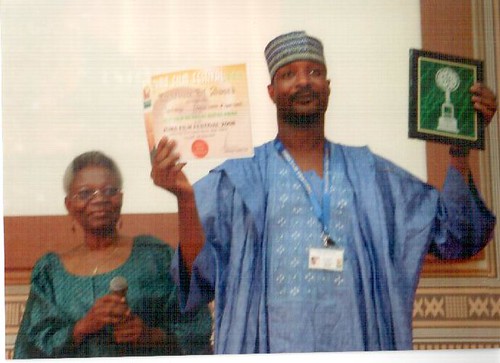
I'm at a desperately slow internet cafe, so these links should serve as the text of this post. Hamisu Lamido Iyan Tama, award winning filmmaker and former gubanatorial candidate in Kano state, has been sentenced to 15 months in prison by a mobile court, for supposedly not registering with the Kano State Censorship Board.
See the details on Abdulaziz Ahmad Abdulaziz's blog article (also published on 1 Jan 2008 in Leadership), on the new blogspot Free Iyan Tama, and Kano State owned Triumph Newspaper.
So anyone reading this from Amnesty International? Human Rights Watch? Any other human rights organization or NGO? This is the time to step up....
See the details on Abdulaziz Ahmad Abdulaziz's blog article (also published on 1 Jan 2008 in Leadership), on the new blogspot Free Iyan Tama, and Kano State owned Triumph Newspaper.
So anyone reading this from Amnesty International? Human Rights Watch? Any other human rights organization or NGO? This is the time to step up....
Image credit from Free Iyan Tama's Flikr Photostream: Iyan Tama in 2007 at the Zuma Film Festival in Abuja, where he won an award for Best Social Issue film. The day after he returned to Kano, and was arrested for the first time for supposedly not registering with the Kano State Censorship Board, although he had a receipt for payment of registration.

Update: And for the best summary of the Iyan Tama case that I've seen so far, see Ibrahim Sheme's blog (an open letter to Governor Shekarau of Kano State) published in Leadership.
Monday, December 29, 2008
Yonder breaks the new and glorious morn
I must admit I have recently been worried about what I can post on this blog. I am discovering more and more people who are following it (either the occasional drop-in or the avid “follower” who I assume gets an email when I make a new post), all of them from very different backgrounds. They say write for your audience, but I’ve got a funny audience. I’ve got Nigerians from the South and Nigerians from the North. I’ve got Americans and a few Europeans. I’ve got academics. I’ve got atheists and agnostics. I’ve got Buddhists. I’ve got Muslims and evangelical Christians, Catholics, Pentecostals. Politically conservative and politically radical. I’ve got people I’ve known since high school, and people I’ve never met except through their comments on my blog. So when I “write what I’m thinking” (the meaning of the title of this blog in Hausa) how careful do I need to be? Can I just write what I want or do I need to issue disclaimers on everything?
I remember the advice of an old poetry professor who said you can’t think about what your family (or others) will think when you write, you just have to write what is true to yourself. But as an academic, I also have a little critic crouched on my shoulder, repeating back to me what my various readers might say to themselves. I worry about the ethics of being “true to myself” when it involves writing about other people or even writing about what I’m thinking. I can’t write as freely as I could if I were writing poetry, which has a certain limited audience, and in the age of internet these posts are far more accessible than my poems ever would have been.
Maybe I should start giving Victorian-type titles or chapter descriptions, and people can choose whether to read it or not.
This one will be:
“A Very Long and Personal Post In which Talatu-Carmen Worries about her Audience and then Muses about the Original Christmas and Christianity in Relation to the Jos Crisis.”
“O Holy Night”
I have been thinking during this Christmas season about refugees and displaced people, poverty and war, about indigenes and settlers and politics. About how many similarities there are between the nativity story and about life here now. Christmas carols leap to life: the darkness of the earth and the sudden burst of joy, the supernatural promise of peace and how “tidings of great joy” were brought to the wretched of the earth—shepherds, peasants, a poor carpenter and his young bride who were moved by imperial decree back to their place of “origin.”
Bethlehem, Nazareth, Jerusalem, outposts in an imperial province. Arrogant Roman soldiers patrolling the streets. Rebels in the hills. The corrupt incestuous Herod family who assassinated each other and who would order the death of children to secure a political post.
In the village of Nazareth there is a young girl promised in marriage. In a Judean town there is the barren wife of a priest. Suddenly the virgin and the old woman are impossibly filled with life.
The rhythm quickens.
A carpenter is heart broken by what seems to be the girl’s betrayal. The old woman believes her, knows, when her own child leaps within her, the mysterious burden her young cousin is carrying before she says a word. Angels come down in dreams. The carpenter believes.
The rhythm quickens.
There is an imperial degree that “settlers” should go back to their place of origin to be counted. A government census is declared. Villagers mutter about the government exercise being a good excuse for officials to take extra kickbacks. What choice do they have? What control do they have over their lives? The carpenter sets off on foot with his tough pregnant little bride for the hundred mile journey. It has been long since his parents or his grandparents had left Bethlehem. There are no family, no friends that they know well enough to stay with. The town is chock full of lost, short tempered pilgrims back in what Rome calls their homeland, and there is no room for hire in the inn. The carpenter and this pregnant teenager must settle for someone’s charity, a room in a poor man’s house where the animals wander in and out, or a stable near the fields.
This is not how most women give birth for the first time. This is not how it is supposed to happen. Mary had seen her cousins give birth, with family around them, sisters and mothers and neighborhood midwives. In Nazareth there would have been clean, soft newly sewn cloths to wrap the baby in. But here she is like a refugee, in a strange town. The only familiar person is this man her parents arranged for her to marry, this man she has only just begun to know. This place they have settled is dirty. Goats and sheep and chickens wander in and out. She does not know where women go to bathe or ease themselves. She is not sure where to find water to wash her clothes. Joseph is an “indigene” of this place, but he knows no one. She had never been in this small dusty village before, although both of their ancestors were buried here.
They are dark days, brutal soldiers, corrupt tax collectors, armed robbers plaguing travelers on the roads. People are suspicious of each other. Rumours fly faster than imperial messengers bringing declarations of new taxes. The Judeans hate the Samaritans and the Samaritans hate the Judeans. The king is a despised Edomite placed in power by colonial overlords. He builds a palace on a distant rock and neglects security and the repair of roads. Religious leaders proclaim their righteousness in the streets, making great displays of their money, while their own parents starve.
The contractions come closer and closer together.
Yet there is this mystery, this insane promise made by angels that makes the tired dirty young couple glow and wonder.
This is the transcendent mystery of Christmas.
The moment of the birth when the earth exploded and all the laws of nature spun topsy turvy.
We Christians believe that God himself was born that cold dusty night in Bethlehem. That God himself burst into the world in the poorest of conditions, to tired displaced peasants who could not even comfort themselves with the warmth of home or family. It is incomprehensible to us—how such a thing could happen. Incarnation--the depth of humility in which the Creator of the Universe sank to emerge into his own creation—as if the author of a book suddenly entered its flat pages or an embroiderer sewed herself into the fabric of her art. The degree of difference between the Roman emporer and the road-weary paupers suddenly becomes miniscule. All the gold and silks and great marble palaces suddenly seem cheap and gaudy compared to what the poorest of the poor saw that night in the dusty ancestral home of David.
The world began to explode around them. The earth could not contain this limitless Being. The night sky burst with light of Presence, just as 33 years later the day would grow dark with Absence.
Shepherds, with their sheep and cattle huddled around them, staggered backwards as the night sky cracked open and stars poured down and music from outside the universe spilled in through the rupture. And it was they, a teenage girl and the manual labourer who married her, shepherds with handwoven hats and cracked heels who first felt the joy. It rippled out from there, an old man and an old woman in the temple who had waited their whole lives to see the prophecy fulfilled, foreign scholars from the East who came on camels bearing gifts for a king, the peasants of Egypt who watched the child as he grew long and slim and began to walk.
And those he touched as he proceeded towards his death: religious leaders, politicians and prostitutes, tax collectors and thieves, fishermen and soldiers, the blind and the epileptic, beggars and rebels, Jews and their hated relatives the Samaritans, colonial Roman overlords, Egyptians, and visitors from the East, those who worshiped him and those who spat on him.
The light of dawn bursts out and the darkness cannot hide it.
But there is so, so much that is wrong—good ripples out and the evil bunches up into pockets of atrocity. The small dusty town of Bethlehem witnesses the birth of an impossible Child, both an indigene and settler, human and God, Creator stitched into his own creation, and the king orders the death of dozens of other children. (How hard it is for a rich man, a ruler of an earthly province, to see the kingdom of God breaking around him like a tidal wave! It is invisible to him)
He thinks he is safe now, protected, like Pharaoh, from children who would usurp him. The Great One dies only months after he thinks he has secured his throne. His son Herod takes his brother’s wife, sneaks into her teenage daughter’s room when he thinks she’s not looking. He is driven mad by nightmares of the prophet he has beheaded yet approves another to be crucified. Another son Herod is consumed by worms that came from inside of him and eat him alive.
Now two thousand years later, these Herods still scheme, unaware of the worms that are eating them alive. They pick schoolgirls off the streets, vacation in Rome with money extorted from peasants, secure bank accounts run by distant colonial lords, pay mercenaries to kill children in the street. The worms eat them. And poor beleaguered people, who keep having to leave their homes, who grow used to gun-wielding soldiers on the roads, are still dazzled with joy at the memory of the song that drifted into our world that winter’s night.
“Blessed are the poor in spirit for they shall see the kingdom of God.”
There is such darkness in the world, and yet there is this unexplained spirit, this beauty that keeps blinding us. We keep surviving. I don’t understand it. But there it is.
Long lay the world, in sin and error pining
Till he appeared and the soul felt its worth
A thrill of hope
The weary world rejoices
For yonder breaks
A new and glorious morn
Fall on your knees
O hear the angel’s voices
O night divine
O night when Christ was born
Glory to God in the highest
And on earth peace
**
“O Come, O Come Emmanuel”
I came into Jos from Kano last week in a taxi full of Hausas from Angowar Rogo. “Kuna Jos lokacin da rigima? Were you in Jos during the crisis?” I ask the two women sitting beside me, as we left Kano. “I, wallahi,” they say beginning to exchange stories of huddling in their houses with their children and other refugees. Coming into Jos, I am stricken by what I see on the road, on the north side of town—what I did not see before because I flew out of the airport in Jos South to Lagos the Wednesday after the crisis. There the blackened outline of the sprawling school for Islamic higher education and another burnt school just before we got to Farin Gada. Rows of burnt and roofless houses and shops. As we pass, I see men bowed in prayer, filling the burnt hull of a mosque. The walls are blackened and broken down on two sides yet they bow, they pray to God.
“There is so much we did not see. There is so much we did not know.” I think. “All we saw were the churches.”
Two days to Christmas, I drive with my parents through Tudan Wada, Katako Market, and Angowar Rogo, taking shortcuts to try to get home before the curfew. Whole streets of shops lie in blackened ruins. They belong to both Christians and Muslims, but the deepest devastation is in Muslim areas.
I read the 2006 Human Rights Watch report on the indigin/settler problem in Nigeria. I'm sure they are oversimplifying some things, but how had I not known that a student could not enter any university in Nigeria without an indigin certificate from somewhere—that there are thousands and thousands of Nigerians caught between here and there, between where they’ve “settled” and their supposed “homeland” where they cannot get indigene certificates either? People who can’t get into schools, can’t get government jobs, who are seen as “settlers” wherever they go? When Jos Hausas go to Kano to make movies they are seen as being “Jos people” coming to corrupt Hausa culture. When they stay in Jos, politicians tell them to go back to where they came from.
Friends (Plateau indigenes and Christians at that) explain details of the elections—how egregiously the elections seem to have been rigged in favour of “indigene” politicians preaching a gospel of protectionism.
Onward Christian Soldiers
Marching into war
One friend tells me he was out at a night spot Thursday night of the election and heard reports from people drifting in that the ANPP candidate has won by a landslide. Then somehow PDP was reported to have won. He tells me about how people on the middle class compound, where most of his neighbors have a university degree, “began to turn into animals before my eyes.” Christians who wanted to kill the few Muslim families who lived on the compound, who only days earlier they were visiting and watching videos with. Young men, his friends from childhood, who called him to come with them to kill and old Hausa man who takes care of horses. Teenage boys and girls who beat to death a Hausa boy who fell off a passing lorry.
This is what Christians have done.
In the name of Christ.
The Prince of Peace.
I begin to understand one of my friends, a Plateau indigene, who converted from Christianity to Islam because of what he saw in the church.
Yet the other stories remain. The “Hausa Muslim” boys who burned churches at 6am on Friday morning, who pulled people out of taxis as they passed on the road and cut off old women’s hands. The Christian girl living behind a nightclub who used her phone to video the mob of young men trying to beat down her door. These stories sit there beside the stories about the young Christian men who killed a fellow Christian night guard who tried to keep his Muslim employer’s property from being burned, beside the stories of young “Christian” men who began to call their friend a traitor when he wouldn’t come with them to kill.
And then there are the stories of what the soldiers did. Christian and Muslim soldiers. Mowing down the young.
Christian. Muslim.
Indigene. Settler.
Fake Soldiers.
Real Soldiers.
Guns. Machetes.
Burned church.
Burned mosque.
Markets burned three weeks before Christmas.
This is the world that Christmas comes to.
The woman at Katako Market from whom my mother bought glass and pitcher sets before the crisis. Her neighbor gives her a few plastic buckets to hang outside the blackened remains of her shop to start over again.
The old Christian Igbo woman whose irrigation pumps are burned during the crisis, who keeps her fields green when her Hausa Muslim neighbors loan her their pumps when they have finished watering their fields.
Christmas comes upon us, unexpected, while houses are still buried in rubble, and refugees whose homes were burned still camp in relatives' houses.
Today, Sunday, the Sunday after Christmas, the last Sunday before the new year, we go to the small cement block community hall where Emmanuel Baptist church is meeting while they wait to begin rebuilding their church for the third time. There are a few streamers and balloons hanging from the ceiling and letters spelling out “Happy X-mas” hung haphazardly on the walls. Women and children greet us warmly. Little girls call out “Aunty Talatu.” The children sit on the floor at the front, while adults squeeze onto benches propped up on stones.
“I’m not happy that we don’t have enough chairs” said the pastor in Hausa, waving the children to the front. He was smiling.
He and his family had gone to the wildlife park with their three children and two foster daughters a week after the crisis to give the children a vacation. While there, they were robbed at gunpoint by men who lay them on their faces and searched in their pockets and purses, said they would kill the children if they did not cooperate.
These are the people who slept on our floors and who sat outside to eat paltry bowls of badly seasoned rice for four or five days. Who had to take baths in cups of water in our bathroom without a drain.
I should not have been surprised by the joy I saw on their faces today. Two days after the crisis started when their service was held at our house, with girls dressed in jeans and mothers in mismatched wrappers, they still sang and danced. They still woke at 5am each morning to pray and sing.
Rejoice, rejoice, Emmanuel,
Shall come to thee, o Israel
Now they wore lace. Their shocked anger had given way to thanksgiving. Most families had gone back to their neighborhoods, to rebuild relationships with old neighbors.
The service is in Hausa. A man comes to the front to exhort the church to remember how Jesus said “If someone takes your cloak, do not stop him from taking your tunic.” He prayed that those whose homes had been burned would be given another. The assistant pastor, an elderly man whose house was burned, leads the singing.
After the exhortations, there are two occasions to celebrate: a baby dedication, and a thanksgiving for a couple married two days before.
The baby girl is prayed over. The drummer beats a danceable rhythm on the newly donated drums. People dance and sing and laugh, laugh, laugh.
The groom, an architect, had been married before. His wife lost their first baby in childbirth. On the road from the village where she had gone to recover, she and her sister were killed in a car accident. Now, two years later, he has married again. The bride smiles and dances as we bring up another offering. The young couple pledges to donate N5000 to help the church buy new chairs. After the service, they pass out a crate of minerals.
So many new beginnings.
See these people who keep coming back.
O come to earth
Abide with us
Our Lord, Emmanuel
The church is a bright bird, bursting out of the flames.
Reborn again and again.
Through the fire and the smoke. Through the gunfire and the raging mobs and the hungry roads and angry robbers.
***
There are those who politic in God’s name.
Those who kill in God’s name.
Those who steal in God’s name.
Those who take revenge in God’s name.
Those who demonize their neighbor in God’s name.
And you can call them Christians and Muslims if you like.
And call it a religious crisis if you like.
A holy war if you like.
If that is what you think God is like.
***
O Come thou rod of Jesse free
Thy home from Satan’s tyranny
From depths of hell thy people save
And give them victory o’er the grave
Rejoice, rejoice, Emmanuel
Shall come to thee, O Israel”
***
But this is what I saw today: Love. Joy. Peace. Patience. Kindness. Gentleness. Self Control.
Angry shock given way to joyful forgiveness.
And this is what I heard, at the end, after we had danced and sung for the bride and the groom and the child.
“May the Grace of our Lord Jesus Christ, the love of God, and the sweet fellowship of the Holy Spirit be with us now and forever more.
Surely goodness and mercy will follow us all the days of our lives, and we will dwell in the house of the Lord, forever.
The church is named Emmanuel:
God is with us.
I remember the advice of an old poetry professor who said you can’t think about what your family (or others) will think when you write, you just have to write what is true to yourself. But as an academic, I also have a little critic crouched on my shoulder, repeating back to me what my various readers might say to themselves. I worry about the ethics of being “true to myself” when it involves writing about other people or even writing about what I’m thinking. I can’t write as freely as I could if I were writing poetry, which has a certain limited audience, and in the age of internet these posts are far more accessible than my poems ever would have been.
Maybe I should start giving Victorian-type titles or chapter descriptions, and people can choose whether to read it or not.
This one will be:
“A Very Long and Personal Post In which Talatu-Carmen Worries about her Audience and then Muses about the Original Christmas and Christianity in Relation to the Jos Crisis.”
“O Holy Night”
I have been thinking during this Christmas season about refugees and displaced people, poverty and war, about indigenes and settlers and politics. About how many similarities there are between the nativity story and about life here now. Christmas carols leap to life: the darkness of the earth and the sudden burst of joy, the supernatural promise of peace and how “tidings of great joy” were brought to the wretched of the earth—shepherds, peasants, a poor carpenter and his young bride who were moved by imperial decree back to their place of “origin.”
Bethlehem, Nazareth, Jerusalem, outposts in an imperial province. Arrogant Roman soldiers patrolling the streets. Rebels in the hills. The corrupt incestuous Herod family who assassinated each other and who would order the death of children to secure a political post.
In the village of Nazareth there is a young girl promised in marriage. In a Judean town there is the barren wife of a priest. Suddenly the virgin and the old woman are impossibly filled with life.
The rhythm quickens.
A carpenter is heart broken by what seems to be the girl’s betrayal. The old woman believes her, knows, when her own child leaps within her, the mysterious burden her young cousin is carrying before she says a word. Angels come down in dreams. The carpenter believes.
The rhythm quickens.
There is an imperial degree that “settlers” should go back to their place of origin to be counted. A government census is declared. Villagers mutter about the government exercise being a good excuse for officials to take extra kickbacks. What choice do they have? What control do they have over their lives? The carpenter sets off on foot with his tough pregnant little bride for the hundred mile journey. It has been long since his parents or his grandparents had left Bethlehem. There are no family, no friends that they know well enough to stay with. The town is chock full of lost, short tempered pilgrims back in what Rome calls their homeland, and there is no room for hire in the inn. The carpenter and this pregnant teenager must settle for someone’s charity, a room in a poor man’s house where the animals wander in and out, or a stable near the fields.
This is not how most women give birth for the first time. This is not how it is supposed to happen. Mary had seen her cousins give birth, with family around them, sisters and mothers and neighborhood midwives. In Nazareth there would have been clean, soft newly sewn cloths to wrap the baby in. But here she is like a refugee, in a strange town. The only familiar person is this man her parents arranged for her to marry, this man she has only just begun to know. This place they have settled is dirty. Goats and sheep and chickens wander in and out. She does not know where women go to bathe or ease themselves. She is not sure where to find water to wash her clothes. Joseph is an “indigene” of this place, but he knows no one. She had never been in this small dusty village before, although both of their ancestors were buried here.
They are dark days, brutal soldiers, corrupt tax collectors, armed robbers plaguing travelers on the roads. People are suspicious of each other. Rumours fly faster than imperial messengers bringing declarations of new taxes. The Judeans hate the Samaritans and the Samaritans hate the Judeans. The king is a despised Edomite placed in power by colonial overlords. He builds a palace on a distant rock and neglects security and the repair of roads. Religious leaders proclaim their righteousness in the streets, making great displays of their money, while their own parents starve.
The contractions come closer and closer together.
Yet there is this mystery, this insane promise made by angels that makes the tired dirty young couple glow and wonder.
This is the transcendent mystery of Christmas.
The moment of the birth when the earth exploded and all the laws of nature spun topsy turvy.
We Christians believe that God himself was born that cold dusty night in Bethlehem. That God himself burst into the world in the poorest of conditions, to tired displaced peasants who could not even comfort themselves with the warmth of home or family. It is incomprehensible to us—how such a thing could happen. Incarnation--the depth of humility in which the Creator of the Universe sank to emerge into his own creation—as if the author of a book suddenly entered its flat pages or an embroiderer sewed herself into the fabric of her art. The degree of difference between the Roman emporer and the road-weary paupers suddenly becomes miniscule. All the gold and silks and great marble palaces suddenly seem cheap and gaudy compared to what the poorest of the poor saw that night in the dusty ancestral home of David.
The world began to explode around them. The earth could not contain this limitless Being. The night sky burst with light of Presence, just as 33 years later the day would grow dark with Absence.
Shepherds, with their sheep and cattle huddled around them, staggered backwards as the night sky cracked open and stars poured down and music from outside the universe spilled in through the rupture. And it was they, a teenage girl and the manual labourer who married her, shepherds with handwoven hats and cracked heels who first felt the joy. It rippled out from there, an old man and an old woman in the temple who had waited their whole lives to see the prophecy fulfilled, foreign scholars from the East who came on camels bearing gifts for a king, the peasants of Egypt who watched the child as he grew long and slim and began to walk.
And those he touched as he proceeded towards his death: religious leaders, politicians and prostitutes, tax collectors and thieves, fishermen and soldiers, the blind and the epileptic, beggars and rebels, Jews and their hated relatives the Samaritans, colonial Roman overlords, Egyptians, and visitors from the East, those who worshiped him and those who spat on him.
The light of dawn bursts out and the darkness cannot hide it.
But there is so, so much that is wrong—good ripples out and the evil bunches up into pockets of atrocity. The small dusty town of Bethlehem witnesses the birth of an impossible Child, both an indigene and settler, human and God, Creator stitched into his own creation, and the king orders the death of dozens of other children. (How hard it is for a rich man, a ruler of an earthly province, to see the kingdom of God breaking around him like a tidal wave! It is invisible to him)
He thinks he is safe now, protected, like Pharaoh, from children who would usurp him. The Great One dies only months after he thinks he has secured his throne. His son Herod takes his brother’s wife, sneaks into her teenage daughter’s room when he thinks she’s not looking. He is driven mad by nightmares of the prophet he has beheaded yet approves another to be crucified. Another son Herod is consumed by worms that came from inside of him and eat him alive.
Now two thousand years later, these Herods still scheme, unaware of the worms that are eating them alive. They pick schoolgirls off the streets, vacation in Rome with money extorted from peasants, secure bank accounts run by distant colonial lords, pay mercenaries to kill children in the street. The worms eat them. And poor beleaguered people, who keep having to leave their homes, who grow used to gun-wielding soldiers on the roads, are still dazzled with joy at the memory of the song that drifted into our world that winter’s night.
“Blessed are the poor in spirit for they shall see the kingdom of God.”
There is such darkness in the world, and yet there is this unexplained spirit, this beauty that keeps blinding us. We keep surviving. I don’t understand it. But there it is.
Long lay the world, in sin and error pining
Till he appeared and the soul felt its worth
A thrill of hope
The weary world rejoices
For yonder breaks
A new and glorious morn
Fall on your knees
O hear the angel’s voices
O night divine
O night when Christ was born
Glory to God in the highest
And on earth peace
**
“O Come, O Come Emmanuel”
I came into Jos from Kano last week in a taxi full of Hausas from Angowar Rogo. “Kuna Jos lokacin da rigima? Were you in Jos during the crisis?” I ask the two women sitting beside me, as we left Kano. “I, wallahi,” they say beginning to exchange stories of huddling in their houses with their children and other refugees. Coming into Jos, I am stricken by what I see on the road, on the north side of town—what I did not see before because I flew out of the airport in Jos South to Lagos the Wednesday after the crisis. There the blackened outline of the sprawling school for Islamic higher education and another burnt school just before we got to Farin Gada. Rows of burnt and roofless houses and shops. As we pass, I see men bowed in prayer, filling the burnt hull of a mosque. The walls are blackened and broken down on two sides yet they bow, they pray to God.
“There is so much we did not see. There is so much we did not know.” I think. “All we saw were the churches.”
Two days to Christmas, I drive with my parents through Tudan Wada, Katako Market, and Angowar Rogo, taking shortcuts to try to get home before the curfew. Whole streets of shops lie in blackened ruins. They belong to both Christians and Muslims, but the deepest devastation is in Muslim areas.
I read the 2006 Human Rights Watch report on the indigin/settler problem in Nigeria. I'm sure they are oversimplifying some things, but how had I not known that a student could not enter any university in Nigeria without an indigin certificate from somewhere—that there are thousands and thousands of Nigerians caught between here and there, between where they’ve “settled” and their supposed “homeland” where they cannot get indigene certificates either? People who can’t get into schools, can’t get government jobs, who are seen as “settlers” wherever they go? When Jos Hausas go to Kano to make movies they are seen as being “Jos people” coming to corrupt Hausa culture. When they stay in Jos, politicians tell them to go back to where they came from.
Friends (Plateau indigenes and Christians at that) explain details of the elections—how egregiously the elections seem to have been rigged in favour of “indigene” politicians preaching a gospel of protectionism.
Onward Christian Soldiers
Marching into war
One friend tells me he was out at a night spot Thursday night of the election and heard reports from people drifting in that the ANPP candidate has won by a landslide. Then somehow PDP was reported to have won. He tells me about how people on the middle class compound, where most of his neighbors have a university degree, “began to turn into animals before my eyes.” Christians who wanted to kill the few Muslim families who lived on the compound, who only days earlier they were visiting and watching videos with. Young men, his friends from childhood, who called him to come with them to kill and old Hausa man who takes care of horses. Teenage boys and girls who beat to death a Hausa boy who fell off a passing lorry.
This is what Christians have done.
In the name of Christ.
The Prince of Peace.
I begin to understand one of my friends, a Plateau indigene, who converted from Christianity to Islam because of what he saw in the church.
Yet the other stories remain. The “Hausa Muslim” boys who burned churches at 6am on Friday morning, who pulled people out of taxis as they passed on the road and cut off old women’s hands. The Christian girl living behind a nightclub who used her phone to video the mob of young men trying to beat down her door. These stories sit there beside the stories about the young Christian men who killed a fellow Christian night guard who tried to keep his Muslim employer’s property from being burned, beside the stories of young “Christian” men who began to call their friend a traitor when he wouldn’t come with them to kill.
And then there are the stories of what the soldiers did. Christian and Muslim soldiers. Mowing down the young.
Christian. Muslim.
Indigene. Settler.
Fake Soldiers.
Real Soldiers.
Guns. Machetes.
Burned church.
Burned mosque.
Markets burned three weeks before Christmas.
This is the world that Christmas comes to.
The woman at Katako Market from whom my mother bought glass and pitcher sets before the crisis. Her neighbor gives her a few plastic buckets to hang outside the blackened remains of her shop to start over again.
The old Christian Igbo woman whose irrigation pumps are burned during the crisis, who keeps her fields green when her Hausa Muslim neighbors loan her their pumps when they have finished watering their fields.
Christmas comes upon us, unexpected, while houses are still buried in rubble, and refugees whose homes were burned still camp in relatives' houses.
Today, Sunday, the Sunday after Christmas, the last Sunday before the new year, we go to the small cement block community hall where Emmanuel Baptist church is meeting while they wait to begin rebuilding their church for the third time. There are a few streamers and balloons hanging from the ceiling and letters spelling out “Happy X-mas” hung haphazardly on the walls. Women and children greet us warmly. Little girls call out “Aunty Talatu.” The children sit on the floor at the front, while adults squeeze onto benches propped up on stones.
“I’m not happy that we don’t have enough chairs” said the pastor in Hausa, waving the children to the front. He was smiling.
He and his family had gone to the wildlife park with their three children and two foster daughters a week after the crisis to give the children a vacation. While there, they were robbed at gunpoint by men who lay them on their faces and searched in their pockets and purses, said they would kill the children if they did not cooperate.
These are the people who slept on our floors and who sat outside to eat paltry bowls of badly seasoned rice for four or five days. Who had to take baths in cups of water in our bathroom without a drain.
I should not have been surprised by the joy I saw on their faces today. Two days after the crisis started when their service was held at our house, with girls dressed in jeans and mothers in mismatched wrappers, they still sang and danced. They still woke at 5am each morning to pray and sing.
Rejoice, rejoice, Emmanuel,
Shall come to thee, o Israel
Now they wore lace. Their shocked anger had given way to thanksgiving. Most families had gone back to their neighborhoods, to rebuild relationships with old neighbors.
The service is in Hausa. A man comes to the front to exhort the church to remember how Jesus said “If someone takes your cloak, do not stop him from taking your tunic.” He prayed that those whose homes had been burned would be given another. The assistant pastor, an elderly man whose house was burned, leads the singing.
After the exhortations, there are two occasions to celebrate: a baby dedication, and a thanksgiving for a couple married two days before.
The baby girl is prayed over. The drummer beats a danceable rhythm on the newly donated drums. People dance and sing and laugh, laugh, laugh.
The groom, an architect, had been married before. His wife lost their first baby in childbirth. On the road from the village where she had gone to recover, she and her sister were killed in a car accident. Now, two years later, he has married again. The bride smiles and dances as we bring up another offering. The young couple pledges to donate N5000 to help the church buy new chairs. After the service, they pass out a crate of minerals.
So many new beginnings.
See these people who keep coming back.
O come to earth
Abide with us
Our Lord, Emmanuel
The church is a bright bird, bursting out of the flames.
Reborn again and again.
Through the fire and the smoke. Through the gunfire and the raging mobs and the hungry roads and angry robbers.
***
There are those who politic in God’s name.
Those who kill in God’s name.
Those who steal in God’s name.
Those who take revenge in God’s name.
Those who demonize their neighbor in God’s name.
And you can call them Christians and Muslims if you like.
And call it a religious crisis if you like.
A holy war if you like.
If that is what you think God is like.
***
O Come thou rod of Jesse free
Thy home from Satan’s tyranny
From depths of hell thy people save
And give them victory o’er the grave
Rejoice, rejoice, Emmanuel
Shall come to thee, O Israel”
***
But this is what I saw today: Love. Joy. Peace. Patience. Kindness. Gentleness. Self Control.
Angry shock given way to joyful forgiveness.
And this is what I heard, at the end, after we had danced and sung for the bride and the groom and the child.
“May the Grace of our Lord Jesus Christ, the love of God, and the sweet fellowship of the Holy Spirit be with us now and forever more.
Surely goodness and mercy will follow us all the days of our lives, and we will dwell in the house of the Lord, forever.
The church is named Emmanuel:
God is with us.
Wednesday, December 24, 2008
O Night Divine... Merry Christmas Eve....
From Jos, where people bend to pray in blackened churches and mosques, and where a few flowers have grown up since the Thursday after the crisis when the rain came to "wash the blood away,"
Merry Christmas.

O Holy Night - Selah
Merry Christmas.
O Holy Night - Selah
Friday, December 12, 2008
My neighbor, my killer, my neighbor, my savior

I have put off writing this for so long—partially because I have not had a lot of internet access—that it will not have the freshness it would have had a few weeks ago, but let me muddle through. Rather than attempt a chronological journal of what happened during the Jos crisis 2008, I’ll rather give some context about what I was doing in Jos and a meditation on some of my experiences, the images that stay in my mind, and the thoughts I had at the time.
Being two weeks (exactly) removed from the first day of the crisis, my experiences are filtered by the ‘noise’ of what has happened since: both the cosmopolitan glamour and press of humanity in Lagos where I flew last week from Jos for the Lagos International Film Festival, the tortuous trip by van/bus back to Kano, the sermonizing and editorializing about Jos and the government response in all the newspapers I’ve read since, seemingly written by people who were not in Jos at the time. Many of the responses leave me mute and conflicted. I don’t know how to respond. My reaction to the crisis is subjective. All I know is what I saw and felt and heard at the time. Perhaps what I heard were all rumours but they were told to me by people, mostly Christians, who had risen from bed and run, been shot at, hid in Hausa Muslim neighbor’s houses, smoke rising behind them.
I had come to Jos from Kano after the election curfew the day before to have Thanksgiving dinner with my family. I hadn’t been planning to come because I was busy, and they were planning to join a big party of Americans on the other side of town. And frankly these gatherings of expatriates make me uncomfortable. I don’t feel at home in them. At the last minute, though, I felt guilty about being only a few hours from my parents on a holiday like Thanksgiving and not going to be with them. So after doing a “practice interview” as I had promised with one of my friends, who had an interview with an international NGO on Saturday, I headed to Na’ibawa car park and joined a taxi going to Jos. There were two Christian non-Hausa women in the seat next to me, and several motherly “Hausa” Muslim women headed to Angowar Rogo, which is the predominantly Hausa settlement close to the permanent site of the university. There was also a very independent and cheeky little boy of about ten years, his only luggage being a leda bag. The driver showed one of the women in the front seat a letter from some official person who asked him to help him transport this “child of tender years” who had been found wandering around Kano back to Jos where he could locate his parents. I’m fascinated by these children who wander the streets of Kano, most of them almajirai attached to some wandering malams. The ones who interest me the most are the independent-minded ones who run about doing errands for people or finding work for themselves—like the ones who serve as conductors in buses. They are tough but cheerful little buggers with cheeky grins and an impressive arsenal of insults. This kid in particular was full of opinions and chatter, jumping around the car as people got in and out. The women around me were half amused, half exasperated, offering him fond motherly admonitions.
We arrived at 6pm about two hours after the election curfew ended, and I went ahead and went to the expatriate gathering and stuffed myself with American Thanksgiving food my dad had saved for me. After we went back home, there was no NEPA, no internet, the battery was down, and the generator was at the repairshop, so we slept early. I woke early on Friday morning, November 28, and couldn’t go back to sleep. Around 6:30am, I was up and my dad led me to the window near the staircase and said “Listen. Do you hear that. Gunshots. Thomas [the caretaker of one of the university guest houses] told me there is trouble in the town… I’m afraid this thing has started up again.” We could hear the pop, pop of shot guns and a little later the ta-ta-ta-ta of automatic gunfire.
After this my narrative will become less chronological, because I did not write it down as it was happening, and it has become a jumble in my mind. There was a lot of time I sat around doing nothing. I should have been writing but a strange lethargy was upon me. I’d wander around, watching people, searching for magazines for people to read, filling pitchers of water to serve.
That first morning, my mother said that since we were all up, we might as well have breakfast, because who knew what the day would bring. I ended up walking up the road behind our house with my dad and Katrina, an American who recently completed her PhD and is living with my parents while she teaches at UniJos. From about 7:30am-10:00, I stayed outside halfway up the private university street with lecturers, undergraduates, residents of the “BQ’s,” a couple of post graduate students from across town who had shown up for exams that morning, watching the events taking place on the main road and the surrounding neighborhoods. Black smoke was rising on almost every side of the university in a wide semicircle, interspersed by white smoke that came from burning houses, churches, and at least one mosque close to one of the petrol stations. The gunfire was intermittent. At one point the gunfire sounded so close that we all started running back toward the houses. I finally settled down on a cement divider by the road with Sabena, who lives behind our house and works as a cook at a boarding secondary school not far from our house. The leaders of the community were trying to round up young men to defend the campus from invaders. A student in his early twenties walked past me muttering, “I don’t want to fight. I’m just three weeks from finishing and starting my life.” My dad later told me about five students he had met sitting between the Protestant Chapel and the mosque on campus. They were living together but thugs had burst into their house and started looting mattresses, clothes. They ran away with only the clothes on their backs. They were lamenting their credentials, their books. Everything. Gone. And without their credentials there was no way of proving they had three years of university behind them. That they had scored high on WAEC. Everything. Gone.
Later we heard of three NYSC youth corpers who were killed. Education behind them. On the cusp of “starting their lives” as the student had muttered as he passed by me… Now killed in a part of the country they were only visiting for a year, in a conflict they knew nothing about…
Refugees were beginning to wander in from outside of campus, women and children, clutching Ghana-must-go bags and mats, many of them in mismatched t-shirts and old wrappers, hair in hair nets. Running away in their night clothes before breakfast or their morning bath.
My dad told me about going up to the university clinic where they were bringing in students and other refugees with gunshot wounds. There was one doctor and two nurses who lived on campus. He told me that when he was treating one patient, the doctor started yelling. It was an old woman whose arm had been hacked off below the elbow, through both bones, dangling only from a bit of skin. “What does an old woman have to do with politics? What does she have to do with anything?”
Later in the day, I went up to the clinic when the DVC asked us to use our digital cameras to document it for the vice chancellor who was out of the country. There was blood dripp
 ed up and down the corridors, young men sitting outside on benches, with bullet wounds in their legs. A woman showed me that she had been shot in the shoulder. She had a wad of cotton stuck to it. There were so many people there that the one doctor could only treat those who were the worst off. The rest, the nurses gave tetanus shots, painkillers, and bandages to put over the metal lodged in flesh. I felt inappropriate taking pictures of people so I focused on the blood dripped on the floor, the bloody wads of cotton scattered about, the bench someone had tried to hastily swab off leaving a swirl of sudsy blood.
But that morning, I sat on the side of the road, chatting off and on with Sabena or the postgraduate students, who tried to explain the politics of the recent election to me, texting friends and journalists I know. By around 10am, the sun was getting hot and it was getting boring. There was the anxiety of anticipation, of wanting to see what would happen, but also the reality that there was nothing really to be accomplished by sitting there. Things would continue to burn. The gunfire would continue. The sun would get hotter. By this time, we heard several reports. That at least 6 or 7 churches closest to the university had already been burnt, more than had been burnt in our area in the 2001 crisis. One of the most poignant is that of Emmanuel Baptist Church, where Sabena attends. This is the fourth time it has been burnt. The church has a peaceful pastor who has emphasized non-retaliation each time it has been burnt. But as I saw over the next few days, since most of the refugees at our house were his parishioners, many of whom had been at my parents house during the September 2001 crisis as well, non-retaliation is one thing, but it does not mean that there is not deep bitter anger that gets deeper and more bitter every time it happens. We also heard that soldiers had come and this made us hope that things would quiet down. (Later we discovered that soldiers had not come until later in the afternoon, and that what we thought were soldiers were actually “fake soldiers” who had obtained uniforms.)
As I walked back to the house, I heard a distant roar from far off loudspeakers, shouting, and the only thing I could make out was “Allahu Akbar.” This moment, as I walked along the strangely deserted street, laundry flapping neglected on lines, represents one of my deepest conflicts as the weekend proceeded. From the first time I had heard gunfire and my dad told me what was going on, I had thought of the Hausa women I ridden down from Kano with and that chatty little boy. They were headed toward Angowar Rogo, where much of the violence was taking place. I wondered if they were running right now? Being shot or macheted down? Having their houses burnt? Had the little boy been caught up in the fighting, or even worse (terrible suspicion born of rumours!) had he, parentless and connectionless, been transported down to take part in the fighting? I had been planning to go into Almah Video near Kwarafa Cinema, in one of the most deeply Hausa parts of town, that day to pick up some more “cocaine” (new films that hadn’t passed censorship in Kano but which I could find in Jos), but thought ironically to myself that I probably wouldn’t be able to go there for a long time now. I worried about my friends near the cinema. What was happening? Were they being killed? Were the cinemas or shops being burned? I had already exchanged worried texts with my friends in Kano, most Muslims, all appalled at what was happening.
And yet there was this shouting, this blasphemous “Allahu Akbar” drifting across campus to the rhythm of machine guns. And there was the smoke of half a dozen churches rising on the horizon surrounding us. As the weekend progressed, our house filled with Christians from Angowar Rogo and Angowar Rimi, Igbo, Yoruba, or Plateau minorities in a majority Hausa Muslim neighborhood (who are nevertheless minorities in the state at large). Some of them with brothers in the hospital, some of them whose houses had been burnt by both thugs and neighbors, and others who had sought refuge with Muslim neighbors before they could escape to “safety” on this besieged campus.
When I heard people saying things like “These people are animals”; “They have no souls”; “My dog is better than them”; words of protest rose to my lips. I did say to a few “not everyone is like this,” “this is politics, not religion”; “Islam does not condone this sort of violence” (and most agreed on the “politics” track); but mostly I remembered how I hated to be preached at the height of my emotion, how I didn’t want to be one of those smug outsiders who condescends to the bereaved. I remembered how I had ended a friendship after September 11th, when from my Brooklyn apartment with ashes blowing through the windows, I emailed to a friend in the mid-West that I hope they found those who had planned this and killed them. My newly-pacifist friend preached at me—why do you want more death? Unless you could look them in the eyes as you pulled the trigger to kill them, you shouldn’t want to revenge death with death. Looking back seven years later, after the disasterous actions taken by the U.S. government after the attacks, I admit that my friend was probably right, but his timing was off. One does not want to hear such pieties when one has just witnessed hundreds of people die in front of one’s eyes. You need that space to shout and be angry, that space to grieve, that space to meditate.
I remembered that as I heard the angry people in my house, clutching the few belongings they had been able to run with. I hadn’t just seen my house burnt or my neighbors looting my shop. I hadn’t just seen my brother shot.
So, I mostly stayed quiet. I don’t know if that was the right decision.
Because I know that words so easily spill over into actions, retaliation, and that most of the deaths in these conflicts are those of innocent people scapegoated by angry people seeking revenge. I know that the majority of the deaths in this crisis were Muslim.
On the first day, especially, I felt like my heart was cracking in two.
Kano. Jos.
Jos. Kano.
Christian. Muslim.
Hausa. Birom.
Youth who make music.
Youth who kill.
Are they ever the same?
They are animals.
They are murderers.
Young thugs.
Old politicians.
They are coming from Kano to kill us.
My love.
I adore you.
My love.
I hate you.
My love.
Christian.
My love.
Muslim
My love.
Hausa.
My love.
Burim.
My love.
Indigen.
My love.
Settler.
My love Kano.
My love Jos.
My love.
I hate you.
My love.
I adore you.
Youth who make music
Youth who kill.
Oh God,
They call your name.
Politicians sitting in their houses
While the young die in the streets.
That night a friend from Kano called, begging me to believe that Islam has nothing like this in it. “Islam is peace. Islam is love,” he said. “This is politics. These are criminals.” “I know. I know,” I say. “It’s the same for Christianity.” The next night he told me someone I know from the studio who is from Jos—Muslim—“they” came into their family compound and slaughtered his entire family, everyone but his grandmother. After that, when people said “they” were animals, I’d tell them his story.
We are all animals.
So easily moved by instinct.
Anger rises in us.
But for the grace of God, there go I.
I think of the spiritual disciplines—how they are preparations for times like this—in a war of spirit against instinct. And after the fact, after the moment, I think of the stories on both sides:
How the Muslim alhaji tried to protect Emmanuel Baptist church until the thugs told him they would shoot him if he didn’t move.
How the Christian man tried to save the house of his alhaji neighbor before the thugs told him they’d kill him if he didn’t move. How the Christian youths DID kill the Christian maigadi because he wouldn’t move….
The many refugees in our house who had been hidden by their Muslim neighbors before they came to our house.
The Muslims hidden by Christian neighbors.
This story that happens over and over during genocide and politicized “ethnic conflict.” Those neighbors who kill and loot and those who protect and hide.
My neighbor. My killer.
My neighbor. My saviour.
There is so much more to tell. I exhaust myself. Perhaps I’ll save the rest for a later post.
At the height of the crisis on Saturday night, we had over 60 people sleeping on the floor in our house, the chairs and couches and tables pushed against the walls to make room for everyone. In our house there were mostly mothers and young children. We sent another 40 or 50 older children and teenagers with Katrina to a guest house my mother helps maintain about a block away, where she searched for towels and sheets to give them a little protection from the cold. On Saturday night, we probably fed 150-200 people. On Friday night and the following nights there were fewer but probably still up to 100 for four or five nights.
We borrowed a big pot, and several women cooked rice over a fire. It was dark by the time they finished. The first couple of nights we used rice my mother had bought to give away for Christmas, and a big bag of grits (ground corn) to make goatee for lunch. The other nights we used rice and beans sent by the CRC mission and 200 pound bag of garri brought by the deputy vice chancellor of the university. We had a lot of people in our house because my parent’s have a large “professorial house” and had sort of been a refugee center in the 2001 crisis as well because of my parent’s friendship with the pastor of Emmanuel Baptist Church. But the entire university, almost everyone in campus took in refugees. There were probably at least 20 extra people in each house, with some having up to 40-50, as well. Some neighbors broke down the door to an unoccupied house, and we later heard that there were 120 refugees piled into it.
An NGO showed up on Monday to give away blankets and mats.
By that time the majority of the people had gone home or to the houses of relatives except those who were afraid to go back because they were minorities in their neighborhood, but my parents tried to distribute the blankets to people who had lost their homes.
I will round up now, and tell some more of the individual stories later. But in concluding analysis, I will react to much of what I have been hearing about this being a “religious” crisis. Of course, it took on religious dimensions, because almost everyone in Jos, in Nigeria, is “religious”—and the “religious” lines often coincide with ethnic and political divisions. But to call it a “religious” crisis is an overly “easy” point to make about a very complex situation. One has to look at the history: precolonial trade, wars of conquest, and migrations, colonial classification and division under “indirect rule,” and post-colonial politics. I have been calling it a “political” crisis, not because I think it was a simple reaction to the elections, the results of which had not even been announced yet when the crisis started, but because it represents a deeper political atmosphere in which power-hungry “godfathers” pay off thugs to kick-start these crisis. It is the thugs and mercenaries who set fire to churches and houses on the first day, then angry people (the “ethnic”/”religious” dimension) take over from there.
The newspaper analysis I have been reading blames the PDP for supposedly rigging the election (since that is what PDP does…) and Governor Jang for announcing that the PDP candidate had indeed won on the second day of the crisis. (Note, however, that the crisis started BEFORE the results were announced.) And this is probably right. PDP is becoming a “swallowing monster,” in the mythical terms of one of my old professors. However, from my observations of the machinations of the ANPP in Kano (where, for example, last month over a hundred film actresses, en masse, went over to the PDP, not because they particularly like the PDP but in protest of the actions of the ANPP Kano government against filmmakers), I can’t think that the ANPP is blameless in this…..
I was going to say more, but I’ve thought better of it….
More later….
Monday, December 01, 2008
Jos Crisis, November 28, 2008
Yes.... I'm in Jos....
I came to Jos after the curfew for the elections had been lifted at 4pm. I hadn't been planning to come but it was Thanksgiving, and I started feeling guilty about not going home for it, since my parents are in the country. So, I arrived in Jos around 6pm. The next morning at 6:30am, my dad told me to come to the window. "Do you hear the gunfire? This thing has started up again." I took this photo around 9am. The compound was surrounded by smoke on all sides--black smoke, tires, white smoke, churches and houses and at least one mosque.
We have ended up having a refugee camp at our house, many of the same people who were here in September 2001. We fed close to 200 last night and have had over 60 people sleeping in the house each night. Fortunately, my mother had bought a lot of food to give away for Christmas, so we had enough rice for a few days and the DVC brought a bag of garri. There are some people staying with us who have lost everything they own. It is a little bit too much to think about.
Things seem to have calmed down now. I am at an internet cafe, but will post more thoughts and pictures when I have a chance, probably once I'm back in Kano.
I came to Jos after the curfew for the elections had been lifted at 4pm. I hadn't been planning to come but it was Thanksgiving, and I started feeling guilty about not going home for it, since my parents are in the country. So, I arrived in Jos around 6pm. The next morning at 6:30am, my dad told me to come to the window. "Do you hear the gunfire? This thing has started up again." I took this photo around 9am. The compound was surrounded by smoke on all sides--black smoke, tires, white smoke, churches and houses and at least one mosque.
We have ended up having a refugee camp at our house, many of the same people who were here in September 2001. We fed close to 200 last night and have had over 60 people sleeping in the house each night. Fortunately, my mother had bought a lot of food to give away for Christmas, so we had enough rice for a few days and the DVC brought a bag of garri. There are some people staying with us who have lost everything they own. It is a little bit too much to think about.
Things seem to have calmed down now. I am at an internet cafe, but will post more thoughts and pictures when I have a chance, probably once I'm back in Kano.
Subscribe to:
Posts (Atom)