Wednesday, June 04, 2008

Back in Naija doing the Obama victory dance.....


and printing out my absentee ballot request.... Whooohooo!!!!

The full text of his speech, which I forgot to get up in the middle of the night to listen to, here....

Pictures courtesy of BBC

Tuesday, May 20, 2008

to my erstwhile readers....

To my erstwhile readers who I'm sure have stopped checking this blog after my long absence,

This is what has been going on in my life since I last posted:

1) I defended my proposal and became a dissertator.
2) I left the university town to stay with my grandmother, while I applied for my visa, bought my ticket, etc.
3) I recieved the news that I did not recieve the big grant I had applied for last year, meaning that I will be a very poor researcher this year.... but I'm still going...
4) I finally recieved my visa from the NY Nigerian consulate--a very nice 12 month student visa. I hereby applaud, praise, and give hearty thanks to the NY consulate immigration section.
5) I bought my ticket and will be leaving the U.S. next week.
6) Somewhere along there, I managed to quite unexpectedly to "meet someone" who was not one of the players in the narrative of my life for the next couple of years that I had thus far written in my head... and have for the past month or so been in the process of negotiating, every night for several hours on the phone, what one negotiates when one meets someone right before leaving the country for a year (and previously secretly hoping that one would be gone much longer than a year), and in the meantime scandelously neglecting all sorts of things I should have been doing. In short, I have absolutely no flipping clue what I am doing.
7) And in the meantime I have becoming more and more concerned about the atmosphere surrounding the film industry in Kano. Hamisu Lamido Iyan Tama, one of the pioneers of the Hausa film industry, has recently been arrested for releasing his film Tsintsiya in Kano without first allowing it to be censored by the Kano State censorship board. Here is a short article from BBC, and a longer more detailed one from Leadership on Ibrahim Sheme's blog. It is a very disturbing situation, and I hope to hear more first hand in a few weeks.

So that's it for now. I'm sorry for the dogon shiru (long silence). I will probably post a little less frequently than I had in the past, especially once I arrive back in Nigeria, but hope to keep the blog fire burning, at least every two weeks or so.

-T-C

Saturday, March 29, 2008

Adam A. Zango's "Tarbiya" from the album "Bahaushiya" that landed him in prison--who has spoiled the youth....?

In the vein of Eedris Abdulkareem's muckraking, yet entertaining, "Mr. Lecturer," Adam A. Zango critiques the elders for the problems of the youth... Why do the youth take drugs? Who is spoiling the young women?

His response to the critique of the "big men" making the rules is that in fact it is they, the elderly and the powerful, who are the problem. I heard this sentiment over and over the last time I was in Kano. I suspect this, along with timing (right after the Hiyana scandal) and the edgy dancing, is why he recieved such a harsh penalty.

This whole album deserves some serious scholarly, activist, and artistic attention--which I intend to write up if I can get a hold of the whole album when I return.

Adam A. Zango's "Bahaushiya"--the song that landed him in prison

Preparing for the defense of my dissertation proposal this coming Monday, I do a little "studying" on YouTube and find the video I have been looking for since last September.

This, ladies and gentlemen, maza da mata, is the song Adam A. Zango was sent to prison for 6 months for.

Apparently, the biggest problem (other than the vigorous dancing, occasionally glimpsed middriffs, and perhaps the shirtless young men?) was that he named the album "Bahaushiya" (Hausa woman), which was seen as "slander" against "all Hausa women," under the censorship laws against slurs against ethnicity, because "Hausa women don't dance like that." Wai.

For more information on this case, see
"How Adam A. Zango ended up in prison"
http://allafrica.com/stories/200710011384.html

"Exodus of Artistes hits Kannywood"
http://allafrica.com/stories/200711050273.html

"Resumption of Film Activities in Kano"
http://xymbollab.org/stories/200802181008.html

"Aftermath of the Nude Video -- Resurgance of Kannywood"
http://allafrica.com/stories/200711120468.html

Thursday, March 27, 2008

Bottom Up Democracy: Barack Obama in Salem, OR, speaks of the differences between him and Hillary Clinton

(Got this from Baratunde's blog)In 5 minutes Barack Obama lays down the main issues that differentiate him from Hillary Clinton. Beginning with a classy note of praise for Ms. Clinton's strengths, he thoughtfully but quickly makes a strong case for how his approach is superior to hers.

Tuesday, March 18, 2008

A More Perfect Union

People,

I'm sorry I have taken such a long break from blogging, and that I have blogged about pretty much nothing else but the American election process the past couple of months as I try to get this man, Barack Obama, who blows my educated cynicism to smithereens, elected.

I was going to write about Dreams from My Father, which I finished on a plane to Atlanta last week, and how it made me hopeful and sad, melancholy and amazed all at one time. Does America deserve a man like this as president? Can we rise above the grubby reality of politics as usual to work together for a common good? Are we ready for this? Is the nation he imagines possible? And what will the presidency do to him?

Today, I was blown away again by his speech "A More Perfect Union," which struck me as about the most perfect description and confrontation of race in America that I have seen in a long time--or at least since I finished his memoir. It indicated an understanding of both white and black America--the "sometimes bawdy humor" the "dancing, clapping, screaming and shouting that may seem jarring to the untrained ear" of the mostly black church I attend, the anger and frustration of those who have to deal daily with ingrained racism in society--the story my pastor has told about how he will never know if the person who demanded his ticket as he walked into a theatre behind his white friends was racist or not, but how such reocurring and repetitive slights rankle for years; the apologetic and curious tone my working-class white Republican aunt took last week as we talked about how admirable Obama is and when she apologized to me for not being able to support him. "I know," I said, startled. I never expected her to, but it made me hopeful to hear how much she liked him anyway. How all the bitterness I've heard in previous years when she spoke of "hypocritical and self righteous liberal" democrats melted away when she spoke of Obama--the wonder and sheepishness in her voice.

Obama consistently resists the easy political binaries that fit into sound bites, and his speech today, in which he critiqued Reverend Wright's controversial statements while acknowledging the good he and his church community has done--the love he has for both his pastor and his occasionally racist white grandmother--was that of a visionary, a wise man, and a poet. But also one who is close enough to the people to see us for who we are.

THIS ultimately is America. This is America in all its complexity and nuance--its mess and its beauty-- its loves and its hates--its anxieties and its hopes--its bitter history and its idealism. Obama respects America by taking his audience seriously. The question is, are we Americans ready for that? Are we ready for open and honest dialogue? Can we handle it? Can we live up to these expectations? Does he tap into our collective hope or is he a prophet who will fall beneath the stones of those who cannot bear to hear Truth?

I find myself praying for politicians these days. For wisdom and strength. For good to prevail. Lord knows I'm being idealistic. But I think He created us like that.

Wednesday, February 20, 2008

Interview with Controversial Playwright Shehu Sani, author of The Phantom Crescent, on Sumaila Isah Umaisha's blog "Everythin Literature"


Having moved out of my apartment last week, I check in to the blogworld from my "cage" in the library where I attempt to finish revisions on my dissertation proposal. Checking through my blog roll, I find a fascinating interview with Shehu Sani, the playwright whose play The Phantom Crescent is critical of the application of shari'a law in Northern Nigeria, on Sumaila Isah Umaisha's blog Everythin Literature. Critics attempted to get a shari'a court to ban the play, and the play is currently "stopped [...] from further circulation, distribution or performance."

Some excerpts from the interview:
"many people have reached out to me from both within and outside the country, that they want to reproduce the Phantom Crescent and that I should even perform it in London, Paris and other places. But I’m not interested in performing in London or Paris, because I want to simply educate and enlighten the people that are here where I come from. I’m not intending to make it a show business kind of thing; I wrote my book to reach out to my own people and to send a clear message and it is here that it should be performed and not anywhere else."
...
"what I will say is that we cannot have laws in a society where the leaders are lawless themselves. We cannot have one kind of law for the poor and another one for the rich. I think for the implementation of Shari'a to be effective certain things are necessary. One, there should be enlightenment and education. Those who are for it and those who are against it must be enlightened. Secondly, there must be a serious attempt to solve the problem of poverty. For instance, if you have money as a government, you have two options; either to solve the problem of water or solve the problem of water borne diseases. They should know it that when you address the problem by providing clean water there will not be water borne diseases. But if you think you can allow people to drink from the mud and then cure those who are affected by the diseases that come from that sources of water, I think you are simply wasting your time. So you must solve the problems that lead people into crimes or else you will only succeed in punishing and jailing people and the problems will not be solved."

Wednesday, February 13, 2008

Vote for those who Can't

Just a quick note. There is a group of young people on Facebook who had the idea, last night, of starting a website with the names and comments of people who can't vote in this election (whether because they are not American or are too young) who would vote for Obama if they could. They have started a blog at http://voteforthosewhocant.blogspot.com/, where you can post comments. Here is what one of the brainstormer/organizers wrote me, when I queried how people could participate:

We just got this started last night, so as of right now, we are simply asking people to send their info (name, age, location - reason they can't vote and reasons they support Obama) to the gmail address! We're already combining efforts to get a website started so we can show the collective global support for Obama!If you'd like to participate, you can also send your ideas to the same gmail address: voteforthosewhocant @ gmail . com. Thanks!!!

In a later email:
Thanks for your support!!! I actually just created a blog for this effort as well. I'm not sure how long it will take to get a website up and running and I thought it was imperative that we get this started. Thanks so much for posting the email address on your blog. If you have the time, we would be so appreciative if you could also reference the upcoming blog:

http://voteforthosewhocant.blogspot.com/

He's electric!


Sunday, February 10, 2008

Frank Schaeffer, Derrick Ashong, and A.N.T. Adaptive

A short post to pull together a few things that have been on my mind lately. Yesterday, I did another first: I phone banked for the Obama campaign calling Obama supporters in Louisiana to remind them to vote. I've always been terrified of talking to strangers on phones, but this was unexpectedly addictive--the feeling of connection with these good, ordinary people, calling in a state that I have an ancestral connection. I let my voice slip in to the slightest hint of the Southern accent that comes when I visit my grandparents who live near Alexandria, Louisiana.... "Hi, my name is [Talatu-Carmen]. I'm calling from Barack Obama's presidential campaign. How ya doin' today? I'm just callin' to see if you've voted yet today in the Loooziana's Democratic primary?" I talked to lot of children, "Momma, she wants to know if you voted? Yeah, she did" and a lot of answering machines with "God bless" at the end. It felt like calling home.

I only had one person who hung up on me, and everyone else said that, yes, they had voted. The most touching moments were the old people (at least they sounded old on the phone). One old man said that he was doing all right; he was just heading to the shower, but, yes, he had voted." An old woman with a Caribbean accent told me that she was at the poll right now. "I just love him. He's my boy." We talked a few minutes about how much we loved Obama, and she seemed almost disappointed when I said goodbye. After 40 calls (many of which had not gone through), I decided I better get back to my dissertation proposal, which I ended up emailing to my advisor around 12:45am.

I have, admittedly, been obsessed with American politics for the past couple of weeks, in part procrastination technique against finishing my proposal and in part fascination with what will go down in history as a very significant primary season, but I have been disturbed by the implication of those who are not supporting Obama that that those of us who do are merely supporting him because of insubstantial emotional reasons. That we support him because we get a high from his inspiring speeches or because "we've drunk the Kool-Aid" to quote Fred--and not because we have done any research on his positions. There is this assumption that Hillary (or McCain or whoever else) is naturally the most qualified candidate, but that Obama's charisma has disguised his inexperience and inability to lead. I've seen these condescending accusations both by Hillary supporters and in acquaintances who are hard-core Republicans. And to be fair to these people, there are plenty of folks going around saying they are inspired, who have not done their research. However, I am not one of those people, and neither are a great many of Obama supporters. (NOTE 8:17pm, See, for instance, this blogger's reasonable and well-thought out take on why he is voting for Obama and the possible drawbacks to Obama's candidacy.) On this blog, I have praised Obama's (and Oprah's) rhetorical abilities. I think such an ability is admirable and a good quality in a leader. It is one reason I am supporting him, yes, but it is certainly NOT the ONLY reason. It would be a patently BAD reason to vote if I didn't have other good reasons. To see his position on issues, see here. I don't stoop to insulting Hillary's supporters saying that they are supporting her only because she is a woman. Why is there this assumption that Obama supporters must have such simplistic reasons?

I do not agree with Obama on everything. I do not think he is the Messiah. I think he will make mistakes, as any president does. And I am worried when I hear certain supporters talking as if once he is president all will be well. All will not be well--not in this global climate--especially not after the past 8 years of irresponsible and even criminal leadership. There are long-standing structural inequalities both within the nation and within the world that need serious attention, thought, and change. And, as Obama has pointed out plenty of times, he can not effect change by himself. He will need his supporters to continue their activism after the election, to continue their volunteerism and their sense of civic duty. Obama, by himself, won't accomplish anything, but I do believe that Obama as the leader of an informed and impassioned populace, a candidate who embraces nuance and who is willing to consider multiple perspectives on a situation, will be able to help shepherd this complex and contradictory country in a new, more positive direction. I believe that he, more than any of the other candidates in this race, will be able to accomplish this.

Some of the things that have fascinated me are the often very intelligent debates going on online--and debates that allow for the discussion of far more complexity than I've remembered in past presidential campaigns where positions of candidates often seemed to be summed up in soundbites. You can't do that with Obama. The reason people think he is a lightweight is because they are only listening to the soundbites. If they actually went online and looked at his positions, If they read his books and the legislation that he has worked on, it would be difficult for them to make such easy accusations. (And here is a remarkable clip of a young Obama supporter (Ghanaian-American musician and actor), Derrick Ashong, who completely bowled over one of those condescending critics who thought he was going to interview "your typical emotional Obama supporter." Completely off the cuff, Ashong responded to this "reporter's" questions about Obama's health care plan showing that he not only had a good reason to support Obama but that he understood the issue far better than the reporter did. I only wish I could be so eloquent.This is a MUST watch. )

I have also been impressed by the multiple facebook discussions on the Obama site. In just one example, there has been a serious and nuanced discussion on abortion on Obama's site--including plenty of Catholics who are pro-choice, athiests who are pro-life, McCain, Huckabee, and Clintons supporters and every imaginable position in between. Of course there are the people who try to shut the discussion down with slogans and cliches, but the discussion has not been shut down.

In part this has less to do with Obama than it has to do with the internet. I think part of the genius of his campaign is that his young supporters have taken advantage of their experience on the internet to campaign in revolutionary new ways from the viral Black Eyed Peas song to the grassroots fundraising of 32 million in one month from 224,000 new voters (including myself) to the 472,947 supporters (and counting, there seem to be about a 100 new sign ups every minute when I'm on there) on Facebook (compared to the 108,485 supporters [and counting much slower] for Hillary). The internet savviness of Obama's supporters compared to the others point to the the way Obama has appealed to a younger generation, while the older candidates practice politics as usual. Clinton has taken a few cues on internet fundraising from Obama's success, although not before she had to loan herself 5 million. (Did anyone else find that rather embarrassing?) The closest comparison in this change of political climate which coincides with new technology and generation I can think of is the televised debates between Kennedy and Nixon---there we go with the old JFK reference again....

Generational variances might also be seen in the widespread support of young evangelical (or other) Christians for Obama. Previously on this blog, I have expressed my frustration with the way evangelical Christians have been objectified and stereotyped in the past by so-called "neoliberals." Well, no longer. We are a populace as complicated as any other. We are also a population that is disillusioned with the way the previous generation fell in line behind ideologues like James Dobson, who conflates being Christian with holding certain cultural and political positions, and politicians who cynically used the "values" vote to gain power and became even more corrupt than those they replaced. We still hold to many of those core values, such as having serious ethical questions about the consumer society of America--a society that thinks it is all right to manipulate human life in such a way as to dispose of or create embryos on demand. I am one of these Christians, who has maintained my belief but disposed of the "evangelical" label because it has lost its meaning. I am one of those Christians who are disturbed by the ethical implications of abortion, stem cell research, cloning, and, yes, even in vitro fertilization, but also the callous way that politico-evangelicals have treated issues of poverty, war, class, human rights, have promoted xenophobia over compassion, profit over care of creation. I am one of those Christians who have realized we cannot afford to vote on a single issue, but who sees in Obama someone who encourages an open space where we can meet together with those who do not agree with us and try to find some common ground. This is the more practical position, much more so than standing at two opposite ends of a room and yelling at each other, which is what the previous partisan politics has felt like. Obama is not perfect, but, in opening that space for dialogue, I think he is our best option. Frank Schaeffer, the son of the legendary Francis Schaeffer and the filmmaker who made those documentaries about abortion with the endless pans of plastic dolls (had to watch them in an ethics class in high school), puts it much better than I could in his essay, "Why I'm Pro-life and Pro-Obama."

This post has turned much longer than I intended, but one last note. One does not expect to find the best hiphop one has recently heard in church, but that's what happened today. One of the musicians in our church today performed his testimony, and I had to go buy his cd (A.N.T. Adaptive) immediately after church. It was timely, relevant, and amazingly good. I have been hitting replay on the cd for the rest of the day. Take for example part of this lyric from the opening song "Ready."

Chorus:
Get ready,
it's about to drop so heavy.
Bumpin in the Lex or the Chevy.
Make sure
every
system got this song on blast,
cause only the truth gone last.
X2

The truth is
my nation is under attack
but not just because of the oil that's under Iraq
because of the fact that a lot of Latinos and blacks
will end up in jail maybe layin' flat on their backs.

The truth is
the rich get richer while the picture for the poor
is sitting there on the bottom floor.
No more health care. We can't get no health there.
Actin' like the sick people chose to put themselves there.

The truth is,
sex sales
so well that it has men buying sex from little girls with pigtails
Maxin' out their credit cards, surfin the net for porn
and the crazy thing is it's been accepted as a norm

The truth is
some kids don't eat every day but your dog do
I ain't tryin to dog you
I thought to address it from the booth
now ask yourself am I telling the truth?
Then holla at the youth...

Chorus:
Get ready, it's about to drop so heavy.
Bumpin in the Lex or the Chevy.
Make sure
every
system got this song on blast,
cause only the truth gone last.
2X

The truth is
too many single moms seen the struggle
Gotta work all day and keep the kids outta trouble
while their baby daddy chillin' with his other baby mommas
Can we learn how to live without all this crazy drama?

The truth is
Martin Luther King had a dream
Racism is alive and well, just behind the scenes
Only forty-five years removed from civil rights
Even Rosa in her death sayin' we still gotta fight

The truth is
are you a Republican or Democrat, homo or hetero,
I'm asking you, you better know, Christian or athiest
I love you, now I'm hatin this.
Can't we come together, it seems like we're still debatin' this.
Throwin up a peace sign or maybe you can raise a fist
and kill all the injustice they get paid to miss,
like being locked up when you're innocent
looked at as guilty
the system is filthy

Chorus:
Get ready,
it's about to drop so heavy.
Bumpin in the Lex or the Chevy.
Make sure
every
system got this song on blast,
cause only the truth gone last.

etc. I don't want to quote the whole thing, but go to the website and listen to it/buy it. I wish the song he performed in church "This is my Story" were on the website, but it's even better than this one...

His performance is just one of those little reminders I have from day to day, whether reading theory on storytelling, listening to 2-Pac, or listening to those old speeches of Martin Luther King, Jr. that make me alternately thoughtful and delighted in my faith. The inspiration may not be anything specifically religious but it suddenly strikes me as TRUTH--something that helps me understand God better and reminds me of the purpose of my own life--how it fits into the larger pattern.

Monday, February 04, 2008

What more do we need in a president?

He can speak, he can imagine, he can inspire.... he can dance and sing.... what more does America need...?

Barack OBollywood

Oprah Winfrey and Toni Morrison on the Creative Imagination

I'm not a bit Oprah groupie, but this was an amazing speech.

"For the first time, we can vote as we believe, and we can do that because that is what the struggle was for.... I have been a woman my whole life, and every part of me believes in the empowerment of women, but the truth is I'm a FREE woman ... and being free means you get to think for yourself and you get to decide for yourself what to do. I am not a traitor [to my gender], I'm just following my own truth, and that truth has led me to Barack Obama."

To those who accuse her of voting on race, she says, "I say that, too , was insulting to me. Don't play me small. I'm not that small... I would never vote for anyone based on gender OR race. I'm not voting for Barack Obama because he's black . I'm voting for Barack Obama because he's BRILLIANT."

Her quotation of Toni Morrison's letter (and I'm a big Toni Morrison fan) sent me to google to read the letter, which I am copying here. I copied the letter from where it was posted on the New York Observer:
http://www.observer.com/2008/toni-morrisons-letter-barack-obama


Dear Senator Obama,

This letter represents a first for me--a public endorsement of a Presidential candidate. I feel driven to let you know why I am writing it. One reason is it may help gather other supporters; another is that this is one of those singular moments that nations ignore at their peril. I will not rehearse the multiple crises facing us, but of one thing I am certain: this opportunity for a national evolution (even revolution) will not come again soon, and I am convinced you are the person to capture it.

May I describe to you my thoughts?

I have admired Senator Clinton for years. Her knowledge always seemed to me exhaustive; her negotiation of politics expert. However I am more compelled by the quality of mind (as far as I can measure it) of a candidate. I cared little for her gender as a source of my admiration, and the little I did care was based on the fact that no liberal woman has ever ruled in America. Only conservative or "new-centrist" ones are allowed into that realm. Nor do I care very much for your race[s]. I would not support you if that was all you had to offer or because it might make me "proud."

In thinking carefully about the strengths of the candidates, I stunned myself when I came to the following conclusion: that in addition to keen intelligence, integrity and a rare authenticity, you exhibit something that has nothing to do with age, experience, race or gender and something I don't see in other candidates. That something is a creative imagination which coupled with brilliance equals wisdom. It is too bad if we associate it only with gray hair and old age. Or if we call searing vision naivete. Or if we believe cunning is insight. Or if we settle for finessing cures tailored for each ravaged tree in the forest while ignoring the poisonous landscape that feeds and surrounds it. Wisdom is a gift; you can't train for it, inherit it, learn it in a class, or earn it in the workplace--that access can foster the acquisition of knowledge, but not wisdom.

When, I wondered, was the last time this country was guided by such a leader? Someone whose moral center was un-embargoed? Someone with courage instead of mere ambition? Someone who truly thinks of his country's citizens as "we," not "they"? Someone who understands what it will take to help America realize the virtues it fancies about itself, what it desperately needs to become in the world?

Our future is ripe, outrageously rich in its possibilities. Yet unleashing the glory of that future will require a difficult labor, and some may be so frightened of its birth they will refuse to abandon their nostalgia for the womb.

There have been a few prescient leaders in our past, but you are the man for this time.

Good luck to you and to us.

Toni Morrison

Saturday, February 02, 2008

Ousmane Sembene on Nigerian video films

I have spent all day reading articles on Nigerian film that I realized I had not yet read and needed to do so speedily before finishing my proposal. Via my library link I was able to get access to a fabulous issue of Film International (2007) 5:4. Most of the articles seem to have gotten beyond the cliched and simplistic haranguing of Nigerian films for not fulfilling some "universal" standard of "quality," and instead delve into the complex and revolutionary contributions Nigerian film is making to world cinema.

However, when I finished reading John McCall's article “The Pan-Africanism we Have: Nollywood’s invention of Africa”, I had to post his postscript, which described what tha Ousmane Sembene, (may he rest in peace), often proclaimed the "Father" of African cinema, recently said about the Nigerian film industry:

I quote from John McCall:
"A few years ago I was fortunate to be among a group of American scholars gathered in Dakar for an NEH Institute to discuss the current state of African cinema. Over the course of the Institute, the question of whether Nollywood movies should be taken seriously became a point of heated discussion. One day we were fortunate to have Ousmane Sembene as a guest speaker. When he completed his presentation, the first question he was asked was what he thought of the new Nigerian video movies. We were all eager to hear what the venerable father of African cinema had to say on this subject. Sembene smiled just a bit, removed the ever-present pipe from his mouth, and said that the Nigerians had found a way to reach the African audience--and that, he acknowledged--was a very great accomplishment. A true revolutionary, Sembene said that the Nigerians had shown the way to reach the African audience, and that African film-makers should rethink their devotion to celluloid film and recognize that video was better suited to the vital task at hand" (McCall 96).

McCall, John C. “The Pan-Africanism we Have: Nollywood’s invention of Africa.” Film International. 5:4 (2007): 92-97.

And, so, my brothers and sisters, I stand vindicated for, in a recent paper, comparing the farcical portrayal of a neocolonial elite in Sembene's film Xala to the farcical portrayal of said elite in Kingsley Ogoro's Osuofia in London, (for those who have seen it think of the "mirror scene" in which the British-Nigerian lawyer begins to lose his accent). I rest my case....

Thursday, January 31, 2008

Just for the record.... drumroll... T-C endorses Barack Obama for president!

Ok, just to get this on the record before I go on another media fast (since I am obsessively following the presidential campaign rather than writing my dissertation proposal, which I've GOT to turn in early next week)... If it has not already been obvious (and to those who are friends on facebook, where I post a new Obama article every hour or so, it's pretty obvious), I'm voting for Barack Obama in the upcoming primaries. I'll try to write more on my reasoning later, but here are two firsts for me.

1) I made my first ever political contribution last week--to the Obama campaign, thus apparently becoming one of the 170,000 new donors to his campaign this month.


2) I am an independent (morally so--disliking the partisanship of American politics I've seen my whole life), so I have never voted in a primary presidential election before. But next week, I'm going to go in and file my absentee vote for the primary (I don't live in one of the Super Tuesday states, and I don't have to register for a party--although I would if I had to).

I watched the debate tonight and thought it was a very pleasant conversation. (And isn't that a great photo...?)Hillary would probably do fine, as a president, and I actually enjoyed hearing her speak tonight. But Obama has a rare fire, and the charisma both (paradoxically) to unify and to shake up the status quo. This is not your everyday candidate...


I'm impressed and moved by how he has built up a grassroots support of independent voters and youth. I support his policy of not taking money from federal lobbysts and his committment to a "clean" and positive campaign. I also am impressed with his experience with grassroots level community activism, and I believe that he, more than Hillary Clinton, can actually rally young voters to continue their activism during his administration. While initially I had hoped that he might have more experience Washington before he ran, I find convincing his argument that being a Washington newcomer is an advantage. While Hillary Clinton has been moving in political circles for the past 20 years or so (and would be yet another dynastic succession should she win the nomination), he has recently been a community activist and had experience at a local level. (The other counter argument, of course, might be that GWB did not come into the White House with much experience...and we don't want a repeat of that. But then again, WHAT exactly was GWB doing before he was a governor? Managing a failing baseball team? Why did people vote for him--was it--perhaps because they looked nostalgically back to his father's time in office and thought that his father's advisors might do a good job helping him lead the country?) And finally (and perhaps this should not be the last reason), I also agree with Barack Obama's positions on the environment, on immigration (more than I agree with Hillary--ie. drivers liscences), his plans to make health care affordable, on his desire to bring a new international diplomacy to the White House.


So, my underlying idealism (always there, deep down) has burst my educated veneer of cynicism about politics and for the first time in my life, I am voting for someone I am excited about, rather than for someone I dislike less than the other guy/gal (and it IS good to have, for the first time, such a strong female candidate, though I'm not voting for her) running. He has made me hopeful about politics--has introduced the startling idea that politics can actually be practiced to bring about positive change, which is, believe me, a transformation from the way I've ever thought about politics before. And this perhaps is at the root of the youth movement behind him. The media has this truism about how youth don't come out to vote. Perhaps the REASON behind this is that for our whole lives (or at least the time we've had to vote) there has been nothing really to rally behind, other than, perhaps, trying to unseat Bush, which is not really a positive reason to vote. It's been the same old politics as usual--always nasty, always partisan, always predictable. Barack Obama represents something new and exciting.

I like him so much I fear to see what American politics will do to him and, of course, I dread the inevitable letdown that people who have claimed him as a kind of messiah will feel when he gets into office and they discover that he is a human being who makes mistakes, but I think the dream he offers is one worth following. Will he establish peace on earth and good will toward men? No. Let me not be blasphemous.

Will he be able to do what he's promised? Probably not altogether. Not by himself, but if enough youth continue the grassroots movement they've begun to elect him, we might be able to bring about some serious change. Maybe. It's worth hoping for, anyway--and it's worth my vote.

Tuesday, January 29, 2008

random blurbs

outside sleet chases hail at a 45 degree angle interspersed with random snowflakes that float above the fray. Above the snow-dusted roof the tips of skeletal trees sway, and curtains of snow sweep from the gutters.

on my cd player, Issa Bagayogo croons to a writable beat, followed by Brenda Fassie.

i attempt to induce my brain to begin labour of a dissertation proposal.

And I wonder about the mandatory charity tax imposed by shari'a in Bauchi....

last night i tried to listen to the state of union address while simultanously skimming a dissertation someone else finished in 2005. I could only make it about half way through the address before my annoyance superseded my desire to be an informed citizen. who were all those idiots applauding and cheering? and has there ever been a president of this country that sounds as absolutely unintelligent as GWB?

Monday, January 21, 2008

Barack Obama Speaks at Dr. King's Church

"Hope is not blind optimism. Hope is not ignorance of the barriers and hurdles and hazards that stand in the way.... [It's] imagining and then fighting and then struggling for and sometimes dying for what didn't seem possible before... Change doesn't happen from the top down. It happens from the bottom up." (21:30, 24:48, etc).
Thursday, January 10, 2008

Review of Measuring Time and Waiting for an Angel by Helon Habila


Coming up for a gulp of air and then down again into the fetid swamp of studying for prelims [comprehensive exams for the PhD]. In addition to typing up old class notes, cramming theory anthologies and seminal books I should have read far before I reached this point in my career, I have been going over various papers I've written so as to remind myself of charachter names and events in all the novels and films and theoretical works I'm supposed to know well enough to write a couple of "robust" essays on next Wednesday and Friday. I re-read this review I wrote of Measuring Time last November alongside the interview I did. But I don't think I ever posted it here.... If you are in Nigeria, you can buy the Cassava Republic Nigerian editions of the novels at any of these venues. I note that Jos is not on the list, despite it being the home of Habila's alma mater, but if you are in Jos, I found copies of Waiting for an Angel at Castro Books across from Modern Bookshop; hopefully, they have Measuring Time there now too. Enjoy:


If you’ve never read anything by the Caine and Commonwealth prize winning author Helon Habila, the first thing to know is that his use of language is exquisite. The second thing to know is that he makes generous use of irony. Although he is a clearly political writer, he questions over-easy assumptions and political binaries. In his latest novel, Measuring Time, Habila continues the project he began in his debut novel Waiting for an Angel—that is to tell history through the eyes of ordinary people.


Waiting for an Angel opens in a prison setting. The imprisoned journalist Lomba is engaged in a battle of wits with the prison superintendent who is extorting poetry from his prisoner in an attempt to impress a woman. If Lomba’s story were told in a straight line, the way it might appear in his prison file, it would be the story of a failure: a student who drops out of university, who loses friends to madness and military violence and the women he loves to other men, a writer who never finishes his novel and whose journalistic career is cut short by his arrest in the slums of Lagos. However, this is not the story that Habila tells. By breaking up and rearranging the linear story of Lomba’s life, he wrests control of the narrative away from an environment-determined fate. The novel starts at the end of the chronological sequence and then circles back to gather stories of other characters in Lomba’s Lagos: a young boy banished from his home in Jos for smoking Indian hemp, an abandoned out-of-wedlock mother, an intellectual in a tragic love affair with a former student turned prostitute, the daughter of a general whose mother is dying of cancer, a disillusioned woman who runs a neighborhood eatery, a man who defies the soldiers on the night of Abacha’s coup, an editor pursued by the police who refuses to go into exile, a legless tailor who dreams of bidding poverty goodbye.

While the form of Waiting for an Angel reflects the frenetic beat of life in Lagos, the small town setting of Habila’s second novel Measuring Time allows for a more meandering pace. Mamo and LaMamo are twins growing up in the middlebelt town of Keti, and they hate their father, a womanizing businessman with political ambitions. They hate him for breaking their mother’s heart before she died giving birth to them, and they hate him for his long absences and his neglect. The twins’ simultaneous desire for revenge and quest for fame ends in their separation. When LaMamo runs away in search of adventure as a mercenary soldier, Mamo’s sickle cell anemia forces him to stay at home, spending more and more time in his imagination. The narrative of Mamo’s day to day life in Keti is rhythmically punctuated by adventure-filled letters from LaMamo as he travels around West Africa. Mamo reimagines events in Nigerian history: the poet Christopher Okigbo did not die in Biafra but instead lay down his gun to travel around Africa with Mamo’s Uncle Haruna. LaMamo enacts Mamo’s imagined story, becoming a soldier-poet who reports from the Liberian war front, and his words capture the spiritual horror and the boredom of war as it is rarely recorded in international news. The twins long for the other: while Mamo imagines adventures beyond the borders of his small town, LaMamo constantly searches for reminders of home in foreign lands.

The narrative of Measuring Time is frequently interrupted by folktales told by Mamo’s Auntie Marina, letters from LaMamo and a professor in Uganda who becomes Mamo’s mentor, excerpts from the memoir of the first missionary in Keti, his wife’s diary, and colonial reports, and the oral histories told by other characters. One of the most remarkable aspects of Habila’s prose is this inclusion of multiple genres alongside a continuous pattern of tributes to preexisting literary works. In Waiting for an Angel, he borrows the character of the prison superintendent from Wole Soyinka’s The Man Died and gives him some of the associations of the folkloric dodo, a dim-witted monster who is often outwitted by the youth he kidnaps. Throughout the rest of Waiting for an Angel he references writers as varied as Ayi Kwei Armah, Ousmane Sembene, Ngugi wa Thiong’o, Franz Kafka, John Donne, and Sappho. Similarly in Measuring Time, he bundles together Plutarch, Christopher Okigbo, William Shakespeare, Wole Soyinka, Alex La Guma, the Arabian Nights and Faust legends, as well as references to oral tales and Nigerian video films. The effect of these competing voices is to open up the boundaries between his fiction and other fictions and historical accounts that lie outside the novel. The illusion of a smooth, progressive, and abbreviated history, such as the Brief History of West Africa that is brought to Lomba in prison (as the Letters of Queen Victoria had been brought to Soyinka in prison) is a false one. Habila’s fictional histories play a function similar to the colonial history the Pacification of the Primitive Tribes of the Lower Niger in Chinua Achebe’s Things Fall Apart in which the district commissioner writes only a paragraph on a man who has been the subject of Achebe’s entire novel. Habila parallels Achebe’s fictional colonial text in Measuring Time with the missionary text A Brief History of the People’s of Keti by Reverend Drinkwater.

It is with these “brief histories” that Habila’s project in both Waiting for an Angel and Measuring Time becomes clear. Mamo is determined to write a history that does not “cut details” as the colonial histories had—a history that tells the stories of “individuals, ordinary people who toil and dream and suffer” (MT 180). The traditional ruler’s story he has been hired to write, Mamo states, is “simply a part of the other biographies…. [that he would] eventually compile to form a biographical history of Keti. That’s what history really is, people and their lives, no matter how we try to manipulate it. It is the story of real people with real weaknesses and strengths and… not about some founding fathers and … even if we want to write about the founding fathers we shouldn’t privilege them, we should place them on par with other ordinary folks…” (225). In Mamo’s subsequent “biographical history,” he writes of his father the failed politician, and his aunt the divorced wife, placing their stories alongside the less than glorious history of the mai, the traditional ruler, of Keti. Every story has its own place alongside the others. When LaMamo returns with a revolutionary fervour reminiscent of Ngugi’s Matigari, the separate lives of the twins blend and become one—LaMamo’s panAfrican experience and his soon to be born child are given into Mamo’s safekeeping and for recording into Mamo’s history of Keti.

Such a history is not merely a radical rewrite of racist colonial histories but an empathetic window into the lives of even the unpleasant characters. The characterization of the prison superintendent in Waiting for an Angel follows Soyinka’s original caricature, but the man is given a more complex psychology. He is a man grieving for his dead wife, a father of a young son. As Lomba realizes when he meets the superintendent’s girlfriend, “The superintendent had a name, and a history, maybe even a soul” (WfA 37). While in Measuring Time, the sleepy-eyed traditional ruler of Keti and his evil vizier take on the typed characteristics of folktale or a video film, most of the characters in Measuring Time are treated with complexity and compassion. When LaMamo calls the old widows who had pursued their father all his life “shameless old women,” Mamo reminds him that “they weren’t so bad… People are just people” (MT 343). And although the missionary Reverend Drinkwater may have misrepresented the history of Keti, his family has become a part of the history of the town. The missionary’s daughters, now old women, live in Keti, tending their parents’ graves. Although they are not Nigerian, they belong in Keti. It is the only life they have ever known.


This concern with multiple perspectives on history is behind what at first glance might seem to be an editorial flaw in Habila’s two novels. When reconstructed in both novels, time doesn’t quite add up. According to the chronology given in “Mamo’s notes toward a biography of the Mai,” the number of years between the installation of the first mai by the British and the current mai should be about thirty two or three years, yet the time period is stretched from 1918 up to the 1980s (MT 238-240). The year-long planning period for the celebration of the mai’s tenth anniversary seems to turn into three. Similarly in Waiting for an Angel, the time between Lomba’s stay at the university and his imprisonment seem much longer than the actual historical tenure of Abacha’s regime. He supposedly meets and falls back in love with an old girlfriend some time after he becomes a journalist. Yet, two weeks before he is arrested (after he has worked at the Dial for two years), another girlfriend, with whom he has lived for a year, leaves him. The times between the two love affairs don’t quite seem to add up.


Placing the novels side by side gives a hint to what Habila is doing here. In Waiting for an Angel, Habila gathers up historical events that happened along a spectrum of ten years and bundles them into the space of a week. Although Nigeria is kicked out of the Commonwealth in November 1995, in the novel, a week after this event, Dele Giwa, the editor of Newswatch Magazine, is assassinated by a parcel bomb on the same day that Kudirat Abiola is assassinated by gunmen. Of course, historically, the two activists were killed ten years apart: Dele Giwa during the Babangida regime in October 1986 and Kudirat Abiola during the Abacha regime in June 1996. The quickening rhythm of disaster in this chapter of Waiting for an Angel parallels the last quarter of the Measuring Time in which Mamo falls into the hard-partying lifestyle of corrupt politicians, religious riots break out, and the quiet town of Keti goes up in flames. Time here is not a mathematical iambic pentameter that can be measured with a clock, but a living fluctuating force that lags behind and loops around to find the stories of multiple characters. It reminds me of the way time acts in Gabriel Garcia Marquez’s One Hundred Years of Solitude or in oral tales and epics. It cannot be diagramed into a dry progression of events such as those found in A Brief History of West Africa or A Brief History of the Peoples of Keti but instead can only be mediated through the memories of those who experienced it. In his afterward to Waiting for an Angel, Habila acknowledges the liberties he has taken with the chronological order of events, “[N]ot all of the above events are represented with strict regard to time and place—I did not feel obliged to do that; that would be mere historicity. My concern was for the story, that above everything else” (WfA 229).


Mamo’s story of Keti, like the story of Lomba in Waiting for an Angel, becomes in miniature the story of Nigeria—not that it can represent all the complex and multi-faceted stories of the nation, but that it offers an example of what can be written: the individual stories of ordinary people living in extraordinary times. Habila layers his work onto that of older writers such as Achebe and Ngugi who rewrote colonial history in their early works, and joins other contemporary Nigerian writers like Chimamanda Ngozi Adichie and Teju Cole whose writing seems similarly concerned with providing entry points into historical events as lived by ordinary people. Measuring Time ends with the performance of a play by church women’s group, both celebrating and mocking the appearance of the missionary Reverend Drinkwater into Keti history. Mamo realizes that through their caricatured performance, they are telling the story on their own terms, invoking a way of life much older than the colonial encounter: “They were celebrating because they had had the good sense to take whatever was good from another culture and add it to whatever was good in theirs: they had done this before when they first met the Komda, and many times before that in their travels and migrations, in times earlier than even the oldest among them could remember. This was their wisdom, the secret of their survival. This was why they were still able to laugh… each generation would bring to this play its own interpretation” (MT 382). This at root is the power of Habila’s work—the ability of humanity to laugh in the face of tragedy—the ability to undermine stories that have been told for you by telling them yourself.

(Update 10 April 2012): To buy the books reviewed here, click on the links below:


Wednesday, January 02, 2008

Kenyan Electoral Crisis

On the ongoing crisis in Kenya: here is a link to a Reuter's article on the Kenyan electoral crisis. Here is a petition created by Wangui wa Goro, Firoze Manji, Mukoma wa Ngugi, Ronald Elly Wanda, King Omoga, Cenya Ciyendi and written by Firoze Manji.

Here is an article written by Ngugi wa Thiong'o about the elections before the election. And here is an article about how PNU party members harassed and violently intimidated Njeeri wa Ngugi, Ngugi wa Thiong'o's wife, and Ngugi's children before Christmas.

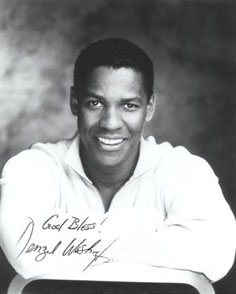
Denzel Washington tells it...


I was taking a little break from my prelims studying a few minutes ago to make some rice and gumbo to eat for the rest of the week, and I turned on NPR to listen to the news, while I was cooking. After the news, Fresh Air with Terry Gross came on. She was interviewing Denzel Washington about his new film The Great Debaters. You can listen to the interview here.


At one point in the interview (around time code 27:10) , she asks him about growing up with a father who was a Pentecostal pastor. Then she asked him if he still belonged to the church (Church of God in Christ [COGIC]), which he affirmed.

Terry Gross then says (around time code 29:00), "I'm wondering if that has even more meaning because you were so brought up in it... since your father---""
And he says, "No it has meaning because it has meaning. Because I believe in the scriptures. I'm a God fearing man who believes what he reads in the Bible, and that has meaning. The meaning that it has is the effect that it has on me, on him [his father] and has on thousands if not millions of other followers. It is our faith in God and our belief in these commandments and in the stories in the Bible...I've read the Bible a couple of times, and I'm working through it again.... I'm now in the book of Romans and listening to the examples and teachings of Paul. The perserverance and the faith that he had in spite of what he was up against... And I'm inspired by those teachings of Paul, of Luke, of all of the apostles, and the great leaders of the Old Testament, as well, obviously, Abraham, Moses..."

Later he says, (around 31:00) "You have to understand. Everything that I've done in my career, and hopefully in my life, is a reflection of my spiritual upbringing and cultivation. I'm not saying I've been an angel all my life. Heaven knows, I haven't.... But you learn. Because I had to go to church, I rebelled against the church, and probably many people out there have gone through that based on whatever negative experiences they may have had. But I can say this to you, whatever success I have, has been a direct result of my faith and the grace of God in my life. period. It's not hanging out with the right people, and it's not studying at some school, or training at some acting school. It's a gift from God, I recognize that. We all have it.

"So, the question is not what you have or what you're going to do with what you have, but recognizing that we all have that gift. It is the grace of God and the gift of God. For some it's acting. Some, it's radio. Whatever your ministry, as they say, is. Understand where it comes from and don't be ashamed of it. If you've had negative experiences in church, (because I'm talking about spirituality and not religion. You know, religion is where man gets ahold of it, and, Lord knows, that's where the problems begin), but if there is something still tugging at your heart, and you're not satisfied, and you feel that there is something there, there IS something there. And don't be ashamed or afraid to continue that search. It led me through all kinds of religions.... One of my favourite books is Siddhartha, you know Herman Hesse's Siddhartha, because it is the journey. And the journey has led me back to the Bible[....]"

Because I need to get back to my books, I won't transcribe the rest of the interview here, but it's a great listen. If you're interested, you can go to the website and listen to it.

What an unexpected blessing and encouragement in a long day of studying!
(And I'm planning to stay away from blogging for the next couple of weeks before my prelims, but I was so touched by this interview that I had to post.)
For the photo credit (Entertainment Weekly, 20-Dec-2002, DETAILS: Best of 2002 featuring Denzel Washington as Entertainer of the Year [photo by Norman Jean Roy]) and bio of the actor, see NNDB.