Saturday, October 07, 2006

"Cyprian Ekwensi at 85" from Daily Champion

Cyprian Ekwensi at 85

Daily Champion
(Lagos)
EDITORIAL
October 4, 2006
Posted to the web October 4, 2006
Lagos

http://allafrica.com/stories/200610040710.html

LAST Tuesday, September 26, one of Nigeria's most profound, versatile, and enduring creative writers marked his 85th birthday.

The birthday was a celebration of a lifetime of excellence not just of literary excellence, but also achievements in areas so crowded that lesser mortal would have found little or no time to think, not to talk of thoughts in writing and book forms.

Between stints as teacher, forester, pharmacist, Board chairmanships, Information, Federal Radio Corporation of Nigeria (FRCN) (1961-1967) and Director General of defunct Broadcasting Corporation of 'Biafra' (BCB) (1967-1970), Cyprian Ekwensi found time to publish about 40 books beginning with Ikolo and Wrestler and The Leopard's Claw, both in 1947.

Ekwensi's most memorable output were, of course, the handful of The Passport of Mallam Ilia. The Drummer Boy, An African Night's Entertainment, Burning Grass and the then scandalous Jagua Nana (1961) that chronicled the adventures, schemings and prurience of urban living with the courtesan nicknamed Jagua Nana because of her volumptious, open-air swagger.

Until Jagua Nana, (1961) Nigerian authors, except in Onitsha-market formats had never openly explored the underworld of modern Nigeria and the socio-cultural dynamics that were imperatively shaping our 20th century post-independence behaviours, and the effects of urbanisation. Cyprian Ekwensi brought this sociological awareness to consciousness of his reading public.

Though, most of his more unpopular works were done before the civil war (1967-70) Ekwensi bounced back with other underground gems of stories like the Samankwe series 1973 and 1975. Many more books including Jaguar Nana's Daughter (1985). Remarkably, Ekwensi is still writing, publishing, running things in general, at 85 years young. Friends and well-wishers (including this Newspaper) had gathered last week, almost reverentially, to honour this resolute chronicler who has enriched the collective memories of Nigerians through his selfless, non-hankering writing endeavours.

The composition, and make up of those who gathered from all over Nigeria demonstrated Ekwensi's cultural spread and acknolwedgement. This is not surprising considering the writer's 'triple heritage' of these great Nigerian cultures by birth and association.

Ekwensi was born in Minna, present Niger State in 1921. He attended Government Colleges in Jos (1931-1936) and Ibadan (1936-1941) and then went to Achimota College Ghana in 1943.

Ekwensi later read pharmacy at Yaba College (as it was then called) and University of London between 1951-1956.

In between this training and re-training Ekwensi taught school at Igbobi College Yaba, (1947-51), lectured at the School of Pharmacy in Lagos and a superintendent of Nigeria Medical Services until 1957. From then, Ekwensi was Head of Features, NBC/FRCN till 1967, as first Nigerian Director of Information (FRCN) 1961-1967 when the civil war broke out.

Ekwensi's relevance as a man may well have depended on the books and stories that he wrote. Nevertheless, the author did equally well in his day-life as administrator, informatist, publicist and businessman.

Ekwensi has lived the fruitful, frill-less life of all sages of history who let their actions speak in their honour rather than speak up for themselves.

Cyprian has not gone un-noticed by his country and international community that have bestowed on him certain honours which include the order as Member Federal Republic (MFR) in 2001, and induction into the Nigerian Academy of Arts in 2005.

All the same there are grounds to believe that the exact worth and relevance of this pan-Nigerian writer whose arresting depiction of our various cultural realities, have been under-stated.

There are speculations that a university chair may be established in Ekwensi's honour. This is all very welcome as ways towards the immortalisation of this author that captured the spirit of his times as well as other renowned practitioners of literacy realism.

Which ever way the argument goes, Cyprian Ekwensi's place in the pantheon of writers that have reported the 20th century to Nigerians, is well assured.

While writers like Wole Soyinka, Chinua Achebe, explored in their works the cultural , political and intellectual realities of the past, and future, Ekwensi showed us ourselves in our natural habitats and how they were shaping our sociology in post-colonial Nigeria.

There in lies the ultimate relevance of Ekwensi to our times. For this, we salute this All-Nigerian writer.

We wish Ekwensi many more years of productive life.


Copyright © 2006 Daily Champion. All rights reserved. Distributed by AllAfrica Global Media (allAfrica.com).


Photos from http://www.cirddoc.org/images/cyprian.jpg
http://caribbeanedu.com/Resources/Media/Photos/Regular/People/sypriane.jpg

Some of Ekwensi's titles:


Thursday, October 05, 2006

happy

Happy. Presented in our departmental graduate student colloquiem today. It was the paper I presented at the conference in Kano, but I am trying to work on it for a symposium in the English Department in two weeks. I love working with film, because when I present on it everyone stays wide awake and laughs and murmurs when I play the film clips (even when the wretched powerpoint projector screws up and goes blank for half of each film clip). It's certainly more entertaining for the audience to get to watch bits and pieces of a film than to hear someone read a paper the whole time. I noticed this positive audience reaction in Kano too; of course, there the laughter and murmuring was much louder and more appreciative. Today, I got some great feedback--plenty to think about. My advisor seemed very interested and offered some good avenues for further research--on music links to C'ote D'ivoire etc. I'm often afraid of him, but he looked as if he were enjoying the presentation and as if he were genuinely interested. I got more of the "fellow-academic" vibe (or at least "advanced student" vibe) than mere lowly "MA student" vibe from him today, which is what I have been working a long time to feel--whether it's all in my imagination or not--it makes me feel better. [I realized recently that the "INFP" personality can be a bit of a drawback in this field; I admit that I am much too sensitive and emotional about some things that are just part of the whole academic process. This is where I need to develop acting skills--be able to "pretend" I don't feel anything for over 40 minutes--right now I can manage about 25 minutes before I know I need to get out or burst into tears] If I can ever get past this MA thesis hurdle, I think I will enjoy working on the whole Hausa film/global influences thing with him.

The only drawback is that I have to cut the presentation to 15 minutes for the symposium in two weeks (it was about 25 minutes today). Everyone offered so many great suggestions, but they will only make it longer. Then the wonderful Prof LH slipped back in after it was all over and I was packing up the powerpoint projector and said "I didn't want to say this during the discussion because you were getting such great content suggestions, but you could cut it down here and here and here and this specific thing and this specific thing might not be necessary for a more general audience." She also said this was about the best presentation she had ever seen me give. I love her!

The new prof. in the department also stayed behind and gave me some good comments, and the oldest (and probably most well known) prof. in the dept. (who had to listen to the presentation in the hallway because he has a big exam tomorrow and scads of students coming to see him about it) called me into his office and gave me some great suggestions for working my ideas on film into a seminar paper for his class this fall.

I'm tired because a lingering illness, but I feel on track and like I'm doing interesting and relevant research. I feel like I'm actually going somewhere. And if this is the best presentation I have given at a GSC so far, it is because I know what I'm talking about, I had some fun visual aids, and I knew how to respond to comments, critiques, and suggestions, even when I wasn't well-read in the specific thing that the person was talking about, because I have so much background in my own area. So, I guess this is how one gradually finds oneself a PhD--not that one is an "expert" in an area, necessarily, but that one seems to know more about it than anyone else in the room. In Kano, of course, I would be the least informed. But that's why I need to just keep going back--so that I can live between and defend my ideas on anyone's turf.

So, NOW, I need to get to work and start trying to cut it back down as LH suggested. I hope I can get it down to 15 minutes...

Monday, October 02, 2006

More on the dam Break in Zamfara from Voice of America

Nigeria Dam Collapse Destroys Hundreds of Homes
By Nico Colombant Dakar02 October 2006
http://www.voanews.com/english/2006-10-02-voa25.cfm

Hundreds of homes have been destroyed in the collapse of a dam in northern Nigeria, but no one is confirmed dead, contradicting earlier reports.
Relief workers gave out water purification tablets in Zamfara state, after floods washed away hundreds of homes and polluted drinking water.
Flood victims sought shelter inside schools, following Saturday's heavy rains, which caused a dam on the outskirts of the state capital, Gusau, to collapse.
State officials contradicted earlier reports from police and witnesses that dozens of people had been killed, saying instead they were missing and most had now been found.
Eric Babajide, a journalist covering the story, says people are still dubious about what really happened.
"I think actually there ...[is] a cover-up because even in the press today all the papers announced it, even yesterday, the same thing," he said. "The governor of that state has already cried for help and this shows really that there is a problem in that state."
There have been other recent incidents in Nigeria in which high-level government officials have initially denied disasters, such as plane crashes, took place or then given completely wrong information about the number of dead.
Babajide says there is general panic over the possible effects of heavy rains in many parts of Nigeria.
"We have a lot of rain everywhere in the country, especially in those areas of the north," he said. "The rain has been very very disturbing and I believe strongly that a lot of damage has been done, not only in Zamfara state, but in the whole north."
Officials say a dam in nearby Sokoto state recently failed to release floodwaters because of a problem with sediment building up.
The government says it contracted a construction firm to look into some of the faulty dams.

Sunday, October 01, 2006

Dam Break in Gusau

(Very worried about my friends here... I spent a few nights in Gusau in August)

Homes washed away as dam collapses in Nigeria
Gusau - Floodwaters from a burst reservoir dam in northern Nigeria have made 1 000 families homeless, but about 40 people earlier feared dead have been found alive, the state governor said on Sunday.Local media had reported Zamfara State Governor Ahmed Sani saying that at least 40 people died after heavy rainfall swelled the reservoir to critical levels, causing the dam to collapse and send a barrage of water through villages."All those missing were later found safe and alive," Sani told reporters."We have over 1 000 families affected and property over three billion naira, but there is no loss of life."The reservoir was the main source of drinking water for Zamfara state capital Gusau.

Published on the Web by IOL on 2006-10-01 23:14:05
http://www.iol.co.za/index.php?set_id=1&click_id=86&art_id=qw1159737304317B252

Saturday, September 30, 2006

Hausa film series notice

The Hausa language group will be starting a Hausa film series starting this coming Monday. We will be meeting every Monday (exceptfor October 16) in VH 579 from 6-8:30pm for the rest of the semester. Many of the films we will be showing are subtitled and are appropriate for a non-Hausa speaking audience. If you are interested in getting an idea of the Hausa language aspect of the Nigerian video-film phenomenon, which is quite different aesthetically and thematically from Nigerian films produced in English, feel free to stop into VH 579 any Monday evening. If you'd like to be put on the email list for updates on what we will be watching, send me an email.

The theme for October will be representations of HIV in Hausa film. We will be starting this Monday (October 2) with the first part of the three part series Jan Kunne, directed by and starring the controversial Sani Musa Danja. The film, which was featured in the Wall Street Journal a few years ago, tells the story of a love triangle between the rakish university student Babangida, the virtuous secondary school student Jamila that he is in love with, and the poor street hawker Mariya, who is in love with him. When HIV/AIDS enters their lives, they are forced to make difficult decisions which lead to unexpected joys.

After finishing Jan Kunne, we will watch Waraka (the Cure) on October 30. This film explores the impact of HIV/AIDS in a more rural setting. Waraka won an award from the Kano State Censorship Board (!) for its carefully researched representation of rural life. Both films are subtitled in English. The schedule for October is as follows:

Oktoba 2: Jan Kunne 1
Oktoba 9: Jan Kunne 2
Oktoba 16: a break
Oktoba 23: Jan Kunne 3
Oktoba 30: Waraka

Jan Kunne 1,2,3. Dir. Sani Musa Danja. Kano: 2 Effects Empire,
Waraka. Dir. Bala Anas Babinlata. Kano: Klassique Films, 2005.

Please feel free to pass this message on to anyone else you think might be interested. Hope to see some of you there! If you can't make it for one or two parts of the series, the films can also stand alone. I will explain what happened in the other parts before we begin each film.

Wednesday, September 27, 2006

strep throat, a lecture tommorrow, and phdcomics

I am very rarely sick, and when I am , I usually just wait it out with echinecia tea and hot lemon juice with honey. But I've had this strange horribly painful sore throat with no other normal cold symptoms for the past two weeks. Someone mentioned strep throat today, and I googled it and I have all the symptoms. Either that or I'm being a hypochondriac, so off to the doctor tomorrow. Even if it's not strep, mabye she can suggest something.

Also giving a lecture on Hausa popular literature and film tomorrow. Should be fun, especially playing Bollywood musical numbers along Hausa musical numbers for the students to compare and contrast. Although I feel like I haven't prepared enough, I will work on it until midnight and then go to bed. I've been staying up too late recently.

Here's an interesting website, I found out about through a GSC newsletter.

http://www.phdcomics.com/comics.php

Tuesday, September 26, 2006

Zazzabi: the Fever


Sani Danja Mansura Isa and Ibrahim Maishunku
(can't get the formatting to work to put captions under pictures--I am so useless at this...)

Zazzabi: Fever
Produced by Auwalu Madaki
Directed by S.I. Belaz
Sa'a Entertainment, Kano, 2005
Starring: Mansura Isa, Sani Danja, Ibrahim Maishunku, Nura Imam, Shehu Hassan Kano, etc.


A doctor who has quarrelled with his eldest son and kicked him out of the house. The doctor's beautiful university-educated daughter, who attracts the attentions of two handsome young men. The spurned son who becomes a policeman. An AIDS test that comes out positive. A murder by strangulation. A dedicated investigator who interviews everyone involved. And a twist at the end that I did not expect.

And a rather amazing song and dance number full of double-entendre:
Part of the chorus that I can type fast enough to catch, with my very bad translation:
Zazzabi ciwo mai zafi, zazzabi ciwo mai zafi
Fever so hot, Fever so hot
Ciwon so, ciwon kauna, zazzabi shi ne a jikina.
Disease of love, disease of passion, it is what is in my body
Zazzabi ya zo jikina, Zazzabi ciwo mai zafi, ciwon so, ciwon kauna, zazzabi shi ne a jikina.
Fever has come to my body, Fever so hot, Disease of love, disease of passion, Fever is what is in my body.

The horribly sad and powerful thing that lingers after all the suspense is over is that in a very non-NGO sponsored way, this film raises questions about this fever that twists paths of love into paths of death. And the fever that overcomes those who are passionately in love can in another context be read as a fever that both come out of passion and makes consumation of future passions impossible. There are no great explanations of how the disease is acquired (although there are hints in one flashback), how it can be prevented, or how one should treat those with it, or oneself if one has it. The filmmakers seem to assume the audience will know all that--which they probably do. Departing from other representations of the disease that I've seen portrayed in Hausa film, the only death in this film is a murder, not a death via AIDS. There are no long suffering scenes, ending in a rattle the throat and a dropped hand. The filmmakers provide no answers, only "what ifs" and leave us with a tremble in a voice, a stricken face, as the chorus "Zazzabi, ciwo mai zafi, Ciwon so, ciwon kauna, zazzabi shi ne a jikina" returns and the credits roll.

Monday, September 25, 2006

Red State: the movie

Currently listening to an interview on WORT with the documentary-filmmaker Michael Shea, who took a road-trip and made a documentary about people in "red states" who voted for Bush. It sounds like a fascinating film...

Here's the link

http://www.redstatethemovie.com/index.php

Sunday, September 24, 2006

Rushdie, Public Mud-hurling, and the agony of cutting down presentations

Currently listening to Jazzman Olofin "Mr Funky." When Tass saw that I had bought it this summer, she immediately started screaming and kidnapped the cd. After she went out and got her own--hot off the press apparently--she gave it back to me.

Today I worked on cutting down the 20+ minute presentation on the representation of women in the Hausa video-film Albashi that I had given at the Mass Media and Popular
Culture conference at Bayero University this summer. I need to cut it down to 15 minutes for a Popular Culture symposium here at the university. It's coming up in a month, and I'm trying to be on time for once. Re-reading it and replaying my powerpoint presentation of video clips, I really liked it. It's hard to cut an 8 page paper down to 5... Then I went back and re-read the conference theme and my abstract and realized that good as it was, the main points weren't really what I was talking about in my abstract for the upcoming conference and didn't really fit with the conference theme, so I decided to start over with the 35 page paper and cut it down to focus more on the elements I had proposed, which of course was a daft idea. arghh...

Finally tired of all that, I started blog-browsing. It's quite enjoyable--people write such clever blogs. I need to start being more clever. One interesting thing I came across was a recent controversy involving Salman Rushdie (what else is new?). He apparently dissed Amitava Kumar at Vassar, who was scheduled to introduce him. Rushdie told the organizers he wouldn't appear on the same stage with him, as Kumar had written some articles critical of him. So, Amitava Kumar wrote about it on a blog, and Salman Rushdie, himself, appeared in the comments section of the blog to continue to wrathfully diss Kumar. I admire Rushdie a great deal--his books appear on my lists of favourites--but was disappointed to see him stoop to such immature pettiness. I suppose fame goes to one's head. http://amitavakumar.blogsome.com/

The internet seems to lend itself to the hasty hurling of insults by otherwise well-respected intellectuals. See also the notorious Ali Mazrui, Skip Gates, Wole Soyinka mud-flinging episode in the West Africa Review a few years ago.
http://www.westafricareview.com/vol1.2/1.2war.htm

Note to self: be careful on this blog not to write things too thoughtlessly. I'm afraid I have the tendency to do so.

ok, well it's late, but because I have a guest lecture on Ado Ahmad Gidan Dabino's novel In da So da Kauna (actually the translation The Soul of My Heart) next week in the class Hausa Verbal Arts in Translation, I need to settle down in my bed and watch the first installment of the 3 part film that I picked up in Kano this summer. I think it would be fun to show the students a few clips--not very long, since there are no subtitles--but enough to give them a flavour of the setting.

Friday, September 22, 2006

ai.... money...

I just spent a great deal of money.

My three year old laptop gave me 6 blue screens before it turned on yesterday. (It has been giving me blue screens every other time I turn it on, but this is the worst it's ever done.) Now I'm afraid to turn it off. I left it on last night. I have a little 2GB flash disk stuck into it, and any time I do any work, I try to copy it over to the flash disk. But I haven't backed up all my photos or music yet--which take up a lot of space and will take up a lot of cds. I also haven't figured out how to back up outlook express or my other email organizing system--which is quite important.

So, in looking on all these deal sites, I see all these cheap laptops, but by the time I add the hard drive space, the memory, the warranty, and the extra strong battery (which this summer I discovered is very important for me) that I want, it propells it up past the mark I thought I wouldn't go. I can't really afford it, according to the budget that I created for this year (I was planning on less)... but I also can't afford to be without a laptop--and if I am going to buy a laptop, then I need to be practical and make sure I'm not just getting a chintzy one because I'm being cheap. I've learned from my current one, what features are important to have--ie. extra strong battery, a lot of hard drive space, etc.

What insideous things computers are. They worm their ways into our lives and we cannot live without them. And then we spend lots of money for something that is ready to die in 3 years.

Thursday, September 21, 2006

thesis turned in....

I turned in my (first draft of my) thesis to my advisor on Monday. I thought maybe after I turned it in, I'd feel a great rush of exhileration and a weight off my shoulders. I wish I had, but I didn't. Instead, I feel worried, and I realize all the theoretical and logical leaps I made that I didn't substantiate or explain or qualify enough. And all the places where I should have made a closer reading of the text--and the horrible, horrible chapter 3, which I just couldn't quite make myself focus on when I got back from Nigeria.

Then, too, I remember how everyone says that my advisor likes "polished" writing, and I am so incapable of producing that until I've gotten feedback on my content. Ideally, I would have liked to have gone to the Writing Centre and gone through the whole thing before turning it in. But it's already been three full years, and I did not want to have it drag out a whole 'nother semester while I "polished." But what I fear the worst is that my advisor who is brilliant and rigorous will destroy all of the major concepts upon which I have hung the thesis.

Worst case scenario: I'll have to completely re-write it.

Best case scenario: He'll say "Carmen, this is good. Improve chapter three in this specific way, tweak this concept in this specific way, add more examples here, and you are done." But I've never heard of him saying such a thing, except to one lucky duck grad student who presented a brilliant and polished paper at our Grad Colloquiem, and whom we are all in awe of now because our advisor praised him highly and didn't say anything negatively critical about his paper. It was a very good paper.

It's at times like these that I realize I shouldn't have made it quite so clear who I am on this blog. I should have masked the city and disguised my name more--and maybe not used pictures. But, really, I suppose my fears are no worse than any other graduate student who is in awe of their advisor. And if a prof. should happen to stumble across it... well, maybe they'll grow nostalic about their own days of angst and uncertainty--if it ever goes away...

Sunday, September 17, 2006

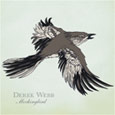
Derek Webb's "Mockingbird" and the angst of the young evangelical


I've just had a conversion, of sorts. My cousin sent me a link to a website giving away downloads of a free cd "Mockingbird" by the CCM musician Derek Webb. I generally steer clear of CCM (Contemporary Christian Music--for those uninitiated into mainstream evangelical youth culture by the Focus on the Family Brio magazine when they were fourteen--"If you like Pearl Jam (which you shouldn't), you'll love [insert name of (obviously quite memorable) CCM musician--so throw out your secular records and start head-banging to God-music...]). In college and after, it was fashionable for English and philosophy majors to disparage such "pretend" music. Continuing on into the "mainstream" world, I've maintained that attitude, though I will admit now, without shame--after my "conversion"--that I retain a fondness for Michael W. Smith's sappy piano numbers and Amy Grant's sing-alongable Christmas album.

I went ahead and downloaded the cd, because it was free, and because I remember sort of liking Caedman's Call, the CCM band Derek Webb used to sing with. After listening to "Mockingbird," I'm wondering if its time to revise those earlier judgments. Why exactly wasn't CCM "real" music? True, it was often shallow, sermonizing, and imitative, but then, so is a lot of other pop music. Justin Timberlake's "Bringing sexy back"--isn't that a kind of sermon or agenda? And sometimes there's a genuine piece that is both touching and catchy. With my renewed interest in popular culture, which as an English major I had suppressed, I see it through a new lens. (The English major vibe: Why read Robert Jordan and Anne McCaffrey fantasies and science fiction, when you should be reading Dostoyevsky, Dickens, and the Bronte sisters? Now certainly, I love those books which have been deemed canonical by the Literary Studieis industry: Shakespeare, Austen, the Bronte sisters, Dostoevsky, Fitzgerald, ... but weren't they also quite popular among their own contemporary audiences? Isn't the whole brilliance of Shakespeare that his plays are brilliant and popular at the same time? Thus the movement towards contemporary cultural theory.)

If CCM gears itself towards a soley "religious," specifically "evangelical" audience, isn't that just as much of an indication that our mainstream culture is split between sacred and secular, which is reflected in the evangelical movement with its frenetic obsession with being "like" popular culture but not "mixed up" with it, rather than there being anything inherently "not quite real art" in singing religiously motivated songs. Certainly it reflects a certain culture, but so does most other popular music. In Nigeria for instance, where people are usually religious (whether Christian, Muslim, or traditional [although traditional does tend to get trampled by the first two]) and thus religion is mainstrain, wildly popular rappers like 2Face Indibia can be singing about partying in track 5, about political action in track 8 and a church-worthy praise song "Thank you Lord" on track 12, and no one seems to think there is any contradiction. There is no farming 2Face off into little Christian stores because of track 12. Similarly, most Hausa (Muslim and Christian) popular music invokes God and moralizes about society and there is no denigration of the "art" of it by secular critics. So, what's going on here?

Well, one thing is that the evangelical movement has been increasingly identified and, in fact, often self-identifies as the political religious right in America, and has commercialized its message so that the mall becomes almost synonymous with church, and the WWJD fad leads into the fad of bashing France with "freedom fries." I've sat through many an uncomfortable academic "let's attack the stupid evangelicals--they're all fanatical Bush supporters" bash session and not said a word--in part because I've done enough of the bashing myself and I know that it is partly true. Yes, I have seen from the inside the equation of being christian with being republican with being a capitalist with going to mega churches with listening only to CCM music and reading Christian romance novels (reading Marx or thinking about postmodernism or voting for a Democrat is of course a sign of either the unsaved or the backslidden) and believing that America is a nation founded on God, and that allowing Terri Shiavo to die after 10 or so years of a vegetative state is a direct contradiction of those principles on which our great country was founded, and that removal of the Ten Commandments statue, put up a few months before by a cranky judge, from a public building is paramount to the martyrdom of the Christians at the hands of the evil Roman empire, which, although corrupted, was also the greatest civilization in the world, and the heart of our great Western society, which as un-pc as this is and that's ok because PC is liberal anyway, is obviously more blessed by God than those pitiable third world countries that just can't get themselves together--because see how things have fallen apart since colonialism...

Yes, I agree. The words and actions of the religious right have done inestimable damage to the public face of Christianity in America, which is why young Christians of my generation tend to be so obsessed with proving that we can be smart, progressive, concerned about social issues, and critical of the religous right.

However, in fact, as I've just hinted at, the evangelical movement is much more complex than its detractors make it out to be, and is rapidly becoming more so as the teenageers who grew up with Focus on the Family, Odyssey radio plays, and Brio Magazine begin to question the teaching of white suburban culture along with the life of Jesus. So, on the other hand, those who take joy in simplistic stereotypes of "idiotic" evangelicals are also mistaken:

Anyone who has bashed the shallow hypocrisy of evangelical Christianity should go to Derek Webb's website and download his free cd "Mockingbird" and listen to it.

Yes, he has the at times strained vocals, the acoustic guitars, violins, and piano that other CCM musicians from back in the day. His music is remniscient of Jars of Clay (whom we all rejoiced over when they had one hit on secular radio) but also sometimes of John Lennon and the British pop idol Robbie Williams (ie. if you like Robbie Williams, you'll love...). Like most CCM music, it is geared towards the evangelical Christian subculture and preaches its share of sermons at it's listeners. But this time it's not "Jesus Freak." Most non-evangelical listeners probably would not get many of the allusions and subtle ironies in the lyrics; however, they might appreciate the sermons because they are saying the same things the critics say about the often lazy and hypocritical Christian right.

Occasionally, the songs slip into the obvious and the tiresomely preachy, but most of them pair the acoustic instrumentation and exquisite minor key harmonies with smart ironic lyrics. Even those that are a bit obvious are still pleasing to listen to, and make an incisive internal critique on the background so many of us come out of.

The messages are unapologetically Christian--and often refer to "the King," to the words of Jesus, or to biblical story and metaphor. He speaks from within the evangelical subculture, which anyone from that background will instantly recognize, but subverts it by juxtaposing the stereotypical "McChristian" language with the words of Christ--digging little jabs at thoughtless suburban creeds. Instead of loudly proclaiming a pround alienation from secular ideals, a la "Jesus Freak", he points to the ways in which the sub-culture is actually profoundly tied to the material obsessions of the "secular" world."

The nice thing about it for me is just this: He can satirize the Christian right while also staying within the broader definition of being evangelical (whatever exactly that means), and his words are usually more gentle than harsh. What I realized tonight is that there is no need to be so strictly vigilant about not identifying myself with evangelicism. It's a culture--one of the many cultures--that I come from. I can criticize and denounce its foolish excesses and its selfish preoccupations, but it is still family and as such, there's a bit of tenderness mixed up in all the finger pointing. And there are a lot of us like this--see Sojourners, see the Harvey Fellows. We are frustrated by the often stupid, insensitive, and plain un-Christian behaviour of the Christian right, but we are also often quietly frustrated by being lumped into a big stereotype if we "come out" as an evangelical-Christian to our non-Christian friends, even when we are somewhat condescendingly considered the "exception," that rare "enlightened" Christian. So, what does that mean about large portions of the global South, who faithfully and un-showily attend church every Sunday, get up at 6am every morning for family prayers, and can quote scripture to put most American evangelicals to shame, while going about their mainstream lives? Case in point a Nigerian video film producer raised Catholic who quoted string after string of scripture to my Muslim hostess when she said some stereotypical things about Christians in Nigeria. What does this mean?

What if the sensitive and intelligent Christian who is both interested in popular culture and committed to something larger than an individual culture is not the exception? What if our integration with our faith and our intellect and our social responsibility is what Christianity is actually all about? What if being Christian IS about being alien--not in stupid ways like wearing WWJD bracelets, which are just another way of fitting in--but in taking to heart such hard teachings as "give away everything you own to the poor and follow me" to "turn the other cheek" to "forgive 70 X 7" to "let those who are without sin throw the first stone" to, yes, "go out and share the good news."

Anyway, enough ranting. Here's sampling of a few of the lyrics. The first one I'm quoting here is my favourite, the second track: "A New Law"

Don't teach me about politics and government
Just tell me who to vote for.
Don't tell me about truth and beauty.
Just label my music.
Don't teach me how to live like a free man
Just give me a new law.
I don't want to know if the answers aren't easy.
So just bring it down from the mountain to me.

I want a new law X2
Just give me that new law.

Don't teach me about moderation and liberty
I prefer a shot grape juice
And don't teach me about loving my enemies
Don't teach me about how to listen to the spirit
Just give me a new law
I don't want to know if the answers aren't easy.
So, just bring it down from the mountain to me.

I want a new law 2X
Just give me that new law.

Because what's the use of trading all you can ever keep
for what you can but cannot get you anything.

Do not be afraid X20 [Admittedly after 20X it's a bit old...]

**

From "A King A Kindom"

"There are two great lies that I've heard.
The day that you eat the fruit of that tree you will not surely die,
And that Jesus Christ was a white middle class Republican
and if you want to be saved you have to learn to be like him.
So my first allegiance is not to a flag, a country, or man..."

From "Rich Young Ruler"

Poverty is so hard to see
when its only on your TV
or twenty miles across town.
When we're all living so good
that we moved out of Jesus's neighborhood
where he's hungry and not feeling so good
from going through our trash.

He says "More than just your cash and coin,
I want your time, I want your voice.
I want the things you just can't give me."

"So, what must we do, here in the West,
we want to follow you.
We speak the language and we keep all the rules,
even a few we made up."

"Come on and follow me
Sell your house and your SUV
Sell your stocks and your security
and give it to the poor."

"Well what is this, Hey what's the deal
I don't sleep around, and I don't steal
But I want the things you just can't me X2"

"Because what you do to the least of these,
my brothers you have done it to me,
because I want the things you just can't give me."


And how stereotypically Christian is this?

"I hate everything (but you)":

"Because it's been one of those kinds of days
and I feel so out of place,
and I hate everything, everything,
I hate everything but you."

Cause no one really understands me baby,if you don't,
so lets not fight, just turn the lights off baby,
you're all I want, yeah.
Because its been one of those kinds of days,
when the whole world is on my case,
and I hate everything, everything but you."

OR

from "Please, Before I go"

"Kiss me once more,
Please before I go,
Just kiss me, sweetheart,
and I won't go no more.
Because I feel a little drunk,
like a man who cannot get enough,
and there's just one thing that can cool my head.

like an addict to his fix
so am I your sweet lips"

of course it is balanced out with the proper Christian, but still very charming sentiment

"wife of my youth
and my drug of choice"


So here is the link for the download:

http://www.freederekwebb.com/pages/index.aspx

Oh, and look at this, after I typed up all those lyrics from listening to them, here they are transcribed on this page:

http://derekwebb.musiccitynetworks.com/index.htm?id=7013

Saturday, September 16, 2006

Carry on with flight plans, ladies from USATODAY.com

As I have about three long-distance weekend trips coming up in the next month or two, I have been starting to worry about this new ban on liquid-toiletry products in carry-on luggage. Usually, for a quick trip, I take only carry-on luggage, which saves quite a bit of time. If I were just visiting friend, I'd probably be ok just borrowing their stuff, but for the conference in San Francisco, I doubt if the hotels will provide things like complimentary facial moisturizer and i don't know if i really want to go out and buy whole new sets of toiletries for a few days. So, I suppose what I'll have to do is just go ahead and start checking stuff. arghh... Here's an article I found on USA today with suggestions... doesn't help me a whole lot since I rarely wear makeup... (couldn't even find it before i left for nigeria, so didn't take any--which i later regreted when i had cameras on me...) It also doesn't give suggestions for shampoo, which I do need... but interesting to think about, just in case, anyway.

(WHOA, a plane just flew overhead and sounded like it was about ten feet above our apt. building. I have never heard one so loud or low here before....) OK, here's the article. Now back to the work that I should have been doing all day...

...............................................................................................................................................................
New carry-on regulations have left female fliers in a cosmetics conundrum. With common products banned, USA TODAY's Colleen Clark went in search of liquid-free alternatives, from foundation to face wash. A sampling:


La Femme

Leave it: Liquid mascara

Pack it: La Femme cake mascara

Why it flies: Harking back to a more glamorous time for makeup � and travel � the '40s-style cake mascara is still a favorite of pros. Glide a moistened brush across the compact, and it'll go on just like your tube version.

The damage: $6.95 at Amazon.com


USA TODAY

Leave it: Liquid foundation

Pack it: NARS powder foundation

Why it flies: Oil-free formulas such as this one by NARS can be applied sheer as a powder; unlike some other powdered makeup, you can use a moist sponge for better coverage.

The damage: $45 at Sephora


USA TODAY

Leave it: Perfume and cologne

Pack it: Bvlgari Oshibori au th� vert

Why it flies: Towelettes are OK to carry on, the TSA says. Bvlgari's perfumed cotton cloths come individually wrapped. The unisex scent has soothing notes of green tea and bergamot.

The damage: $25 for 12 towelettes at Sephora


USA TODAY

Leave it: Face wash and moisturizer

Pack it: Dove Cool Moisture cleansing cloths

Why it flies: The new rules bar moisturizers and liquid cleansers. These dry cloths foam up with a few splashes of water.

The damage: $5.99 for 30 cloths at CVS


USA TODAY

Leave it: Sunscreen

Pack it: Eau Thermale Av�ne tinted compact

Why it flies: Step off the plane sun-kissed and beach-ready with this SPF-50 bronzer. Tucked into a sturdy compact, it comes in a TSA-approved pressed-powder format.

The damage: $17 at CVS


USA TODAY

Leave it: Toothpaste

Pack it: Oral-B Brush-Ups

Why it flies: A toothbrush and paste in one, these dry, textured teeth wipes cleanse the mouth, freshen breath and work water-free. They come six to a pack, perfect for distributing to seatmates.

The damage: $1.89 for 6 at CVS


Find this article at:
http://www.usatoday.com/travel/flights/2006-08-17-travel-makeup_x.htm
Updated 8/18/2006 9:35 AM ET

Friday, September 15, 2006

"A Hymn to God the Father" by John Donne

Exhausted. Have been up most of the night for the past three or four nights trying to get my thesis in shape to submit to my intimidating, rigourous, and brilliant advisor. Have also been embarrassed thoroughly in front of my dept. when someone bcc-ed the faculty list on a first draft of a petition I was circulating among the grad students for (later, after extensive editing) submission to the faculty.

But it seems to all be ironing itself. I sent an apology and the final draft of the petition to the chair and my advisor. My advisor copied the polite and complimentary final draft to the rest of the faculty who had earlier gotten this manifesto-ish rah-rah-let's-rally-the-students-and-fight-for-our-rights petition meant for the eyes of the students only. (It actually wasn't that bad and didn't say anything the students haven't been saying among themselves for years. The only damning paragraph was a brief statement, which I will copy here. "Since the department often does not seem to take into consideration the wishes or needs of the graduate students in offering required courses in a timely fashion or in offering courses which meet requirements or general practical interests, I figure the only way to make a difference is to take a collective stand. It may not work, but it doesn't hurt to try and create a more powerful voice for ourselves in the department. " I stand by the statement, but I never would have said it directly to the faculty in that way--one approaches these things with a bit more caution when one is speaking to ones superiors.

I'm still embarrassed, and have learned the important lesson that one must never write in an email what one would not like the whole world to see, as it is so easy for an email to get forwarded/bcc-ed/whatever. (A bit ironic, then, that I am copying the damning paragraph on my blog which IS open to the whole world. I figure once it's out there, let it be out there.) But, apparently, it is promoting dialogue amongst the faculty and hopefully later amongst the faculty and students, and that was the intent--although I never wanted to come across as a rabble-rouser. I'm usually quite diplomatic (I've often been called a "politician" for my tendency to straddle the fence and see both sides of an issue), but I have this great flaw of getting angry when I see "injustice" (which admittedly is sometimes just my own interpretation of injustice in a structure), whether to myself or to others, and then tend to act out passionately rather than wisely (the flaw would be the action not the anger), which usually comes back and bites me. ai, ai, ai...

As I sit here editing and deleting footnotes in my thesis, I did a brief search for a citation for another poem by John Donne, and came across this hymn, which so beautifully expresses thoughts I've had recently. I've got to read more Donne.

201. A Hymn to God the Father

WILT Thou forgive that sin where I begun,
Which was my sin, though it were done before?
Wilt Thou forgive that sin through which I run,
And do run still, though still I do deplore?
When Thou hast done, Thou hast not done; 5
For I have more.

Wilt Thou forgive that sin which I have won
Others to sin, and made my sins their door?
Wilt Thou forgive that sin which I did shun
A year or two, but wallow'd in a score? 10
When Thou hast done, Thou hast not done;
For I have more.

I have a sin of fear, that when I've spun
My last thread, I shall perish on the shore;
But swear by Thyself that at my death Thy Son 15
Shall shine as He shines now and heretofore:
And having done that, Thou hast done;
I fear no more.

http://www.bartleby.com/101/201.html

Tuesday, September 12, 2006

September 11

I was going to try to post this when it was still September 11, but perhaps it is appropriate that instead of my memories of five years ago when it felt like the world was coming to an end, that I posted the article on the environmental disaster in Cote D'Ivoire--a reminder that the tragedy in New York was not the tragedy to end all tragedies and that there are still abuses and disasters that go on every day around the world--that are often lost and overwhelmed by the loud lamentations of America.

That's not to say that the events of that day were not horrific, and that the loss of life on that day did not have a lasting impact on their families our nation.

My memories of five years ago are still vivid. The blue, blue sky, the warmth of a perfect late summer day, the gaping holes one high one low in the silvery towers where the smoke roiled out, billowing in a stream over Brooklyn, the sound of voices shouting into bull horns over the water. That ripple of white smoke down the first tower, I thought that I had just seen about 20,000 people die before my eyes.

I was in Bay Ridge, Brooklyn, about 5 blocks from my apartment where I had been packing up to go to Nigeria on the Fulbright. When we heard about the planes crashing into the buildings on another radio station (there was a staticky empty place on the dial where NPR usually was), Ruth had (daftly) headed off to work on the subway, despite all my protests. "No, no, I have an important meaning. I'm not going into Manhattan. I'll be ok." she said. We later joked about the insanity of her work ethic.

I ran down to the water to be, I now admit, a tourist to the latest world news. At that time, we didn't realize how serious it was. I stood there in the sun with the other people on the pier, mouth open, thinking of the Will Smith movie "Independence Day." I read now that everyone felt like they were in a movie, and I suppose I was caught up in that communal imagination. All of my actions felt staged, fake. When the ripple of smoke first traveled down the side of the right tower (right from our direction) and then the large white cloud covered everything, I thought another plane had come and fallen down, until I heard the people around me screaming that it was down, the building had fallen.

People have asked if I heard the sound of them falling. I cannot remember any sound. Later there were the bullhorns, people shouting illegible words over the loudspeakers. I cannot remember sound when the building fell. I do remember people saying, "Oh my God, he's going to go to War." And I remember wondering if I had just seen Job die--thinking that I probably had, and so this is what it is like to have a friend die (later found out he wasn't even in the towers just in the World Trade Centre complex in buildings nearby)--thinking that it was impossible for people to actually go down that many stairs.

When I covered my face with my hands, I felt like I had to pretend that I was devestated. I felt nothing but a kind of horrified excitement--an awareness of my body, and where my hands were, and of the people around me. "I just saw my friend die," I said melodramatically in a high pitched voice, stagily to the silent couple behind me, and left, hands on my forehead, making myself hyperventilate a little. I felt nothing. I acted like I did.

I had run down to the water, but I walked slowly back to the apartment. On my way back, I met the construction workers who had been on a roof of a brownstone I had passed earlier. They were running toward the pier. One of them dropped his helmet. "Just leave it," his friend yelled. They ran passt me. I continued up the street. One lone construction worker was left on the roof. He sat there, staring blankly. The streets were strangely deserted. I heard radios and TVs blasting out of open windows. By the time I got home, I heard them announcing on the radio that the second tower had fallen. I lay on my bed for hours--the sun traveling over my body, the radio loud. I eventually got through on the phone to my aunt in Georgia, crying. (Now she gives me 9-11 memorials every Christmas.) Ruth came back in the early afternoon while I was in the shower. The subway had stopped and she had walked back 70 blocks through the blinding gritty ash that blew across Brooklyn. She had to go into a deli and get a napkin to cover her face. She walked beside a man who had walked from downtown Manhattan and who was heading to Staten Island.

I don't know what I did for the next few weeks. For a few days, we just stayed in the apartment listening to the radio all day long, listening for news of survivors. That first night it was Ruth, and I, and our friend Erykah who had been staying with us while she tried to find a job. I think our friend Betsy and her friend also came and stayed the night. We didn't want to be alone. Eventually after a few days, they went back to work. I had quit my editing job a few weeks earlier to pack in preparation for Nigeria. I ventured out a couple of times to the subway where whole walls were covered with missing posers, the parks where little shrines with candles had been set up. The city felt very tender. Everyone was gentle with eachother. I looked after our landlord's children a few mornings (their parents were editors at major newspapers). When I went looking for boxes, the boy in the Rite Aid found me some and then offered to help me carry them home.

A week later, a fireman's funeral went by on 3rd avenue. The street was filled with bagpipes. I felt both cut off and connected. I did not want to leave New York.

But I did.

In Jos, there was a dusk to dawn curfew. My parents had lived through a political/ethnic/religious/whatever crisis that had started three days before 9-11 and lasted about 4 days after. They had a refugee camp of around 200 people in and around the house. They heard about the World Trade centre from a professor on campus who had CNN. There were no phones then, but they figured I was probably ok.

At home, I slept a lot for the first few weeks. I dreamed a couple of times that I was on the pier and that a missile came and blew me away with another fellow. But somehow we survived and ended up at a party together with the terrorists. They looked sheepish and apologetic, and we were all polite to each other.

After 9-11 my parents invested in a dish to pick up free Saudi Arabian satellite TV and I would spend hours watching Arabic-subtitled CNN. I was obsessed with the news of the clean up efforts, the new pictures of downtown New York. Until after a while, it began to feel like there was just a little bit too much news coverage, a few too many memorials. People around me told me stories of where they had been during the Crisis, of loved ones who were still missing. The U.S. embassy brought to the University of Jos a photo exhibition by a New Yorker photographer of the tower rubble, the volunteers; the flags hanging slantwise in morning sun, the strange beauty of the collapsed rubble, like a ruined cathedral. They were beautiful photos. I was hungry to see New York healing. But as I stood beside all the Jos folks shaking their heads and murmuring about how terrible it was, I felt a little uncomfortable. When would Nigeria send around the world an exhibition of the Jos crisis in which nearly 2000 people were killed? It wouldn't happen. News of the crisis hardly even registered with people in Port Harcourt during the Association of Nigerian Authors convention in November. Their theme was the crisis in the Niger Delta, and discussion of that occupied most of the public airtime.

So, while I was hungry for the photos, I also began to feel a profound dis-ease, about flows of information, about priorities for world grief, about the implied importance of recognizing one disaster in daily and then monthly and then yearly memorials--whereas the other ones faded into individual stories of the families who had finally found their father washed up on a river bank a few kilometres away--about those who had never found their loved ones but figured they must be somewhere in the mass graves out by the barraks--the soldiers just shoveled bodies in.

There are no large memorials, no loud speeches, but the echoes and reverberations are still trembling in Jos. Jos is different now, my friends in Kano tell me, we're afraid to go there now. And my friends in Jos tell me that they are trying to teach their children their own languages now because they don't want them speaking Hausa anymore. The mutual resentment hangs thick in the air. There are more armed robberies these days, and a few evenings before I left to come back to the U.S. our neighbor went missing, the former deputy vice chancellor, the last time he was seen was around the NASCO biscuit factory around 9pm at night. He was coming back from a condolence visit to the family of a woman in his church who had died in childbirth. They haven't found his car and they haven't found a body. You never know with all the politics these days, they say. But why him? He had no political ambitions.

So, it is now September 12, 2006. It is 2:21. I am 29 years old. The rain whispers outside, a low background static. The earth is big, the world is small. It erupts into explosions, and it rains for days at a time. In a month it will probably be snowing. The sun has not stopped. The stars still come out. Planets still hurtle through space, as they always have. Names change. Theories evolve. Light from other galaxies take centuries to reach us--just one blink and we're gone.

Monday, September 11, 2006

From H-Net Africa: FYI: Catastrophe ecologique et sanitaire a Abidjan (English translation)

The following message was posted on H-Net Africa this morning by Allen Roberts at UCLA.

Date: Thu, 7 Sep 2006


[Editor's note: The statement from Greenpeace below was
posted in French on H-Africa. Since it may be of
interest to many anglophonic readers Allen F. Roberts,
UCLA was very kind to translate it: MANY THANKS! In the
meantime news spread that at least 4 persons are dead
and more than 3000 intoxicated...]


400 Metric Tons of Toxic Waste Spilled in Abidjan


Abidjan, 06/09/2006

An ecological aand sanitary catastrophe has occurred in
the economic capital of Cote d'Ivoire, where 400 metric
tons of highly toxic waste have been spilled by the
"Probo Koala," a Russian ship under Panamanian flag and
hired by a Dutch company. The current toll: two dead
and hundreds of persons affected (_intoxiquees_ or
"toxified" in French).

Having left Spain several months ago, the "Probo Koala"
sailed for a long time along the African coast before
landing to be cleaned on 19 August 2006 in Abidjan, the
largest port of west Africa. The liquid to be
dumped--sediment from oil refining--is rich in organic
materials and very toxic sulfrous elements (hydrogen
sulfide, H2S, and something called "mercapans")--has
mysteriously been labeled "used water," which allowed
it to be treated.

"This double infringement of international law has
permitted Cote d'Ivoire to be used as a rubbish bin
(_poubelle_)," declares Yannick Vicaire, who is the
head of Greenpeace of France's campaign against toxic
waste. First, the London Convention concerning the
immersion of waste, and then the Basel Convention which
prohibits transfer of dangerous waste between countries
of the OCDE and countries that are not in the OCDE.

The toxicity of the 400 metric tons spilled in this way
in several places in Abidjan was only discovered after
the ship left the country without incident, headed for
Estonia. The spreading of these 400 metric tons of
highly toxic materials in Abidjan is beginning to have
serious repercussions on local inhabitants. Two girls
have died and more than 500 people have already gone to
hospital suffering from diarrhea, respiratory problems,
headaches, and chest pains.

"We are leading investigations to understand when and
how this waste was reclassified and who is responsible
in the chain (_cascade_, literally "waterfall") of
businesses and (public) services who have, at one time
or another, been responsible for this waste," concludes
Yannick Vicaire. "It seems that none of these parties
was unaware of its dangerous nature."

Greenpeace considers that Spain, as the country that is
an OCDE member and where the waste was produced, is
responsible for decontaminating the polluted zones.

-----------------------------------------------------
Ceci est un communiqué de presse de Greenpeace
http://www.greenpeace.org/france/news/400-tonnes-de-dechets-toxiques

400 tonnes de déchets toxiques déversés à Abidjan

06 septembre 2006

Abidjan, International - 06/09/2006 -Catastrophe
écologique et sanitaire dans la capitale économique de
la Côte d'Ivoire, où quatre cents tonnes de déchets
hautement toxiques ont été déversés par le Probo Koala,
navire russe battant pavillon panaméen et exploité par
une société hollandaise. Bilan actuel : deux morts et
des centaines de personnes intoxiquées.

Parti d'Espagne il y a plusieurs mois, le Probo Koala
aurait longtemps navigué le long des côtes africaines
avant d'accoster pour une vidange, le 19 août, au port
d'Abidjan, le plus grand d'Afrique de l'Ouest. Le
liquide à vidanger - des boues issues du raffinage
pétrolier, riches en matière organique et en éléments
soufrés très toxiques (hydrogène sulfuré, H2S et
mercaptans) - aurait alors mystérieusement été notifié
sous la qualification d'« eaux usées », ce qui permet
de s'affranchir des exigences de traitement.

« Cette double violation fragrante du droit
international transforme la Côte d'Ivoire en un
pays-poubelle, déclare Yannick Vicaire, responsable de
la campagne Toxiques de Greenpeace France. D'abord de
la convention de Londres régissant l'immersion des
déchets, et ensuite de la convention de Bâle, qui
interdit le transfert des déchets dangereux entre pays
de l'OCDE et pays non membres de l'OCDE. »

La toxicité des quatre cents tonnes de déchets ainsi
déversées dans plusieurs quartiers d'Abidjan n'a été
découverte qu'après le départ du bateau qui a quitté le
pays sans être inquiété, en direction de l'Estonie. La
dispersion quatre cents tonnes de produits hautement
toxiques à Abidjan, commence à avoir de sérieuses
répercussions sur la santé des habitants. Deux
fillettes sont mortes et plus de 500 personnes se sont
déjà présentées dans des hôpitaux, souffrant de
diarrhées, de problèmes respiratoires, de maux de tête
et de douleurs thoraciques.

« Nous menons des recherches afin de comprendre quand
et comment ces déchets ont changés de qualification et
quelles sont les responsabilités dans la cascade de
sociétés et prestataires qui ont, un moment ou l'autre,
pris en charge ces déchets, conclut Yannick Vicaire. Il
semble néanmoins qu'aucune des parties en cause
n'ignorait leur nature dangereuse. »

Greenpeace considère que c'est à l'Espagne, pays de
l'OCDE d'où sont partis les déchets, d'assurer la
décontamination des zones polluées.

Sunday, September 10, 2006

walking in the rain

I half ruined my favourite green sandals today, walking to church in the rain. The joggers on the bike path in their waterproof anoraks, hair lightly misted with rain laughed as they passed me. I suppose I looked as if I belonged among the slightly insane that often hang about on the banks of the Wingra—grizzled “homeless”-looking men (is that a stereotype?) with long greasy hair, and cigarette packs bulging out of front pockets, beer cans hidden in styrophome cups, perpetually fishing.

I was, I suppose, an unexpected sight on a rainy bike bath. Even on sunny mornings I get startled looks, dressed as I am in my Sunday skirts and shoes. Today I wore a boat-necked green sweater with a long bright pink silk skirt that billows and flutters when I walk. Put together they make me feel like an upside down flower. I covered them up with an all-weather white coat from the 60s or 70s that I found in a thrift shop in Florida. To complete the ensemble, I covered my head with a large white Shopko © bag slit down the middle to provide that avante garde Andy Warhol look. “The irony is what we are going for,” says the designer. “The delicate floral silk is in continuous conflict with the plastic imprint of the commercial logo. The mysterious transluscent white hood is slashed with the symbol of mundane suburbia. It is a commentary on the illusiveness of romantic escape in the commercial age.”

In plain English, I am chronicly umbrellaless. However, the Shopko © bag was much more successful than the brown paper Copps © bags I used to cover myself on a walk to Van Hise last year. Linda Hunter tut-tutted when she saw a me emerging drenched from the elevators holding soggy brown paper. She offered me several Orange Tree Import plastic bags, and told me Jane would have tape. Magdelena Hauner one-upped her and found an extra umbrella for me to borrow for a trip across campus.

My umbrellaless state is quite sad, because I actually do have an umbrella that lives in Georgia. My dear Aunt Joy gave me an enormous black umbrella for Christmas last year that would have protected me and all passersby from the rain. It was a very resourceful voluminous sort of umbrella with the singular frivolous feature of having a large engraved silver knob at the base. The silver gave it a Victorian air of gravity and distinction and also added about ten pounds to its weight. Alas, the umbrella was too long to fit into my large suitcase, and I was fearful that I would be arrested for attempting to sneak a weapon on the plane if I took it as hand luggage. The silver knob would have proved a quite useful bludgeon for conking out a pilot or flight attendant had any terroristic urges seized me during the course of my flight back to Chicago. So, the umbrella currently holds state in one of my grandmother’s back closets, while I wander Madison covered in large white Shopko © bags.

Halfway to church, I see a grizzled man with dull yellow hair clad in a red anorak. He is seated in a wheelchair beside the creek. The rain had gotten a little heavier and I peered out at him from underneath my improvised hood.

“Hello, Miss,” he said, and I paused, smiling, the two of us joined for a moment in our mutual oddity. “Good morning,” I said. “Are you out here by yourself in this rain?”

“Yeah, well, I had a friend who left his cooler here an hour ago.” He said, indicating a cooler on the bank of the creek, “I said I’d watch it for him. I don’t want it to get taken.”

“Do you have a car?” I asked.

“No, but he has a truck. He went somewhere.” He said.

“And he’s left you here in the rain?”

“Yeah, but its Ok, because I know if I left, in about three months I’d be wishing I was out here in this warm weather.”

“Feels cold to me in this rain,” I said.

“Oh, but in December, this isn’t nothing.”

I laughed. “Yeah, I guess this is hot compared to that.” I said “So, you’re OK?”

“Yeah, I like it out here,” he said. “This rain isn’t nothing.”

“Well, have a good day,” I said.

“You too, Miss.”

I continued on, silk getting soggier, hair poking out from Shopko © bag frosting over with rain drops. Before I reached the intersection of the bike path with Fish Hatchery road, I saw the bus go by—meaning I was now about 45 or 50 minutes late to church, meaning it had taken much longer than usual to walk, perhaps because of the rain-stretched fabric of my shoes, meaning I could have left the house later, walked the 7-10 minutes to the bus stop and arrived at church relatively dry. But the lateness doesn’t matter so much at my church. We went for another two hours. The new fellow from Swaziland in my department came. I was so glad to see him.

Coming back, no longer in need of the Shopko © bag, I walked along misty banks thinking that I should have helped that man carry the cooler to a shelter somewhere. Why hadn’t I thought of that? Maybe up to St. Mary’s hospital, where he could have sat out of the rain and maybe called his friend. As I neared the bridge, I saw him still there, in his red anorak and wheelchair.

“Hey, you’re still here,” I said. “Did your friend ever come back.”

“Nope,” he said.

“Where’s the cooler” I asked.

“Some black guys came and said there was a guy up there who needed it, but they’d bring it right back. And I trusted them.” he said.

“Oh,” I said.

“But they never came back. They took off with the cooler. Then the guy came back and we was like ‘Where’s my cooler.’ But what else do you expect in this area. You know this area.’ Those black guys, that’s all they want.”

“What do you mean?” I said, trying to figure out how to respond. Trying to remember what I’ve said in other situations like this.

“Those black guys, all they want to do is drink and steal…”

He sat in his wheelchair looking peevish, yellow hair greased down over his ears.

“That’s a pretty big stereotype to make,” I said evenly, turning.

“But it’s true,” he called as I walked away. I didn’t look back.

As I walked home through the zoo, I thought of all the cutting things I should have said, and that cracked open feeling I have when I am spoken to as a specifically white person, that air of assumed mutual understanding. As if I have some common secret superiority—with grizzled fishermen on the banks of the Wingra, with drunken Jules Berger construction workers from Ireland in Sokoto. “What the hell do you think I have in common with you,” I scream in my head. “Ni ban irin ka ba ne.” Once at my church there was this puzzling call for a “white people” meeting, I suppose as a well-intentioned attempt to address “white people’s” insecurities and culture shock at being in the minority for once. I felt rebellious and annoyed and didn’t go. Why exactly is it assumed that all people of similar shades of skin colour are going to have similar cultural hang-ups and outlooks?

At the zoo, it was cold and grey. There were very few people out. I stopped at the otter pool where a family stood staring at an otter that had its nose pressed against the glass—smashing his nose in all different directions, his tongue licking the window, his paws/flippers wiping back and forth. The children laughed and put their hands and faces against the glass. “He’s so cute—so cute. Look mommy.” It looked like he was waving at them, playing like a five year old doing a blow fish on the window. I had never seen such a thing, except perhaps in a Disney cartoon. The parents laughed alongside the children. “Yes, he’s cute,” they said. “Look, he’s waving,” and then exchanged looks above the children’s heads, ironic half-laughing, half-worried looks muttering something about “hydrophobia.” I watched the otter for a while, his desperate tongue flailing against the glass, his paws grasping at the smooth surface. I turned as the little girl gave the glass one last pat. I walked away, one step ahead of the family, past the birthday party under the covered picnic areas, past the pelicans with shoulders hunched, past the lion lying head on paws staring out at beyond glass walls. Some college students were shooting a film. It was cold and gray, and it had started raining again.

Thursday, September 07, 2006

The beautiful prose of neither here nor there

I would like to share a beautiful piece of prose I have just written, that illustrates the extreme brilliance of Carmen's thesis-writing process. If there is anyone reading this, just consider yourself privileged to catch a rare glimpse of the magnificent and articulate pre-finale scribblings of a genius:

Furthermore, Habila’s brief appearance as an author destabilizes the idea that the story is being written by the military; however, his deus ex machina appearance does not necessarily implicate him as the deterministic decider of the text. Indeed the vomiting of the actual contemporary Nigerian literary figures mirrors the vomiting of the fictional writer. There is some ambiguity about which party came first, and which actuion was committed by which reality. Habila’s breaking into his text destablaizes the unity, reminds us that he exists, and if these intrustions create cracks in the structure, then the rearranging of the text creates(—the characters speak for themselves)

Tuesday, September 05, 2006

The beauty of hand writing a brainstorm

I breathe a sigh of relief. Finally, I'm back on track. I feel like my inspiration is back. It's the old pressure kicking in. I sat down and made a list and a calender of all the stuff I've got to do this semester (I have about 6 different categories and have taped a little timeline above my computer (conferences and conference papers, possible journal submissions..., class papers, and my Thanksgiving trip to New York, which I'm not going to give up because I gave it up last year and had a very boring and unpreductive Thanksgiving anyway) and it's pressure cooking me. I wrote an email to my committee telling them that I would be turning in my thesis next week. I knew that telling them that would make me get my show on the road. So, my prof says today, "Oh, so you're done with your thesis!" And I'm like... Erm... Well, I figured if I told you that I would HAVE to finish next week.

I just sat down and wrote (in red pen) all over my outline. Handwriting things on paper really helps sometimes. When you're doing everything on the computer, it's too easy to get seduced by the idea of just cutting and pasting from previous papers or brainstorms into the thesis without working it out how it fits exactly into my argument. So, writing it out helps. Now I'm working out the idea of the deus ex machina, as related to the appearance of the Yoruba god Esu-Legba in the story Viaje a la Semilla by Alejo Carpentier. Habila's appearance in his novel creates a similar trauma to the structure of the story, and acts as a kind of deus ex machina. Yet, the author is not able to SOLVE problems, there is no denoument; however, by playing with the structure and the time, he is able to suggest alternate possibilities which can become part of the social imagination of the community... (which fits in with what Soyinka said in his interview with Habila.) Oh lovely, lovely, lovely. I love my thesis again! Yay!

Now at the risk of losing momentum, I am going to go to bed. I read when I googled "writer's block" the other day... A very sneaky form of procrastination... that sometimes it helps to stop when it's flowing because your idea will stay on your brain and make you want to get started the next day. I know for a fact that doesn't always work. I've lost a lot of time and momentum by not continuing something when the inspiration is there. But I'm going to try it for tonight because I've got to wake up early and try to get into this Victorian literature class in the English Department tomorrow morning. I emailed the prof. last semester during registration and he said that the class was already full (even though the website showed 8 spots still open--I suppose they were reserving them for incoming English MA students), but that I was the first on the waiting list. When I emailed him again last week, he made it sound like it was going to be really hard to get in. (According to my roommate who is in the English department, there are a record number of new MA students this year) So, I'll go beg him tomorrow, since English is supposed to be my minor, plus this looks like a really interesting class. The name is Victorian Others/Other Victorians.

If he doesn't let me in, I'll take it as a sign from God that I should minor in something else... like Film. I hate the idea of giving up the English thing, but REALLY have started feeling like I need to take some film classes. I need to know so much more than I know.

To email or to call, that is the question...

YES!!

Helon Habila has responded to my email requesting an interview... So, now the question is whether to send him my list of questions by email or to try to do a phone interview. I think I prefer email, but I don't know if that is as professional? And of course, I wouldn't be able to ask follow up questions as the conversation moves if I did email.

What to do? Anyway, I must decide before this evening so I can respond.

Yay!!!!

Monday, September 04, 2006

a little break while waiting for tea water to boil

I wonder if there is anyone in the world (other than Helon Habila) who is as obsessed by Waiting for an Angel as I am? And if there is, I wonder if they have ever experienced such simultaneous love and dread for it as I am experiencing at this moment? Why can I not write Chapter 3? This was supposed to be the most brilliant and exciting chapter. This is the chapter I have been building up to. This is where all of the truly original (I hope) analysis was supposed to come in for a grand finale. And instead I find myself ploddlingly pushing it through the outline I wrote four months ago. My writing is devoid of any great joy or insight or excitment. And yet this is the reason I started writing the thesis; these are the ideas that have been driving me from the beginning.

I took a break last night and worked until 3am on an old story I found in a college file. I took out a bunch of corny dialogue, rewrote large portions, and inserted some probably pretty heavy-handed symbolism. I allowed myself to do this because the inspiration comes so rarely and because I figured the excitement of working on the story might transfer back into excitement of working on the thesis. Alas, this morning when I woke, I only wanted to go back and read the story (is it something or is it just a stupid little college daydream?)--not work on my thesis.

I just took another break and wrote my "Thank you" page, as if I had already finished the thesis, defended it and was ready to print up the final copy. It was comforting and liberating to imagine myself done and to think of all the people who have walked me through this process. Maybe this act of imagination will spurr me back into the excitement I have felt whenever I think about writing on the novel.

Or maybe I just need to go back and read Waiting for an Angel again for the twelfth or thirteenth time. That usually provides the necessary inspiration.

Sunday, September 03, 2006

In praise of tabbouli

Let me take one moment (away from my thesis) to boast. I made the most amazing tabbouli today. Another nice thing about Madison(as I continue my efforts to count my blessings): Asian Midway Market, which is a 5 minute bike ride from my apartment, and where I made a special trip today to make sure I had all the ingrediants. I have never been one to eat raw onions, but green onions, with fresh mint, lemon juice, parsely, tomatos, with cracked wheat soaking in all the juice, served on a toasted pita. Mmmmmmmmm.... The mixture of flavours.... Mmmmmmmmmm....

Have been playing 2Pac nonstop since yesterday. The J-Lo, on the other hand, I will donate to the next garage sale I see.

Saturday, September 02, 2006

"Drinking Wine in Airport Barrooms" a poem by Helon Habila

"Drinking Wine in Airport Barrooms"
by Helon Habila

We settle on red, as if to
Rework memories of yesterday's kisses,
Lovers' bites, blood on our lips

We clink glasses – bells to rouse
Us to reality, for soon there will be
Goodbyes, levitations off runways

But we've done this before: rehearsed
Goodbyes with wine glasses, the tannin red
On our lips, every minute past an open wound.

Now we look at the barroom faces,
Hidden behind smoke veils – how anonymous they all seem.
To take our minds off our pain we
Play guessing games: who is real, who is a cheat
Like us, who has prior engagements, who has
Love surprised the night before and now
Must say goodbye…

See how we laugh loud, deceiving everyone,
Yet our eyes, still not conquered by wine,
Probes, seeks: does this moment mean anything, would
We recognise each other in another life…

But soon we will depart this barroom,
Escape our smoke cover. Soon dollars will be
Changed for pounds, passports submitted for scrutiny
And lips, red with pain of parting, pursed
For one final kiss.

poem found at http://www.sablelitmag.org/otherwords.html
"His poems can be read on pages 114-118 of Sable LitMag issue 4. "

Dastardly Airport X-rays, 2Pac, "I am African" Adverts, and Pursuing an Icecream Truck

From the look of the title, we can assume that Carmen has not gotten very much work done on her thesis today.

But lets start from the beginning. Carmen broke her writers block in the morning and worked for about an hour. She now has about three or four good paragraphs. She rewarded herself by taking a bike ride to the East Side of town to go pick up her photos from Nigeria at Star Photo, a somewhat expensive but more-professional-than-Walgreens photo developer.

On the way there she ran into a couple of garage sales, and she is now the proud owner of a food weigher ($1), (which she will use to weigh mail); two big cooking spoons ($1); a cup and half cup measuring cup because the markings are wearing off of Sara's (50c); a jewelry box (50c), because she now has more than one pair of earrings; a VCR($8), because Sara's is broken; three shirts ($1.50); a green sweater ($1); A Writers Handbook 2003 ($1); 4 books which she will probably give away at a later date ($1): Plato: Gorgias; Victor Villasenor: Rain of Gold; Frederick Douglass: Narrative of the Life of Frederick Douglass; and best of all Personal Finance for Dummies....; 3 cds ($3) 2pac: best of, Fugees: The Score (which she already has, but...), and (shamefully) J-Lo: The Remixes.

The garage sales meant that she missed the farmer's market, since she always goes late because that is when people are trying to get rid of the produce and it is the cheapest. Since the only thing she really NEEDED to get was honey from the sour-faced honey guy, that was ok. Madison is lovely right now, the air is cool, the sun is warm, the grass is green, the lakes are blue, and families are out on the bridges and piers fishing. The bike paths for the most part keep her off of the big roads.

On to Star Photo, where she discovered to her horror that the airport X-rays for handluggage (at least she is assuming it is the airport X-ray) which are not supposed to affect film under 800 speed had fogged almost all of her 8 rolls (400 and 200 speed)--the photos are still visible but they all look grainy and washed out and in some instances one can see the direction of the fogging. The first photos on the rolls, which are in the inner part of the roll are much crisper. Carmen has not had very much luck with photography this summer. Just before she started going onto movie sets, she broke her digital camera. She was upset because it was expensive, but knew that her 35mm film camera would take better photos anyway. The only problem is that it is a huge pain to lug the thing around, so she didn't get quite as many photos as she would have otherwise, but the ones she did get, she thought were going to be good.... Kaico! At least, she hadn't taken anything that she thought was a masterpiece, so that this is more of an annoyance than a heart break. STILL... Today, she considered getting one of the lead film carriers, but her carry-on is already overweight with just a computer and a camera, so... instead she will take the advice of the woman behind the counter and put all of her film from now on into clear cannisters in a ziploc bag and demand hand inspection. The horrible thing is that there is a whole bunch of film not yet taken that she will have to now throw away, or at least reserve for not very important photos. Kash! Alas!

On the way back home, back through the afternoon sunlight, through park bikepaths, through sleepy Saturday neighborhoods, she hears the tinkling tune of a icecream truck. She hasn't heard that since the Mr. Softies that would wind through Brooklyn (and Manhattan) streets in the summer, and which she read in some local paper annoyed long-term Brooklyners. She had not lived in New York long enough to become irritable, and had loved those things that hardened New Yorkers are cynical about: the itinerate knife grinders, the Mr. Softies, the doo-woppers in the subway, the irritable Brooklyners. These are the things that make her nostalgic for New York, even as after three years she is finally starting to settle into a summery Madison (settling into a wintery Madison will take much longer). So, she followed the Icecream truck (feeling slightly foolish), taking each turn with him and plodding along behind on her bike, and wondering when he would stop. Finally she waves hands at his mirror and coasts over onto a sidewalk as he slows. As he speeds up again she calls over "Are you selling icecream?" and he stops and she buys a fudgecicle which is frozen solid and frosted over with ice. But it makes her happy.

Back at home she skims through the lastest issue of the New Yorker. Is anyone else offended by the new "I am an African" adverts starring various Western celebrities with paint slashed across their faces and jewelry that appears to be somewhat Zulu-ish? The Byline reads "I am African. Help us stop the Dying. Pay for Lifesaving AIDS Drugs that can keep a child, a mother, a father, a family alive. Visit KEEPACHILDALIVE.ORG to help." The impulse to help pay for AIDS drugs is admirable, but there is so much baggage on so many level in these adverts. The conflation of AIDS with AFRICA with images of polished-faced celebrities "primitivised" by the random slashes of paint. (Remniscient of the Helen Fielding satire _Cause Celeb_). Apparently the paint makes them African? You might as well just say, "I come from the Dark Continent. We are all dying. We need you, the beautiful celebrities to save us from ourselves." "I am African."???? Well, actually... no, you are not. Perhaps Carmen will devote a whole post or paper... to this at some point.


Ok in the process of looking for photos to post online, I found this blog with many comments on the issue: http://blackademic.com/?p=139 The pic of Paltrow comes from this blog. Here are some other relevant links: http://gawker.com/news/photoshop/gwyneths-african-ad-inspires-imitators-193729.php. http://percipere.typepad.com/media/2006/08/cause_celebre_o.html


Now, back to her room and her computer, to blast 2Pac while she continues to plow into the third chapter on the ambiguities between fiction and reality.

"Cry later, but for now lets enjoy the laughter. God bless the dead. thas right... God bless the dead."

Friday, September 01, 2006

Pickles, boiled squash, and chedder cheese

Ironic how life cyles around isn't it? Can be zipping around on achabas, wearing beautiful clothes, speaking Hausa, and acting in movies one month, and then the next you're back to the prosaic task of sitting in front of a computer all day with an unexplained terror of venturing into the murky territory of the intimidating CHAPTER THREE. So, you sit there, all bloody day, re-reading and re-reading, listening to P-Square, Eedris Abdulkareem, and Paul Play, dancing around your room, editing and adding in a sentence or two every once in a while to Chapters 1 and 2, and eating nonsense like pickles, boiled squash, and chedder cheese for dinner because you can't let yourself do anything (even fix dinner) but work on the thesis, but you also can't quite get started on it, even though it has been a week now that you've been doing about the same thing, and you desperately have to finish the damn thing because you have four classes to read for, two conference papers to finish, and a book to translate before november.

Why exactly are you doing this again?

Wednesday, August 30, 2006

ZAN MUTU!!!!!! I AM GOING TO DIE!!!!!!!!


Confession: I indulged in a little acting this summer. It was at best a worthy amatuar effort. Nothing better and probably much worse. I pray that they do miracles in the editing process. I groan whenever I remember the horrific (for me--and probably for every one else who had to watch my mortification) experience of having to do a (mimed) song and dance number. (we have gone far beyond the realm of possible humiliation at a conference--which by the way went fine.) The film thing was also very very very fun, which is why I kept doing it.

Now, I am reaping the consequences. My friend Aisha, the editor of FIM magazine, just emailed, gleefully informing me that she has placed me on the cover of the latest edition.

Just bury me right now. I am DYING!!!!!!!!!!

(and also, I know the pictures she has in her file. They were all horrible. So, to put a brave front on it, I am going to post a pictures of me in an outfit she had sewn for me, which I had not sent her until today after I found the news that passes all understanding of mortification and kunya.)

Saturday, August 26, 2006

Melancholy (back in Madison) and the joys of hot showers

I arrived back yesterday after an exhausting trip that was fairly routine except for the slightly tighter security. Back to a very pretty Madison that is about as cloudy and rainy as Jos was when I left.

Much as I have disliked Madison in the past, it's good to be back in my own apartment, which my roomate has really fixed up with some very comfortable new couches that her mom sent her this summer. It was good to lie in my own bed last night listening to Coltrane on a cd player that worked fine while I wrote in my journal. It's good to have electricity all the time--yesterday I realized that I was waiting for it to go off. And, it's good to take a long hot shower. At one point this summer I marvelled at how well I had adjusted to cold bucket baths, and how little water I really needed to bathe. In August when the rains came often and the winds were cold, bathing was a bit more of a chore than it had been at first. Of course, I made it harder on myself than it had to be, as most people I stayed with heated their bath water on the stove (when there was NEPA then the electric kettle or the electric heating element would make it quicker). I was just too lazy to go to the bother, and a bit nervous about lighting the kerosene stove. I realize here at this transition moment how quickly we become accustomed to excess and luxury. As a self-proclaimed environmentalist (of the dillatante level) since preadolescence, my secret sin is long hot showers. Maybe this summer makes up for it a bit.

So, there are blessings to Madison. Still feel a bit melancholy. I feel like I didn't accomplish as much (academic) stuff as I should have this summer. I have so much to do before school starts and so little time. And I miss Kano. I miss speaking Hausa. These in-between times are always the hardest.

At the moment, I am obsessing over a song in Hausa "Na Ba Ka" with a rap and exquisitely addictive harmonics by Jeremiah that is on a mix cd I bought in Jos. "Reloaded: Welcome Back" with songs from "Naija 'n Ghana."

Today, tried to compile email addresses from four different notebooks and a bunch of business cards so I could send an email to everyone letting them know I got back safely and to thank everyone for being so hospitable and helpful. When I finally sent the email, half of the addresses bounced back from yahoo. Wai, the accounts have been disabled, which I can understand if it's from lack of use, because this summer I rarely checked my email. Life is so busy, and internet cafes are not always close by, and when there are there are so many mails to look at that you never very thoroughly answer anyone. Texting is much easier and more efficient. I shall sorely miss my cellphone. I am toying with the idea of buying a prepaid phone, with which I could send texts to Nigeria for 3 cents per text, but I'm a bit worried about it taking over my life if I do that.

Today has been a long glut of internet, so that I am thorougly sick of it. There's always just one more thing to do. But hopefully, the abstinance from internet for weeks at a time this summer will translate into slightly less usage here. Allah zai taimake ni.

Here's a random photo from some time in July before I broke my digital camera. It is of me at Dabo Film Productions after one of their weekly rehursals/actor's training workshops.

Wednesday, August 23, 2006

After a long silence, RCG Internet Cafe, Jos

Wednesday, 23 August 06, Jos

To, ga ni. Na dawo. Amma yanzu ina tsammani yauwancin mutane wadanda suke karanta blog nawa, sun tafi, sabo da rashin posting. Amma, to, zan sake fara in rubuta.

So, I'm back. After a long silence. When one is only checking email once every two weeks or so and when one does not work on one's computer very often because of no NEPA and when blogs take a long time to upload, then blogging becomes less of a priority. It probably also has something to do with breaking my digital camera (Wayyo!! Kaico!!! Kash!!!), and I liked to write around the images. Also, perhaps, something to do with settling in, and becoming busy, and breaking my internet obsession.

So, it's been a very full, very good time. My Hausa is much better, and there are many things (one rather wild example: acting in Hausa films) that would have made for very interesting posts, and perhaps I will begin to post them as I try to process my summer over the next few weeks (or week) before classes start. I am flying out of Abuja tomorrow on Lufthansa. Currently trying to reconfirm my flight online since I haven't been able to get through on the phone for the past four days. But no way to do it online. I'm slightly worried about not being allowed handluggage because of the terrorism scare a few weeks ago. But since I have found no notice of it in the Lufthansa website, I am going to assume (perhaps dangerously) that my handluggage is allowed. I am currently trying not to go overweight although I have probably 30-40 VCD films and probably that many novels in Hausa. When will I ever have time to watch them all. I am very grateful for the FLAS fellowship this year, which will give me a good excuse to sit down and watch Hausa movies. I am hopeing to incorporate the watching of films into the curriculum--maybe a movie a week in addition to our translation project.

So, I'm back. I will probably keep this up, although not as obsessively as I did when I first started it. Let's see if this uploads....

Thursday, July 06, 2006

The Road to Lagos (Zing Zang Internet Cafe)

Having taken a break from blogging for a while, here is a poem that I read at the Kano Association of Nigerian Authors English branch, which holds at the British Council. I kind of got drafted to read at the last minute (I hadn't planned to read when I saw that there were about 100 people there, as opposed to the 6 or 7 that usually show up in Jos), so I didn't get much feedback. So, I'll post it here for comments.

I am very impressed by both Hausa and English sections of the Association of Nigerian Authors. From the one English section meeting I've attended and the two Hausa sections I've attended, I would guess that probably over 70 people (a very rough guestimation, and I'm bad at numbers) attend each section. The format is formal and moderated by a chairperson, with a group of about five authors reading poems, short stories, or excerpts from novels. Most of them have photocopied enough copies to pass around to the rest of the people there. There is then a response time during which people make comments on the works, and if there is time the authors respond. Depending on how many people there are, they might go through this process several times.

In Kano, there is an English and Hausa writers section. The Chairman of Kano ANA, Ado Ahmad Gidan Dabino, also tells me that there are also plans to establish a French and Arabic writers section--a cross-language creative initiative that will also be a part of the up-coming Kano-ANA trip to Niger.

A great forum. Rather intimidating to read because there are so many people there.

Here's my poem that I wrote about two and a half years ago and revised last semester:

The road to Lagos

HOPE is the thing with feathers,
the squawking cock strapped
over the back wheel of an okada
that travels the long road west.

The bus in front dances like an old man;
It bounces aged joints over rainy season
excavations in asphalt. Patched tires spray
mud of late rains.

Four travelers who set out at dawn,
wedge in the third seat from the back.
Hipbone grinds hipbone.
Sweat spreads underarms
on lace agbada and Holland-wax blouse.
The pilgrims to Lagos watch,
as if hypnotized, the red, white, and blue cut-
out air freshener sway from the cracked mirror
that breaks their faces in two.

“Che,” says the cloth trader headed for Togo,
in the next seat, when she hears
where the four travelers hope
to go. “Na dat one be God’s own countri,
oh. God dey. Na im go give una visa.”

It is only then, as if in response to her prayer,
the manic okada swerves
between their bus and the lorry speeding east.

“JEEEESUS.” There is squawking,
and then blood and a spray of glass—
a brief shimmer of caught sun—
like a spirit released.

It is late afternoon, and when they emerge
into the drawing crowd, all they can see
of the okada is a twisted metal skeleton,
blood smeared, then feathers scattered
on the road like that sacrifice
where the white man plucked away the coin, and left
the bloody chicken covered in chalk,
feathers fluttering down the road.